August Birth FlowersGladiolus & Poppy
Updated June 2026
Strength, integrity, remembrance, and the spirit of summer
Quick answer: The birth flowers for August are the Gladiolus and the Poppy.
Gladiolus symbolizes strength of character and integrity, while poppies represent remembrance and consolation: a powerful pairing for the height of summer.
What Are August's Birth Flowers?
August has two birth flowers: the gladiolus and the poppy. Together, they capture the month's intensity: the gladiolus standing tall and bold like a midsummer day, and the poppy carrying layers of history and meaning beneath its fragile petals.
The gladiolus (Gladiolus species), often called the "sword lily," is August's primary birth flower. Its name derives from the Latin gladius meaning "sword," a nod to its blade-shaped leaves. Gladiolus produces dramatic vertical spikes bearing six to twenty individual florets that open sequentially from bottom to top, creating a long-lasting display in nearly every color except true blue.
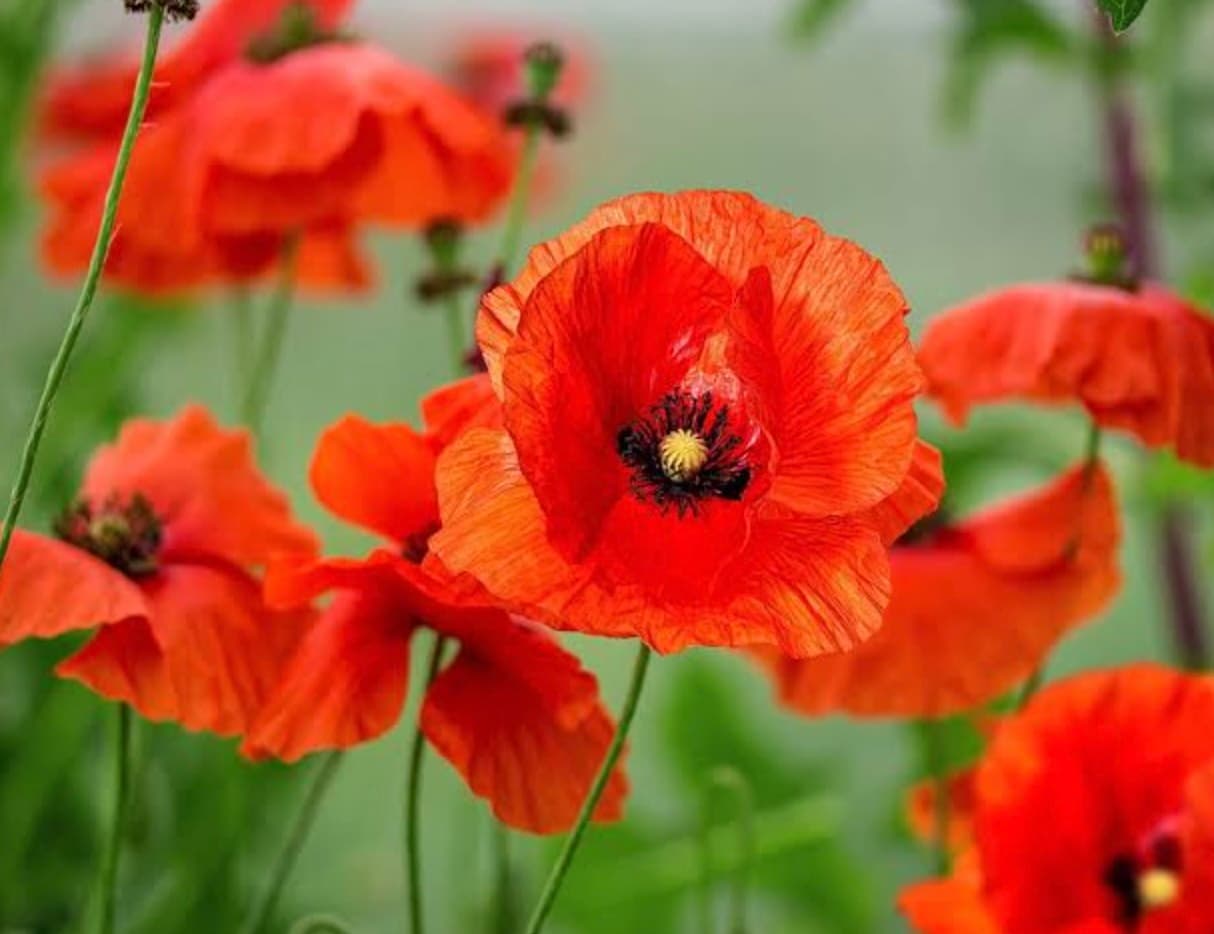
The poppy (Papaver species) is August's secondary birth flower. With delicate, crepe-paper-like petals and distinctive seed pods, poppies are among the most recognized flowers in the world. Most famous in vibrant red as a symbol of fallen soldiers, they also appear in shades of orange, yellow, pink, purple, and white.
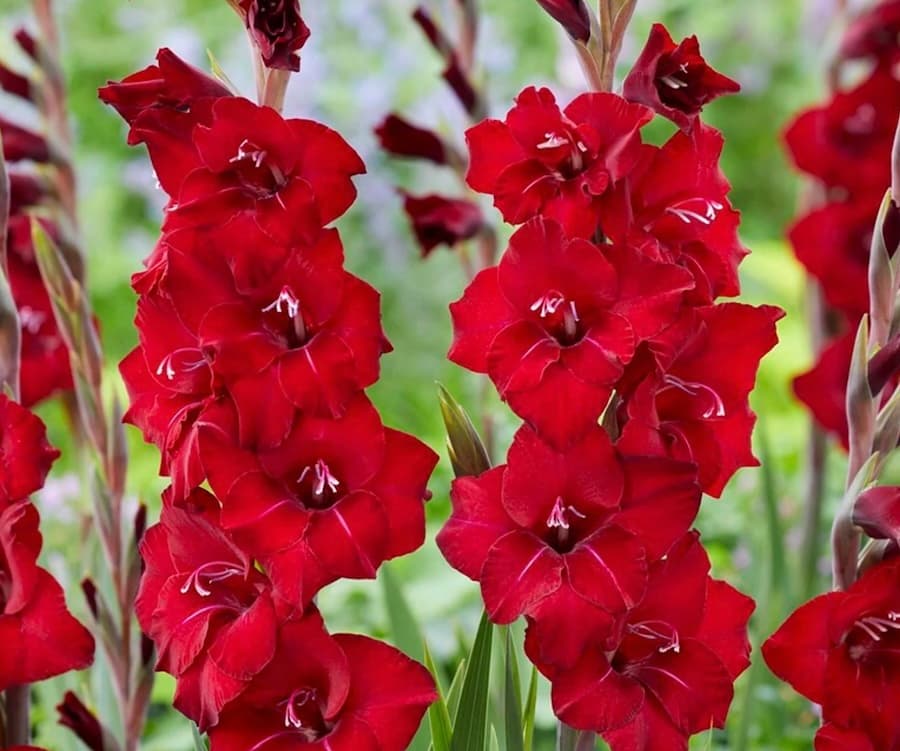
Gladiolus: Meaning & Color Symbolism
The gladiolus is a flower of powerful messages. In the Victorian language of flowers, it declared "you pierce my heart," a confession of infatuation. Each color adds its own layer of meaning:
Gladiolus Meanings by Color
Red
Passionate love, strength, and courage
Pink
Compassion, femininity, and motherly love
White
Purity, innocence, and moral integrity
Yellow
Joy, friendship, and cheerfulness
Purple
Charm, grace, and mystery
Orange
Enthusiasm, excitement, and warmth
Cultural Significance
In ancient Rome, gladiators wore gladiolus corms around their necks as protective amulets before entering the arena, believing the flower would bring them victory and shield them from death. This association with warriors cemented the gladiolus as a symbol of strength and honor.
Today the gladiolus is the traditional flower of 40th wedding anniversaries, representing the strength and character that sustain a long marriage. In South Africa, where most wild species originate, gladioli hold deep cultural significance and appear in traditional ceremonies marking important life transitions.
Poppy: Meaning & Symbolism
The poppy symbolizes remembrance, consolation, imagination, and resilience. Its association with sleep and dreams dates back to ancient Greece, where the flower was sacred to Morpheus, the god of dreams, and to Demeter, goddess of the harvest.
The red poppy became a worldwide symbol of remembrance after World War I, when the flowers bloomed across the battlefields of Flanders. Poppy seeds can lie dormant in soil for decades, only to burst into bloom when the earth is disturbed, which is why they appeared in such abundance on churned-up battlefield soil.
In Eastern cultures, poppies carry different meanings: in China and Japan, they represent beauty, success, and rest. In Persian literature and poetry, the red poppy is a powerful symbol of love and sacrifice, often appearing alongside imagery of wine and passion.
History of August's Birth Flowers
Gladiolus History
Gladiolus species are native to sub-Saharan Africa, the Mediterranean, and parts of Western Asia. Ancient civilizations cultivated them for both ornamental and medicinal use, and Roman gladiators turned them into symbols of martial courage.
Modern hybridization began in the early 19th century when European botanists crossed African species to create the large-flowered varieties we know today. With over 300 wild species and thousands of cultivars, the gladiolus has become one of the world's most popular cut flowers.
Poppy History
Poppies have been cultivated since at least 5000 BCE. Ancient Egyptians placed them in burial tombs, and the Sumerians called the poppy "hul gil," the "joy plant." Greek physicians recognized the sedative properties of poppy latex thousands of years ago.
After World War I, the red poppy became an international symbol of remembrance. The tradition of wearing poppy pins on Remembrance Day and Veterans Day continues across dozens of countries, making the poppy one of the most culturally significant flowers in the modern world.
How to Grow August's Birth Flowers
🗡️ Growing Gladiolus
- Light:Full sun (6-8 hours daily for best blooms)
- Soil:Well-drained, fertile soil with organic matter
- Water:Regular watering: about 1 inch per week during growth
- Zones:USDA zones 7-10 (lift corms in colder zones before frost)
- Bloom:Mid-summer to early fall, 70-90 days after planting
- Tip:Stake tall varieties and plant corms every 2 weeks for continuous blooms
🌺 Growing Poppies
- Light:Full sun for most species
- Soil:Well-drained soil; poppies thrive even in poor, sandy soil
- Water:Light watering; poppies dislike soggy roots
- Zones:USDA zones 3-9 (varies by species)
- Bloom:Late spring to early summer for most varieties
- Tip:Sow seeds directly in fall or early spring; poppies dislike transplanting
Popular Varieties
Garden Gladiolus
G. grandiflorus
The classic florist gladiolus with tall spikes of large, showy flowers in nearly every color except true blue.
Dwarf Gladiolus
G. nanus
More compact and cold-hardy with delicate flowers, ideal for containers and smaller gardens.
Byzantine Gladiolus
G. byzantinus
A wild species with magenta-purple flowers that naturalizes easily in suitable climates.
Corn Poppy
Papaver rhoeas
The iconic red field poppy of remembrance, with bright scarlet blooms and black centers that self-seed freely.
Oriental Poppy
P. orientale
A perennial with large, dramatic blooms in orange, red, pink, or white that returns with increasing vigor each year.
Iceland Poppy
P. nudicaule
Delicate, cup-shaped blooms in soft pastels on wiry stems, excellent for cutting gardens in cool climates.
Interesting Facts
Gladiator's Talisman
Roman gladiators wore gladiolus corms around their necks before battle, believing the flower would bring victory and protect them from death.
Over 300 Species
There are more than 300 wild gladiolus species, most of them native to southern Africa, with thousands of cultivars developed by breeders worldwide.
Seeds That Wait Decades
Poppy seeds can remain dormant in soil for up to 80 years, springing to life when the ground is disturbed. That explains their sudden appearance on WWI battlefields.
60,000 Seeds Per Plant
A single poppy plant can produce up to 60,000 tiny seeds. The seeds used in baking contain no narcotic properties whatsoever.
Bottom-Up Blooming
Gladiolus flowers open sequentially from the bottom of the spike upward, with each stem bearing 6 to 20 individual florets over several weeks.
Ancient Medicine
The milky latex from cut poppy stems contains alkaloids that have been used medicinally for thousands of years. Gladiolus corms were also used in traditional remedies for wounds and colic.
How to Use August's Birth Flowers
Birthday Bouquets
Create a dramatic August birthday arrangement by pairing tall gladiolus spikes with delicate poppies. Choose warm reds and oranges to capture the energy of midsummer.
Home & Garden
Plant gladiolus corms in succession every two weeks for continuous summer blooms. Scatter poppy seeds in a sunny border for a wildflower meadow effect.
Tattoo Inspiration
August birth flower tattoos are striking: the gladiolus spike translates beautifully into vertical designs, while the poppy's tissue-thin petals suit watercolor tattoo styles.
Special Occasions
Gladiolus are the traditional 40th anniversary flower. Red poppies make meaningful gifts for remembrance events, and mixed arrangements suit celebrations and sympathy alike.
August Birth Flowers by Date
Gladiolus and poppy cover all of August. Whatever your date, the flowers are the same, but the zodiac sign splits late in the month:
August birth flowers for every date
| Date | Zodiac Sign | Birth Flowers |
|---|---|---|
| August 1st | Leo | Gladiolus & Poppy |
| August 2nd | Leo | Gladiolus & Poppy |
| August 3rd | Leo | Gladiolus & Poppy |
| August 4th | Leo | Gladiolus & Poppy |
| August 5th | Leo | Gladiolus & Poppy |
| August 6th | Leo | Gladiolus & Poppy |
| August 7th | Leo | Gladiolus & Poppy |
| August 8th | Leo | Gladiolus & Poppy |
| August 9th | Leo | Gladiolus & Poppy |
| August 10th | Leo | Gladiolus & Poppy |
| August 11th | Leo | Gladiolus & Poppy |
| August 12th | Leo | Gladiolus & Poppy |
| August 13th | Leo | Gladiolus & Poppy |
| August 14th | Leo | Gladiolus & Poppy |
| August 15th | Leo | Gladiolus & Poppy |
| August 16th | Leo | Gladiolus & Poppy |
| August 17th | Leo | Gladiolus & Poppy |
| August 18th | Leo | Gladiolus & Poppy |
| August 19th | Leo | Gladiolus & Poppy |
| August 20th | Leo | Gladiolus & Poppy |
| August 21st | Leo | Gladiolus & Poppy |
| August 22nd | Leo | Gladiolus & Poppy |
| August 23rd | Virgo | Gladiolus & Poppy |
| August 24th | Virgo | Gladiolus & Poppy |
| August 25th | Virgo | Gladiolus & Poppy |
| August 26th | Virgo | Gladiolus & Poppy |
| August 27th | Virgo | Gladiolus & Poppy |
| August 28th | Virgo | Gladiolus & Poppy |
| August 29th | Virgo | Gladiolus & Poppy |
| August 30th | Virgo | Gladiolus & Poppy |
| August 31st | Virgo | Gladiolus & Poppy |
August Birth Flower & Birthstone Connection
Both gladiolus and peridot symbolize strength and protection. Ancient peoples believed both had powerful guardian properties.
The poppy's vibrant red and orange hues create a striking visual contrast with peridot's signature lime-green, together representing summer's full spectrum.
Both August's birth flowers and birthstone have ancient histories spanning thousands of years, with deep cultural importance across multiple civilizations.
The gladiolus represents integrity and moral clarity, while peridot has long been called "the gem of the sun": both embody inner light and honest character.