March BirthstoneAquamarine
By Emily RichardsonUpdated September 2026
The birthstone of courage, serenity, and honesty, carried by sailors for centuries
Quick answer
The birthstone for March is Aquamarine.
Aquamarine is the modern birthstone for March (with bloodstone as the traditional alternative). It is known for its blue color, excellent clarity, and connection to the sea.
- Birthstone
- Aquamarine
- Color
- Light Blue to Blue-Green
- Hardness
- 7.5–8 Mohs
- Meaning
- Courage, Serenity, Honesty
- Zodiac
- Pisces & Aries
- Birth Flower
- Daffodil & Jonquil
- Anniversary
- 19th Wedding Anniversary
What Is the Birthstone for March?
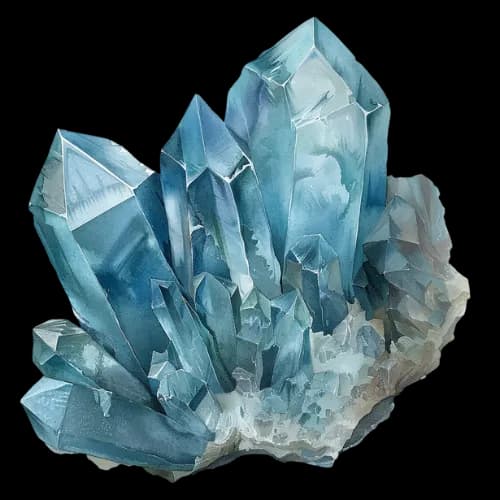
The March birthstone is aquamarine. Aquamarine is a member of the beryl family (the same mineral group as emerald). Its color ranges from pale sky blue to the deep blue of a tropical sea. It is one of the most popular and wearable gemstones in the world.
The name "aquamarine" comes from the Latin aqua marina, meaning "water of the sea." Ancient mariners carried aquamarine talismans for safe passage across stormy waters, believing the stone was a gift from Neptune, the Roman god of the sea.
Today aquamarine is prized for its clarity, hardness, and versatility. Large, clean crystals are relatively common, so aquamarine is available in big sizes (which is rare for other gemstones) at reasonable prices.
Aquamarine Meaning & Symbolism
Aquamarine has carried a range of meanings across cultures, many of which still resonate with those born in March.
Courage & Bravery
Named after the sea, aquamarine has long been a stone of courage for sailors, soldiers, and anyone facing rough patches in life.
Serenity & Calm
The soft blue is associated with inner peace, lower stress, and a calmer state of mind.
Honesty & Truth
Known as the "stone of truth," aquamarine is linked to open communication and honest relationships.
Loyalty & Commitment
Aquamarine is associated with trust and faithfulness, which makes it a thoughtful gift between partners and close friends.
Protection
Ancient sailors believed aquamarine would protect them from shipwrecks. Today it is still carried as a travel talisman.
Healing & Renewal
Connected to the throat chakra, aquamarine is believed to support the respiratory system and soothe sore throats.
Aquamarine Colors & Varieties
Aquamarine is defined by its blue color, but the shade and character vary across several varieties:
Intense Deep Blue
Santa Maria
The most prized variety, named after the Brazilian mine. Saturated blue with no green tint. Premium prices.
Medium Blue
Espirito Santo
Named after the Brazilian state. A medium blue that balances depth and transparency.
Rare Deep Blue
Maxixe
An unusually deep blue variety caused by natural radiation. The color fades with light exposure.
Blue with Chatoyancy
Cat's Eye
A rare variety that shows the cat's eye effect when cut as a cabochon. Caused by parallel needle-like inclusions.
Blue-Green with Inclusions
Moss Aquamarine
Has moss-like inclusions that create unusual internal patterns. Popular with collectors.
Light Sky Blue
Pale Aquamarine
The most common and affordable variety. A light, icy blue that works well for everyday jewelry and large statement pieces.
Why Is Aquamarine the March Birthstone?
The link between aquamarine and March is rooted in the seasons. March marks the start of spring: ice melts, rivers flow, and the sea calms after winter storms. Aquamarine's water-inspired blue fits this moment of renewal.
The modern birthstone list was standardized in 1912 by the American National Retail Jewelers Association (now Jewelers of America). They named aquamarine as the modern March birthstone alongside the traditional bloodstone. Its color, durability, and maritime symbolism made it a good fit for the month when winter gives way to spring.
Aquamarine connects to both March zodiac signs. Pisces, a water sign, lines up with aquamarine's oceanic and intuitive qualities. Aries leans into its association with courage and new beginnings.
The History of Aquamarine
Aquamarine has been valued since at least 480 BCE in ancient Greece. Roman fishermen called it the "sailor's stone" and carried it for protection and good catches. They believed aquamarine was formed from sea water blessed by Neptune, and that its power was strongest when submerged in ocean water under a full moon.
During the Middle Ages, aquamarine was thought to be an antidote to poison (a serious concern for royalty and nobility). Crusaders wore aquamarine amulets for protection during battle and safe passage at sea. It was also said to reawaken the love of married couples and make the wearer invulnerable in legal disputes.
The Renaissance brought aquamarine into the courts of European kings and queens. One of the most famous aquamarines is the Dom Pedro, which weighs about 10,363 carats and is the largest faceted aquamarine in the world. The obelisk-shaped gem is now at the Smithsonian National Museum of Natural History in Washington, D.C.
Brazil has been the world's main source of fine aquamarine since the 18th century, particularly the state of Minas Gerais. The discovery of deeply blue stones at the Santa Maria de Itabira mine established the "Santa Maria" name for the most intensely blue aquamarines.
Aquamarine Properties
⚛Physical Properties
- Mineral
- Beryl
- Hardness
- 7.5-8 on Mohs scale
- Crystal System
- Hexagonal
- Refractive Index
- 1.577-1.583
- Chemistry
- Be₃Al₂Si₆O₁₈
- Color Range
- Light blue to blue-green
🌎Where Aquamarine Is Found
Aquamarine is found across the globe, and stones from different regions have a distinct character:
How to Care for Aquamarine Jewelry
Aquamarine is durable and good for everyday wear, but a few precautions will keep it looking sharp:
Clean aquamarine jewelry with mild soap and warm water using a soft brush.
Ultrasonic cleaners are generally safe for aquamarine unless the stone has liquid inclusions or fractures.
Steam cleaning is not recommended as sudden temperature changes can potentially damage the stone.
Store aquamarine jewelry separately from harder gemstones like diamonds to prevent scratching.
Remove aquamarine jewelry before using household chemicals or engaging in rough activities.
How Much Does Aquamarine Cost?
Aquamarine is moderately priced, with cost rising sharply as the blue gets deeper and more saturated. Bloodstone, March's traditional alternative, sits at the opposite end of the scale and is inexpensive by comparison.
| Quality Tier | Typical Price Per Carat | What You Get |
|---|---|---|
| Pale aquamarine | $5 – $100/ct | Light blue stones, the most common and affordable variety |
| Fine medium-to-deep blue aquamarine | $150 – $600/ct | Stronger, more saturated blue with good clarity |
| Top "Santa Maria" aquamarine | $1,000+/ct | Intense deep blue, the most prized grade, mainly in larger stones |
| Bloodstone | Low, usually priced per piece rather than per carat | Dark green jasper with red flecks, typically cut as cabochons |
Indicative 2026 retail prices for loose stones; settings and brand add to the total.
How to Choose Aquamarine Jewelry
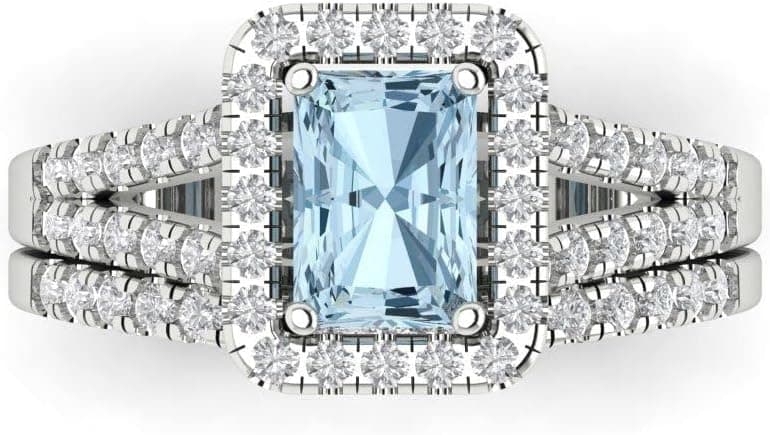
When shopping for aquamarine jewelry, color matters most. The best stones show a medium-to-deep blue without noticeable green or gray tints. Because aquamarine often forms in large, clean crystals, you can find big stones at reasonable prices, which is why it works well for statement pieces.
- 1. Color first: Medium-deep blue with no visible green tint is the most valued. Deeper blues (Santa Maria quality) command higher prices.
- 2. Clarity: Fine aquamarine should be eye-clean. The gem naturally forms with excellent transparency.
- 3. Cut: Emerald cuts are classic for aquamarine and show off its clarity. Oval and cushion cuts work well too.
- 4. Setting: White gold, platinum, and silver complement aquamarine's cool blue tones. Yellow gold creates a strong contrast.
Facts About Aquamarine
Aquamarine and emerald are actually varieties of the same mineral (beryl), with their different colors caused by different trace elements.
Unlike many gemstones, aquamarine often occurs in large, flawless crystals, allowing for sizable cut gems. The largest cut aquamarine is the Dom Pedro, weighing approximately 10,363 carats (4.6 pounds).
Aquamarine's color typically becomes more intense with larger stones, which is unusual among gemstones.
In Medieval times, aquamarine was thought to reawaken the love of married couples and make the wearer invulnerable in battles or legal disputes.
March Birthstone by Date
No matter which day in March you were born, aquamarine is your birthstone. Here's how each part of the month maps to it:
March 1–10
Pisces
Early March birthdays line up with aquamarine's clarity and the fresh energy of approaching spring.
March 11–20
Pisces
Mid-March connects to aquamarine's themes of emotional depth and creative flow.
March 21–31
Aries
Late March leans on aquamarine's courage and boldness, alongside the spring equinox.
March birthstone for every date
| Date | Zodiac Sign | Birthstone |
|---|---|---|
| March 1st | Pisces | Aquamarine |
| March 2nd | Pisces | Aquamarine |
| March 3rd | Pisces | Aquamarine |
| March 4th | Pisces | Aquamarine |
| March 5th | Pisces | Aquamarine |
| March 6th | Pisces | Aquamarine |
| March 7th | Pisces | Aquamarine |
| March 8th | Pisces | Aquamarine |
| March 9th | Pisces | Aquamarine |
| March 10th | Pisces | Aquamarine |
| March 11th | Pisces | Aquamarine |
| March 12th | Pisces | Aquamarine |
| March 13th | Pisces | Aquamarine |
| March 14th | Pisces | Aquamarine |
| March 15th | Pisces | Aquamarine |
| March 16th | Pisces | Aquamarine |
| March 17th | Pisces | Aquamarine |
| March 18th | Pisces | Aquamarine |
| March 19th | Pisces | Aquamarine |
| March 20th | Pisces | Aquamarine |
| March 21st | Aries | Aquamarine |
| March 22nd | Aries | Aquamarine |
| March 23rd | Aries | Aquamarine |
| March 24th | Aries | Aquamarine |
| March 25th | Aries | Aquamarine |
| March 26th | Aries | Aquamarine |
| March 27th | Aries | Aquamarine |
| March 28th | Aries | Aquamarine |
| March 29th | Aries | Aquamarine |
| March 30th | Aries | Aquamarine |
| March 31st | Aries | Aquamarine |
March Birth Flower: Daffodil & Jonquil
March's birth flowers, the daffodil and jonquil, share aquamarine's themes of renewal and new beginnings. The daffodil signals spring and aquamarine's blue mirrors the same seasonal optimism.
Explore March's Birth Flowers