February Birth FlowersViolet & Iris
Updated June 2026
Faithfulness, wisdom, devotion, and the courage of spring
Quick answer: The birth flowers for February are the Violet and the Iris.
Violets symbolize loyalty and modesty, while irises represent faith and wisdom: a meaningful pairing for the month of love.
What Are February's Birth Flowers?
February has two birth flowers: the violet and the iris. Together, they capture the spirit of mid-winter: the violet's quiet devotion and the iris's bold declaration of faith and wisdom make them a perfect pair for a month defined by love.
The violet (Viola) is February's primary birth flower. Small but mighty, violets have been beloved for thousands of years for their sweet fragrance, heart-shaped leaves, and ability to bloom even in the chilly tail end of winter. Ancient Athenians adopted the violet as the symbol of their city, and Napoleon made it his personal emblem.
The iris (Iris germanica) is February's secondary birth flower. Named after the Greek goddess of the rainbow, the iris produces strikingly architectural blooms in nearly every color imaginable. Its three upright petals (standards) and three falling petals (falls) give it one of the most distinctive silhouettes in the flower world.
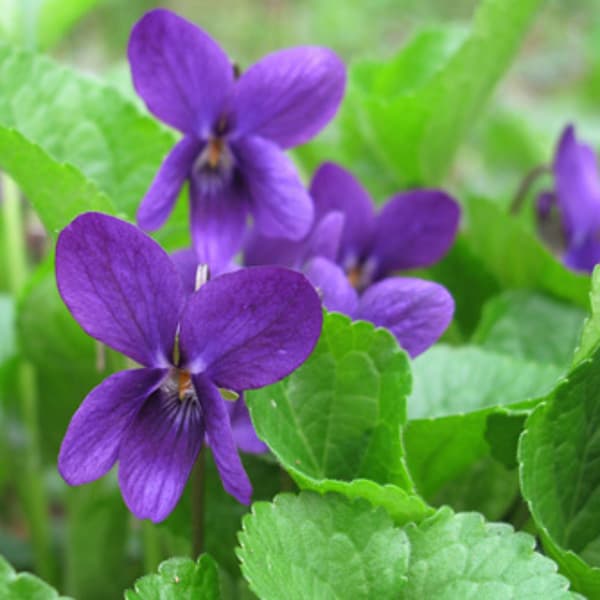
Violet: Meaning & Color Symbolism
Violets carry rich symbolism that shifts based on color. In the Victorian language of flowers, each shade sent a distinct message to the recipient:
Violet Meanings by Color
Purple
Loyalty, devotion, and faithfulness
Blue
Watchfulness, trustworthiness, and reliability
White
Innocence, purity, and taking a chance on happiness
Yellow
High worth, goodness, and joy
Pink
Love, affection, and romantic feelings
Cultural Significance
In ancient Greece, violets symbolized love and fertility. The Athenians considered the violet so sacred that it became the official emblem of Athens itself. Greek women used violets in love potions, and the flowers were woven into garlands for celebrations.
Napoleon Bonaparte famously adopted the violet as his signature flower. When he was exiled to Elba, he told supporters he would return before violets bloomed again. His followers began wearing violets and using the code name "Corporal Violet" as a secret sign of loyalty, turning a delicate wildflower into a powerful political symbol.
Iris: Meaning & Symbolism
The iris symbolizes faith, wisdom, valor, and hope. Named after the Greek goddess Iris, who served as a messenger between the gods and humanity by traveling along rainbows, the flower represents the bridge between earth and heaven.
In ancient Egypt, the iris was a symbol of power and majesty. Pharaohs placed iris motifs on the brows of sphinx statues, and the flower appeared in royal iconography throughout the dynasties. Egyptian artisans depicted the iris alongside lotus flowers in temple carvings.
The iris's most lasting cultural impact may be the fleur-de-lis, the stylized iris that became the emblem of French royalty. King Clovis of the Franks is said to have adopted the iris as his symbol after a field of yellow irises guided his army to a safe river crossing during battle. Centuries later, the fleur-de-lis remains one of the most recognized heraldic symbols in the world.
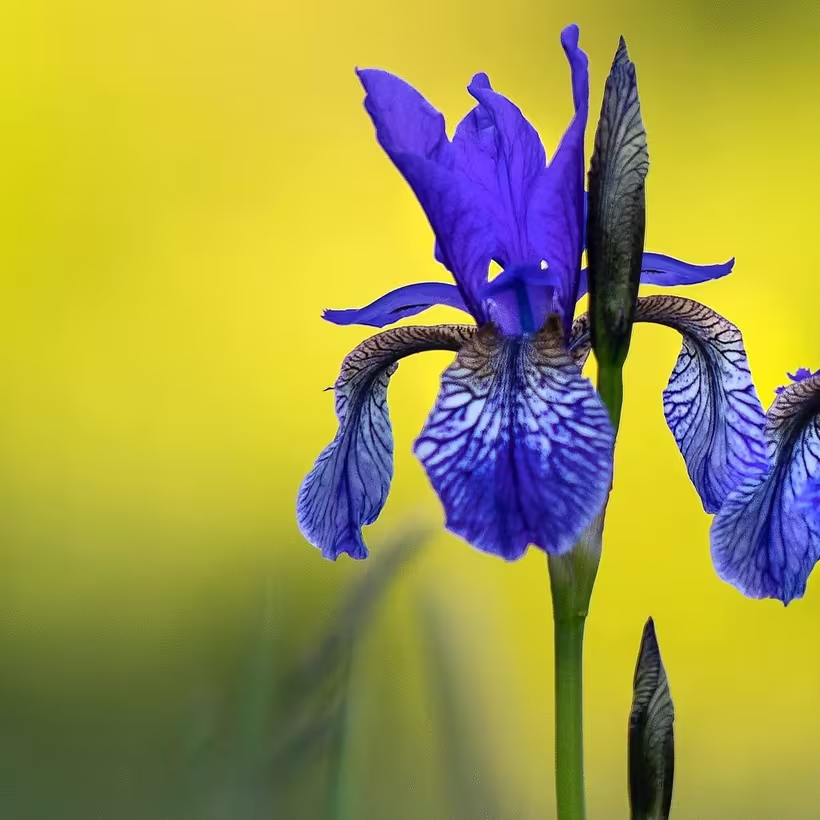
History of February's Birth Flowers
Violet History
Violets have been cultivated since at least 500 BC. The ancient Greeks grew them commercially for the Athens flower market and used them in wine, medicine, and garlands. Romans scattered violets at banquets and believed they could prevent drunkenness.
During the Victorian era, violets became the most popular flower in England, outselling even roses. London street vendors sold bunches of sweet violets on every corner, and entire industries grew around violet-scented perfumes, candies, and cosmetics. The town of Toulouse, France, became famous for its crystallized violets, a confection still produced there today.
Iris History
Irises have been cultivated for over 3,500 years. Ancient Egyptians grew them in temple gardens, and the flower appears in frescoes at the Palace of Knossos on Crete dating to 1500 BC. Greek physicians used iris root (orris root) as a medicine and perfume fixative.
By the Middle Ages, irises were grown in monastery herb gardens across Europe. Dried orris root, which develops a rich violet-like scent as it ages, became one of the most prized ingredients in perfumery, a status it holds to this day. Florence, Italy, adopted the iris as its city emblem, and Tuscan iris farms still supply the world's finest orris root.
How to Grow February's Birth Flowers
🌸 Growing Violets
- Light:Partial to full shade (morning sun with afternoon shade is ideal)
- Soil:Moist, humus-rich soil that drains well
- Water:Keep consistently moist: violets dislike drying out
- Zones:USDA zones 3–9
- Bloom:Late winter to spring, with some reblooming in fall
- Tip:Allow plants to self-seed for natural, spreading ground cover
🌺 Growing Irises
- Light:Full sun to light shade (6+ hours of direct sun ideal)
- Soil:Well-drained, slightly alkaline soil
- Water:Moderate: avoid soggy roots; water during dry spells
- Zones:USDA zones 3–9 (varies by species)
- Bloom:Spring to early summer; reblooming types flower again in fall
- Tip:Keep rhizomes partially exposed above soil level to prevent rot
Popular Varieties
Sweet Violet
Viola odorata
The classic violet with an intoxicating fragrance, heart-shaped leaves, and deep purple flowers loved for centuries in perfumery.
Johnny Jump Up
Viola tricolor
A charming multi-colored variety with purple, yellow, and white petals that self-seeds freely in cottage gardens.
Horned Violet
Viola cornuta
Long-blooming tufted pansies that are more heat-tolerant, producing abundant flowers from spring into summer.
Bearded Iris
Iris germanica
The most popular garden iris, featuring distinctive fuzzy "beards" on the falls and an enormous range of colors.
Siberian Iris
Iris sibirica
Graceful, slender blooms in blue and purple shades, perfect for moist borders and waterside plantings.
Dwarf Iris
Iris reticulata
Tiny, early-blooming bulb irises that produce vivid purple and blue flowers in late winter, ideal for rock gardens.
Interesting Facts
Disappearing Scent
Violets contain ionone, a chemical that temporarily shuts down your scent receptors. After one sniff, the fragrance seems to vanish, then returns moments later, making each encounter feel like the first.
Edible Blooms
Violet flowers and leaves are edible and rich in vitamins A and C. Crystallized violets have been a French delicacy since the Middle Ages, and violet syrup adds floral flavor to cocktails and desserts.
Rainbow Namesake
The iris gets its name from the Greek word for rainbow. With species available in virtually every color except true red, irises live up to their colorful heritage.
Precious Perfume
Orris root, dried iris rhizome, can take up to five years to develop its full violet-like aroma. This aging process makes it one of the most expensive natural perfume ingredients in the world.
Napoleon's Secret Symbol
After Napoleon's exile, his supporters wore violets and asked strangers "Do you like violets?" as a coded loyalty test. Answering "yes" identified you as a Bonapartist, making the humble violet a tool of political intrigue.
Heraldic Icon
The fleur-de-lis, inspired by the iris flower, has been used in coats of arms across Europe for over a thousand years. It remains the symbol of Florence, the emblem of French royalty, and a motif on flags worldwide.
How to Use February's Birth Flowers
Birthday Bouquets
Combine deep purple irises with a collar of sweet violets for a stunning February birthday arrangement that echoes the amethyst birthstone.
Home & Garden
Plant violets as fragrant ground cover under deciduous trees. Grow bearded irises along sunny borders for dramatic late-spring color.
Tattoo Inspiration
The violet's heart-shaped leaves and the iris's elegant sword-like form make popular birth flower tattoo designs, often inked in shades of purple and indigo.
Special Occasions
Purple violets for Valentine's Day, white irises for weddings, and mixed arrangements for anniversaries: February's flowers suit every occasion of the heart.
February Birth Flowers by Date
Violet and iris cover the whole of February, including leap-day birthdays. The flower is fixed; the zodiac sign shifts mid-month:
February birth flowers for every date
| Date | Zodiac Sign | Birth Flowers |
|---|---|---|
| February 1st | Aquarius | Violet & Iris |
| February 2nd | Aquarius | Violet & Iris |
| February 3rd | Aquarius | Violet & Iris |
| February 4th | Aquarius | Violet & Iris |
| February 5th | Aquarius | Violet & Iris |
| February 6th | Aquarius | Violet & Iris |
| February 7th | Aquarius | Violet & Iris |
| February 8th | Aquarius | Violet & Iris |
| February 9th | Aquarius | Violet & Iris |
| February 10th | Aquarius | Violet & Iris |
| February 11th | Aquarius | Violet & Iris |
| February 12th | Aquarius | Violet & Iris |
| February 13th | Aquarius | Violet & Iris |
| February 14th | Aquarius | Violet & Iris |
| February 15th | Aquarius | Violet & Iris |
| February 16th | Aquarius | Violet & Iris |
| February 17th | Aquarius | Violet & Iris |
| February 18th | Aquarius | Violet & Iris |
| February 19th | Pisces | Violet & Iris |
| February 20th | Pisces | Violet & Iris |
| February 21st | Pisces | Violet & Iris |
| February 22nd | Pisces | Violet & Iris |
| February 23rd | Pisces | Violet & Iris |
| February 24th | Pisces | Violet & Iris |
| February 25th | Pisces | Violet & Iris |
| February 26th | Pisces | Violet & Iris |
| February 27th | Pisces | Violet & Iris |
| February 28th | Pisces | Violet & Iris |
| February 29th | Pisces | Violet & Iris |
February Birth Flower & Birthstone Connection
Both the violet and amethyst share a signature purple hue that has symbolized royalty, wisdom, and spirituality across cultures for millennia.
The violet's theme of faithfulness and devotion beautifully mirrors amethyst's reputation for promoting sincerity and clarity of thought.
The iris's association with wisdom and valor complements amethyst's ancient use as a stone believed to sharpen the mind and protect against poor judgment.
Both February's flowers and gemstone have been treasured by royalty, from Napoleon's violets to the amethysts in the British Crown Jewels.