March Birth FlowerDaffodil
Updated June 2026
New beginnings, joy, rebirth, and the golden promise of spring
Quick answer: The birth flower for March is the Daffodil (Narcissus).
Daffodils symbolize new beginnings, joy, and rebirth: the perfect flower to herald spring and celebrate March birthdays.
What Is March's Birth Flower?
March's birth flower is the daffodil. Few flowers announce spring's arrival with the same exuberance. Their golden trumpets push through thawing ground as early as late February, bringing the first real splash of color after months of winter gray.
The daffodil (Narcissus) belongs to the amaryllis family and is native to meadows and woodlands across southern Europe and North Africa. With over 13,000 registered cultivars divided into 13 official divisions, daffodils come in far more variety than most people realize, from towering trumpet types to miniature multi-headed jonquils.
What makes daffodils especially beloved is their reliability. They are perennial bulbs that naturalize easily, multiplying year after year with minimal care. Deer and rodents avoid them (the bulbs contain toxic alkaloids), making daffodils one of the few spring bulbs that thrive without protection from wildlife.
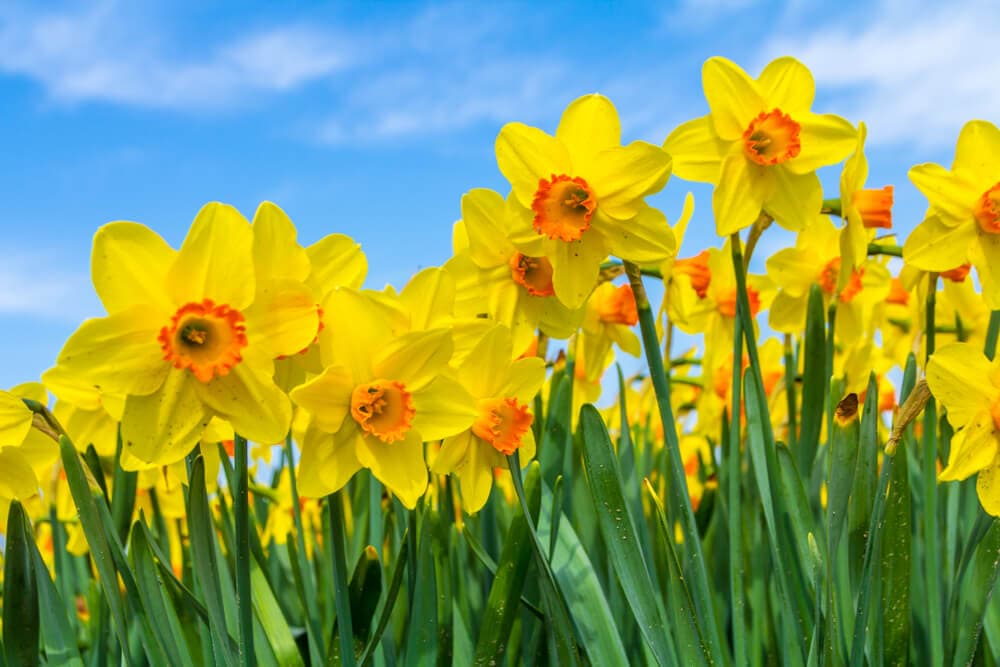
Daffodil: Meaning & Color Symbolism
While yellow daffodils are the most iconic, these flowers come in a range of colors, each carrying its own meaning in the language of flowers:
Daffodil Meanings by Color
Yellow
Joy, happiness, new beginnings, and friendship
White
Purity, respect, and a fresh start
Orange
Enthusiasm, vitality, and warmth
Pink
Gentle love, grace, and admiration
Bicolor (Yellow & White)
Contrast, balance, and the meeting of two worlds
Cultural Significance
In China, daffodils are called "water fairies" and are highly prized during Lunar New Year celebrations. A daffodil that blooms on New Year's Day is believed to bring exceptional luck and prosperity for the entire year. Families carefully tend potted narcissus bulbs to time their blooming perfectly.
In Wales, the daffodil is a national emblem worn on St. David's Day (March 1st). The Welsh name for daffodil, "cenhinen Bedr" (Peter's leek), links it to the country's other national symbol, the leek. Daffodils are also the symbol of many cancer charities worldwide, representing hope and the fundraising efforts that take place each spring.
Jonquil: The Fragrant Cousin
The jonquil (Narcissus jonquilla) is a member of the daffodil family that deserves special attention as March's most fragrant variety. Unlike trumpet daffodils, jonquils produce clusters of small, intensely perfumed flowers on each stem, with slender, rush-like leaves.
Jonquils symbolize desire, returned affection, and sympathy. In the Victorian language of flowers, sending jonquils carried a more intimate message than standard daffodils: they expressed a longing for the recipient's affection to be returned.
Native to Spain and Portugal, jonquils were among the first Narcissus species brought to England in the 16th century. Their heady scent made them favorites in Tudor knot gardens, and they remain prized by perfumers. The southern United States has a particular fondness for jonquils: they naturalize beautifully in warm climates and are often the first sign of spring across the region.
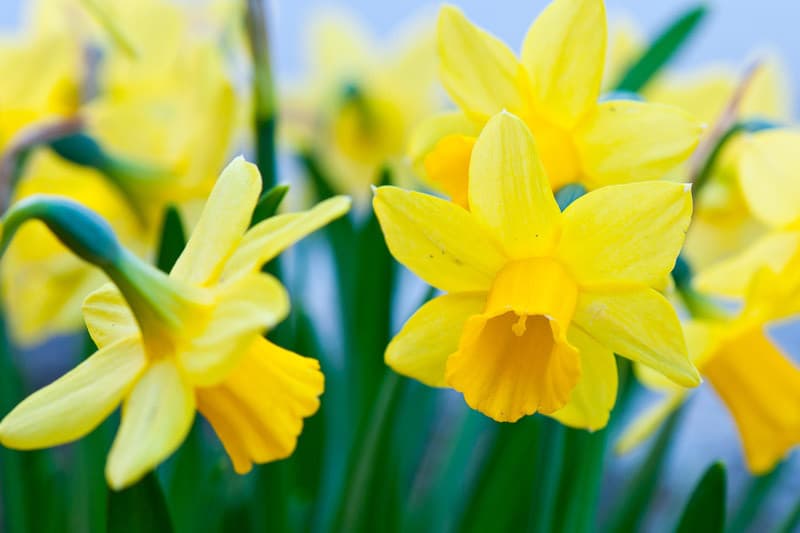
History of March's Birth Flower
Ancient Origins
The daffodil's scientific name, Narcissus, comes from Greek mythology. The handsome youth Narcissus was cursed to fall in love with his own reflection in a pool of water. Unable to leave his reflection, he wasted away and transformed into the flower that now bears his name, forever bending its head to gaze at the ground.
Ancient Egyptians placed daffodils in funeral wreaths, and the Romans cultivated them across their empire, bringing them as far north as Britain. The Roman naturalist Pliny wrote about the narcissus, noting its medicinal properties and its ability to numb the senses. The name may also derive from the Greek "narke" (numbness), the same root as "narcotic."
Modern Legacy
The modern daffodil industry took off in the 19th century when English and Dutch growers began breeding spectacular new varieties. Peter Barr, known as "the Daffodil King," traveled across Europe collecting wild species and spent decades developing cultivars that laid the foundation for today's incredible diversity.
Today, the Netherlands is the world's largest producer of daffodil bulbs, growing hundreds of millions annually. The Isles of Scilly off England's coast have been famous for daffodil farming since the 1880s, and their early-season flowers are shipped across Britain each spring. Daffodils now serve as the official symbol of cancer charities in many countries, from the American Cancer Society's Daffodil Days to the Canadian Cancer Society's daffodil pin.
How to Grow March's Birth Flower
🌼 Growing Daffodils
- Light:Full sun to partial shade (6+ hours of sun for best blooms)
- Soil:Well-drained soil: they will rot in waterlogged ground
- Water:Moderate in spring; let soil dry out after foliage dies back
- Zones:USDA zones 3–9 (varies by species)
- Bloom:Late February through May depending on variety and climate
- Tip:Plant bulbs in fall, 4–6 inches deep and 4–6 inches apart, pointed end up
🌿 Naturalizing & Maintenance
- Foliage:Never cut back leaves until they turn yellow: they feed the bulb
- Feeding:Apply bulb fertilizer when shoots emerge and again after flowering
- Dividing:Lift and divide clumps every 3–5 years when blooming declines
- Wildlife:Daffodils are deer- and rodent-resistant thanks to their toxic alkaloids
- Containers:Use pots at least 6 inches deep; chill bulbs in cold climates
- Tip:Interplant with late-emerging perennials to hide dying daffodil foliage
Popular Varieties
Trumpet Daffodil
Narcissus 'King Alfred'
The classic golden daffodil with a large trumpet as long as its petals: the quintessential spring flower found in gardens worldwide.
Large-Cupped
Narcissus 'Ice Follies'
White petals surrounding a wide, frilly cup that fades from yellow to cream. Vigorous and excellent for naturalizing.
Double Daffodil
Narcissus 'Cheerfulness'
Clusters of fragrant, ruffled double flowers in creamy white with yellow centers. A favorite for late-spring cutting gardens.
Jonquilla
Narcissus jonquilla
Clusters of small, intensely fragrant golden flowers on slender stems with rush-like foliage. Naturalizes superbly in warm climates.
Miniature Daffodil
Narcissus 'Tete-a-Tete'
Tiny golden blooms on 6-inch stems, perfect for rock gardens, containers, and forcing indoors during winter.
Poet's Narcissus
Narcissus poeticus
Pure white petals with a small, red-rimmed cup and a powerful, sweet fragrance. One of the latest-blooming and most elegant daffodils.
Interesting Facts
Natural Pest Control
Daffodil bulbs contain lycorine, a toxic alkaloid that repels deer, squirrels, and voles. Gardeners often plant daffodils around tulips and crocus to protect them from hungry wildlife.
13,000+ Cultivars
There are over 13,000 registered daffodil cultivars organized into 13 official divisions by the Royal Horticultural Society, ranging from tiny 3-inch miniatures to towering 20-inch specimens.
Cancer Research Connection
Daffodils contain galantamine and narciclasine, compounds being studied for cancer treatment. Pharmaceutical companies actually harvest daffodil bulbs commercially for their medicinal alkaloids.
One Means Bad Luck
In many traditions, giving a single daffodil brings misfortune. But a bunch of daffodils promises happiness and good fortune, so always give them by the armful, never alone.
Welsh National Emblem
The daffodil is one of two national emblems of Wales (alongside the leek). On St. David's Day each March 1st, Welsh people wear daffodils pinned to their clothing to celebrate their patron saint.
Self-Multiplying Bulbs
A single daffodil bulb can multiply into a clump of a dozen or more over five years. Once established, daffodils can persist and spread for decades with virtually no care at all.
How to Use March's Birth Flower
Birthday Bouquets
A generous bunch of yellow daffodils makes a cheerful March birthday gift. Mix trumpet types with fragrant jonquils for variety and scent.
Home & Garden
Plant daffodil bulbs in drifts along paths, under trees, or in lawns for a naturalized meadow effect. They return stronger every year with almost no effort.
Tattoo Inspiration
The daffodil's trumpet shape and graceful stem create elegant birth flower tattoo designs, often rendered in golden yellow ink or delicate linework.
Special Occasions
Daffodils are traditional flowers for 10th wedding anniversaries. They also make cheerful get-well gifts, housewarming presents, and spring table centerpieces.
March Birth Flower by Date
The daffodil is the birth flower for every single day in March. What changes with your date is your zodiac sign:
March birth flower for every date
| Date | Zodiac Sign | Birth Flower |
|---|---|---|
| March 1st | Pisces | Daffodil |
| March 2nd | Pisces | Daffodil |
| March 3rd | Pisces | Daffodil |
| March 4th | Pisces | Daffodil |
| March 5th | Pisces | Daffodil |
| March 6th | Pisces | Daffodil |
| March 7th | Pisces | Daffodil |
| March 8th | Pisces | Daffodil |
| March 9th | Pisces | Daffodil |
| March 10th | Pisces | Daffodil |
| March 11th | Pisces | Daffodil |
| March 12th | Pisces | Daffodil |
| March 13th | Pisces | Daffodil |
| March 14th | Pisces | Daffodil |
| March 15th | Pisces | Daffodil |
| March 16th | Pisces | Daffodil |
| March 17th | Pisces | Daffodil |
| March 18th | Pisces | Daffodil |
| March 19th | Pisces | Daffodil |
| March 20th | Pisces | Daffodil |
| March 21st | Aries | Daffodil |
| March 22nd | Aries | Daffodil |
| March 23rd | Aries | Daffodil |
| March 24th | Aries | Daffodil |
| March 25th | Aries | Daffodil |
| March 26th | Aries | Daffodil |
| March 27th | Aries | Daffodil |
| March 28th | Aries | Daffodil |
| March 29th | Aries | Daffodil |
| March 30th | Aries | Daffodil |
| March 31st | Aries | Daffodil |
March Birth Flower & Birthstone Connection
The daffodil's sunny yellow and aquamarine's cool blue create a striking complementary palette: warmth and clarity working in harmony to define March.
Both the daffodil and aquamarine carry themes of renewal and fresh starts, perfectly reflecting March's position as the gateway from winter into spring.
Daffodils emerge from the earth just as aquamarine evokes the clear waters of the sea, and both symbolize the cleansing, revitalizing energy of the season.
Ancient sailors carried aquamarine for protection, while daffodils were planted near homes to ward off evil: both have served as talismans across cultures.