Aquamarine Engagement Rings: The Ultimate Guide to March's Birthstone for Your Proposal
Aquamarine is a serious engagement stone, and we think more couples should treat it as one. The March birthstone stands for courage, honesty, and lasting love, it is hard enough to wear every day, and it costs a fraction of what a diamond does. If you want a ring that doesn't look like everyone else's, this is one of the strongest cases in the colored-stone world.
Why Choose an Aquamarine Engagement Ring?
1. Exceptional Beauty and Clarity
Aquamarine is one of the few gems that routinely comes out of the ground clean. Most stones on the market are eye-clean, meaning no inclusions visible without a loupe, and that glassy transparency is the whole point of the gem: a pale ocean blue you can look straight into. Be honest with yourself about one thing, though. Aquamarine does not sparkle the way a diamond does; its light is quieter, more windowpane than firework. Plenty of people prefer exactly that. Just choose it knowingly.
2. Meaningful Symbolism
The name "aquamarine" comes from the Latin words for "water of the sea," and sailors once carried these gems for protection and good fortune on long voyages. The modern meanings grew out of that lore: courage and clear communication, loyalty and friendship, calm and tranquility, and the old promise of eternal youth and happiness. For a proposal, the sailor's version is the one we like best. A stone for safe passage together.
3. Excellent Durability
Aquamarine rates 7.5-8 on the Mohs scale. That is harder than the quartz dust that scratches softer stones in daily life, which is the practical test for any ring you never take off. It is a beryl, the same mineral family as emerald, but without emerald's habit of internal fractures, so it shrugs off knocks that would worry an emerald owner.
4. Exceptional Value
Carat for carat, aquamarine costs a fraction of what a diamond does. The same budget therefore buys a noticeably larger stone, a better setting, or both. That is the entire financial argument in one sentence, and for many couples it is decisive.
Popular Aquamarine Engagement Ring Styles
Emerald Cut Aquamarine Rings
The emerald cut suits aquamarine better than almost any other shape. Its step-cut facets create the hall-of-mirrors effect, long clean flashes instead of glitter, and step cuts are unforgiving: they hide nothing, so they only flatter stones with real clarity. Aquamarine has real clarity. The pairing is natural.
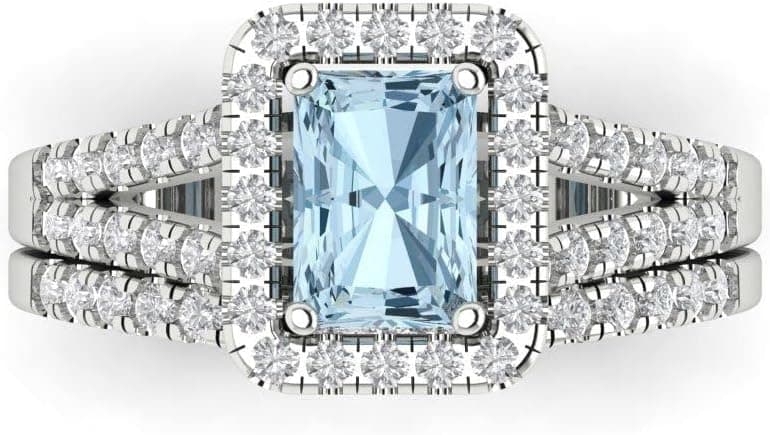
Featured Ring: Clara Pucci 1.7ct Emerald Cut Natural Aquamarine
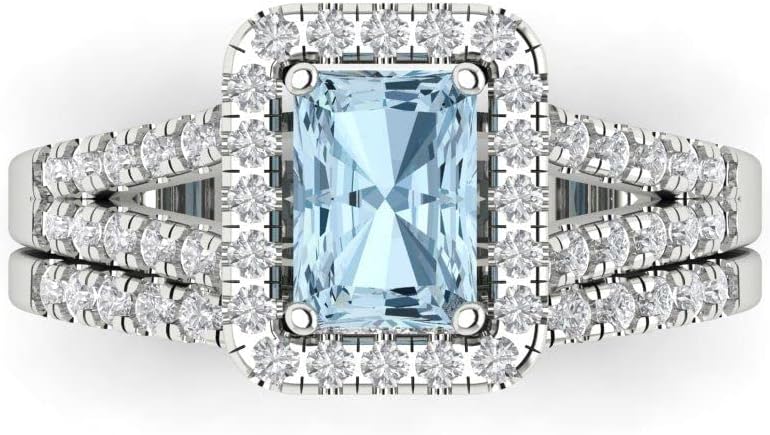
A useful worked example is the Clara Pucci 1.7ct Emerald Cut Natural Aquamarine Ring, priced at $1,071.99. You get a natural 1.7 carat center stone in the classic emerald cut, in the light blue that fine aquamarine is known for, at a size that reads clearly across a dinner table without tipping into cocktail-ring territory. Price a 1.7 carat diamond of respectable quality and you will see why rings like this one sell.
Halo Settings
A halo of small diamonds around the aquamarine does two jobs at once: it supplies the sparkle the center stone lacks on its own, and it makes that center stone look bigger. The style reads vintage, and the warm glitter of diamond against cool blue is a genuinely good combination rather than a fashion accident.
Three-Stone Designs
The three stones traditionally stand for your past, present, and future together. Aquamarine versions usually put a larger blue center between two diamonds, which frames the color the way a halo does but with cleaner, more architectural lines.
Solitaire Settings
The solitaire is the confident choice: one stone, one band, nothing to hide behind. It only works when the stone is good. With aquamarine, the stone is usually good.
How to Choose the Perfect Aquamarine Engagement Ring
Color Considerations
The most valuable aquamarines show a deep, saturated blue with no green undertone. Lighter stones cost less, and plenty of people honestly prefer them; pale aquamarine looks icy and clean where darker material looks richer. Choose the color you actually like, then let the price follow from that, not the reverse.
Clarity Matters
Because aquamarine grows so clean, the standard is high. Insist on an eye-clean stone, meaning no inclusions visible to the naked eye. Unlike with emerald or ruby, you should not have to pay a painful premium to get one.
Cut Quality
A well-cut aquamarine shows the most brilliance and the most even color. The cuts that earn their keep:
- Emerald cut (rectangular with cut corners)
- Oval cut
- Cushion cut
- Round brilliant cut
Carat Weight
Aquamarine is less dense than diamond, so a 1-carat aquamarine physically measures larger than a 1-carat diamond. Same number on the paperwork, more presence on the hand. This is why aquamarine rings look impressive at prices that would buy a very modest diamond.
Caring for Your Aquamarine Engagement Ring
Aquamarine asks very little of you:
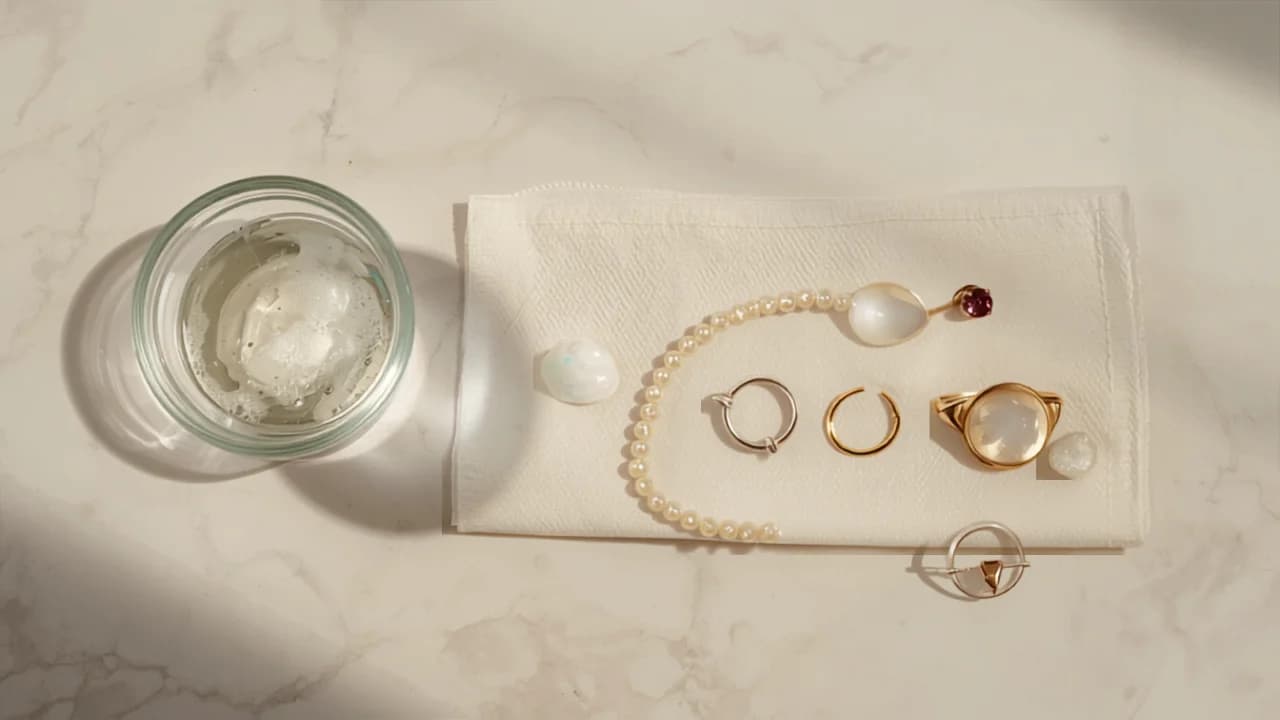
- Regular cleaning: warm, soapy water and a soft brush
- Avoid harsh chemicals: take the ring off before using cleaning products
- Professional maintenance: have the setting inspected once a year, because a worn prong loses more stones than damage ever does
- Safe storage: keep it separate, so it neither scratches softer pieces nor gets scratched by a diamond
Why Aquamarine Engagement Rings Are Trending
Colored center stones have moved from alternative to mainstream, and aquamarine sits near the front of that shift. The reasons are practical. A blue stone doesn't look like every other ring at the table. For March birthdays, the birthstone connection gives the ring a built-in story. Colored gems are often easier to trace to their source than diamonds, which matters to a growing share of buyers. And the soft blue sits as comfortably in a vintage halo as in a bare modern bezel.
The Investment Value
Aquamarine holds its worth well over time. High-quality stones, particularly those over 2 carats with strong color, are becoming rarer and more valuable as the best material gets harder to find. Don't buy an engagement ring as a financial instrument, but it is fair to say this is not a purchase that evaporates either.
Making Your Decision
The decision usually comes down to three questions. Does she love the color enough to see it every single day? Does the March connection mean something to you both? And would you rather put the diamond difference into a bigger stone or a better setting? Answer those and the ring mostly chooses itself, whether that is a ready-made emerald cut like the Clara Pucci above or a custom design built around a stone you pick yourself.
Ready to Find Your Perfect Ring?
Start with trusted jewelers who handle colored stones regularly, and keep four things in mind: set a budget that works for you, consider her personal style, think about how a wedding band will sit alongside the ring, and choose a seller with a solid return policy. That last one matters more with colored gems than with diamonds, because color is personal and photographs flatten it.
Our Honest Take
If your partner dreams of a classic diamond, buy the diamond; tradition is worth exactly what it is worth to the person wearing it. But if she is drawn to color, to the March connection, or to the idea of a ring that is hers rather than everyone's, aquamarine is the colored stone we would pick first for daily wear. It is hard enough to last, clean enough to cut beautifully, and blue in a way nothing else quite manages.
Ready to explore aquamarine engagement rings? Browse our aquamarine jewelry guide or learn more about March's birthstone.
Working out a budget? Our engagement ring budget calculator turns a monthly figure into a realistic ring spend, and the ring size calculator gets the fit right before you order.