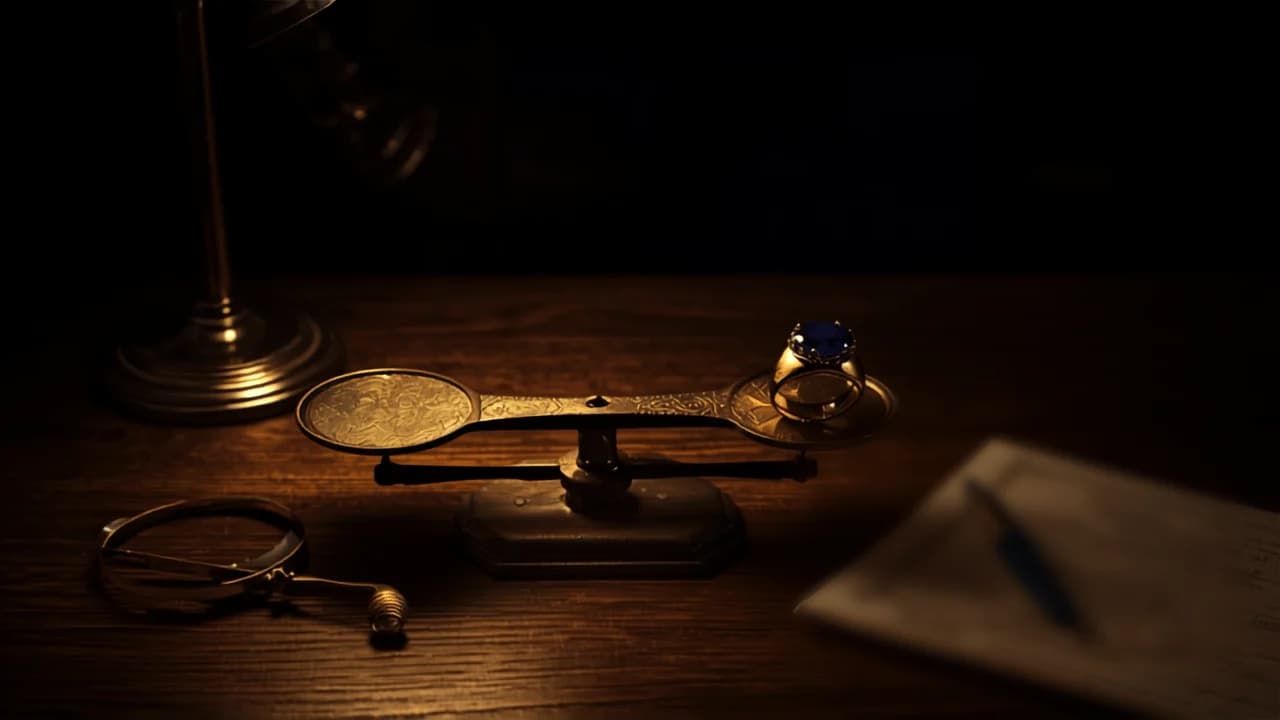
There is a moment that happens in jewellers' shops every day. Someone slides a ring across the counter, the person behind it looks at it for about ninety seconds, and then says a number. The number is always lower than expected. Usually much lower.
Then comes the part I find genuinely unfair, which is that the seller has no way of knowing whether that number was generous, reasonable or insulting. They have nothing to compare it against. They walk out either feeling cheated when they were not, or feeling relieved when they should have walked across the road.
This guide is my attempt to fix that. It covers where to sell jewelry, what each route actually pays, how the offer in front of you is built, and the part almost nobody tells you: which stones a buyer pays real money for, and which ones they quietly value at zero.
Every guide about where to sell jewelry was written by someone who wants to buy it
Search for where to sell jewelry and look carefully at who owns the results. A national diamond buying platform. A local jeweller in Minneapolis. A cash for gold service. A pawn chain. An auction house. A jewellery store in San Antonio with a page explaining, with great warmth, why the best place to sell jewelry in San Antonio happens to be them.
Every single one of those pages is written by a party to the transaction. They are not lying to you, mostly. But nobody publishing a "best places to sell your jewelry" list is neutral about where you land on it, and the one route that costs the buyer the most money, which is you being patient, is the one that never makes the top of the list.
We sell nothing. We do not buy your ring, we do not take a referral fee for sending you to someone who will, and we have no shop window that needs stock. That is the only reason this article can say the following out loud: for a lot of jewelry, particularly mass market coloured stone pieces, the honest answer is that it is worth very little on resale and you may be happier keeping it than discovering that.
How a buyer builds the number they offer you
Understanding the arithmetic behind the offer removes most of the sting from it, and it tells you exactly where to push.
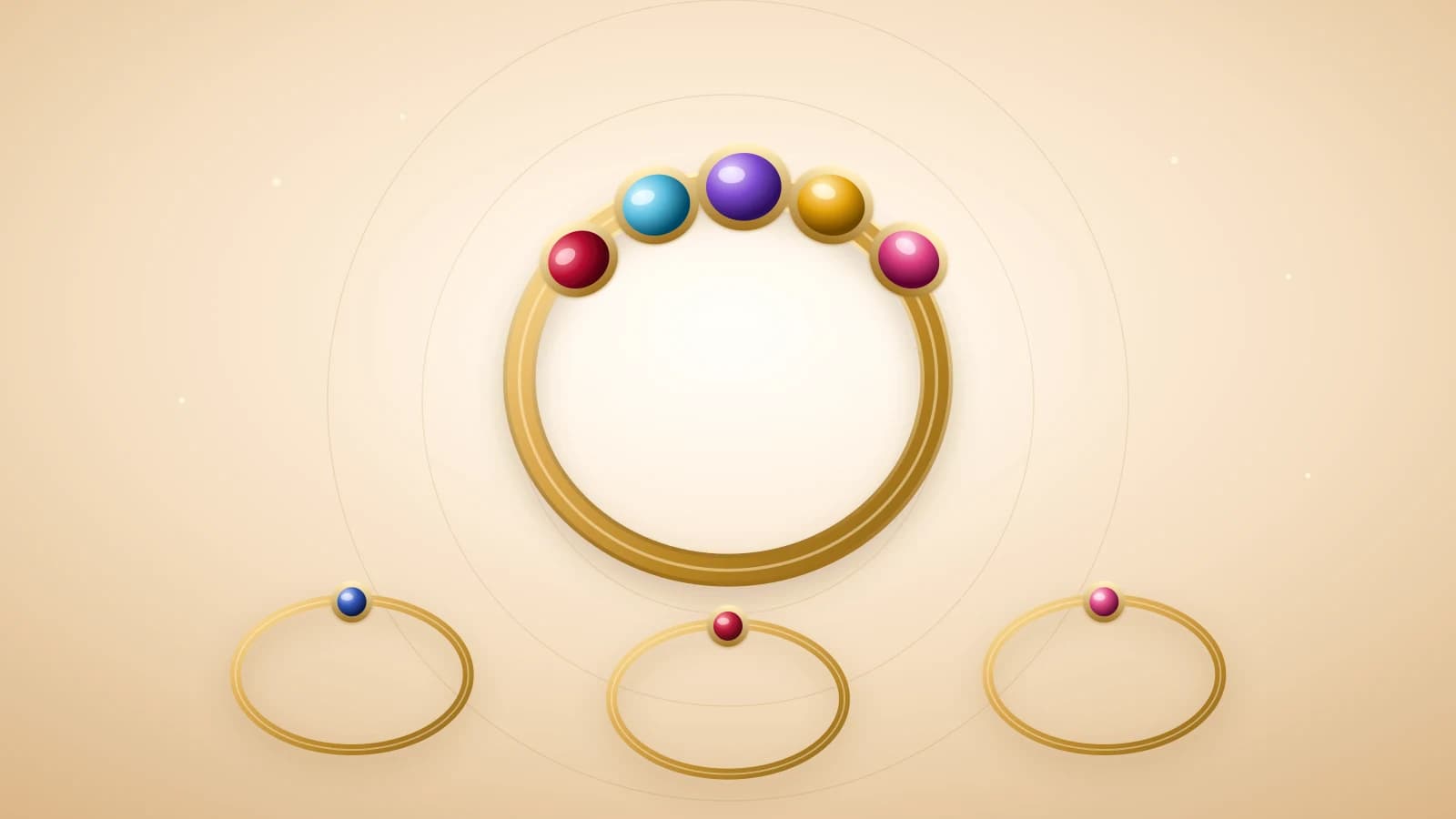
A buyer is not valuing your ring. They are calculating what they can turn it into, minus what that will cost them. There are usually four components and one of them is normally zero.
The metal. This is the easy part and the only genuinely liquid piece. Gold has a public spot price that moves every day. Your ring's melt value is its weight multiplied by its purity, so a 5 gram 14 karat band contains about 2.9 grams of pure gold. A fair buyer pays somewhere around 80% to 90% of melt value for clean gold. A pawn shop may offer 50% to 70%. You can work out the floor yourself in about thirty seconds with our gold price calculator, and I would say doing that before you visit anyone is the single highest value five minutes in this entire process.
The diamonds. Diamonds have a wholesale market, but it is a dealer market rather than a public one, and it is far less liquid than gold. A buyer will value your centre stone at what a dealer would pay them for it, which is well below any retail figure you have ever seen. Small melee stones under about 0.15 carats in a halo or a band are usually worth almost nothing individually, and are often lumped in as a token amount for the lot.
The coloured stones. This is the component that is frequently zero, and it is the section of this article that matters most, so it has its own heading below.
The piece itself. Occasionally the whole is worth more than the parts. A signed Cartier bracelet, an art deco ring with intact original detail, an unusual designer setting. When this premium exists it can be enormous and it can be the entire value of the item. When it does not exist, and for the overwhelming majority of jewelry it does not, the craftsmanship you paid for is simply not recoverable.
Then the buyer subtracts their own margin, which is not greed so much as the cost of holding stock that might sit unsold for eight months. Expect that to be 20% to 40% depending on the route.
Add all that up and you land at the working expectation that surprises people most: a diamond engagement ring typically resells for 20% to 40% of what it cost new, sometimes 50% or more if it is large, fine and well documented, and rather less if it was bought at a mall chain where the original retail markup was steepest.
The nine places to sell jewelry, what they pay, and how long they take
Roughly ordered from fastest and cheapest to slowest and most rewarding.
Pawn shop, immediate sale. Cash the same hour. Expect the lowest offer of any route, often at or below melt value on gold and very little for stones. A pawn loan is a separate product where you borrow against the piece and buy it back with interest, and it typically advances even less. Useful in a genuine emergency. Never use it as a valuation.
Mail in cash for gold services. A few days. They work honestly enough at the reputable end but you are selling to a refiner, so you get metal value only and every stone in the piece is worth nothing to them. Fine for broken chains and odd earrings. Wrong for anything with a stone or a name.
Local jeweller buying outright. Same day to a week. A good independent jeweller who deals in estate pieces will pay more than a pawn shop because they can retail the ring rather than scrap it. This is the best fast option for most people. Bring the paperwork, expect a real conversation, and ask whether they are buying it to resell or to scrap, because the answer changes the price enormously.
Jeweller consignment. One to six months. The shop displays your piece and takes a commission, commonly 20% to 40%, when it sells. You get a much higher gross price because a retail customer pays it, but you wait, and it may not sell at all. Get the terms in writing, including who insures it while it sits in their case and what happens if the shop closes.
Specialist online buyers and diamond auction platforms. One to three weeks. Services built around diamond rings will photograph and grade the piece, then run it in front of a national network of dealers. This usually beats a single local jeweller for a diamond ring, because you get competitive bidding rather than one opinion. Fees typically run around 10% to 20%. Check the reserve mechanism, meaning your right to decline the final number and have the piece returned.
Selling privately, including eBay and marketplace apps. Weeks to never. The highest ceiling and the highest hassle. You are competing with professional sellers, you carry the fraud risk, platform fees run in the region of 13% to 15%, and expensive jewelry attracts an unusual concentration of scams and chargebacks. I would do this for a $400 piece and would not do it for a $9,000 one.
Antique and estate dealers. Days to weeks. If your piece is genuinely old, meaning Georgian through to mid century, a specialist dealer will recognise things a modern jeweller reads as flaws. Old mine cut and old European cut diamonds are the classic example, since a modern grading eye marks them down while a period dealer pays a premium for exactly those cuts.
Regional auction house. Two to six months. They lot your piece into a jewelry sale, market it to collectors and dealers, and charge a seller's commission that is usually around 10% to 25%, plus photography, insurance and lotting fees. There is normally a minimum value threshold. For unusual, signed or antique pieces this is often the highest realistic number.
Major international auction house. Six months to a year. Only relevant above roughly the $20,000 mark, and realistically above $50,000. If you own something in that bracket, the specialist consultation is free and you should take it before you sell anywhere else.
The birthstone problem: which stones buyers pay for, and which are valued at zero
This is the section only a birthstone site will write for you, because it is bad for business if your business is buying jewelry.
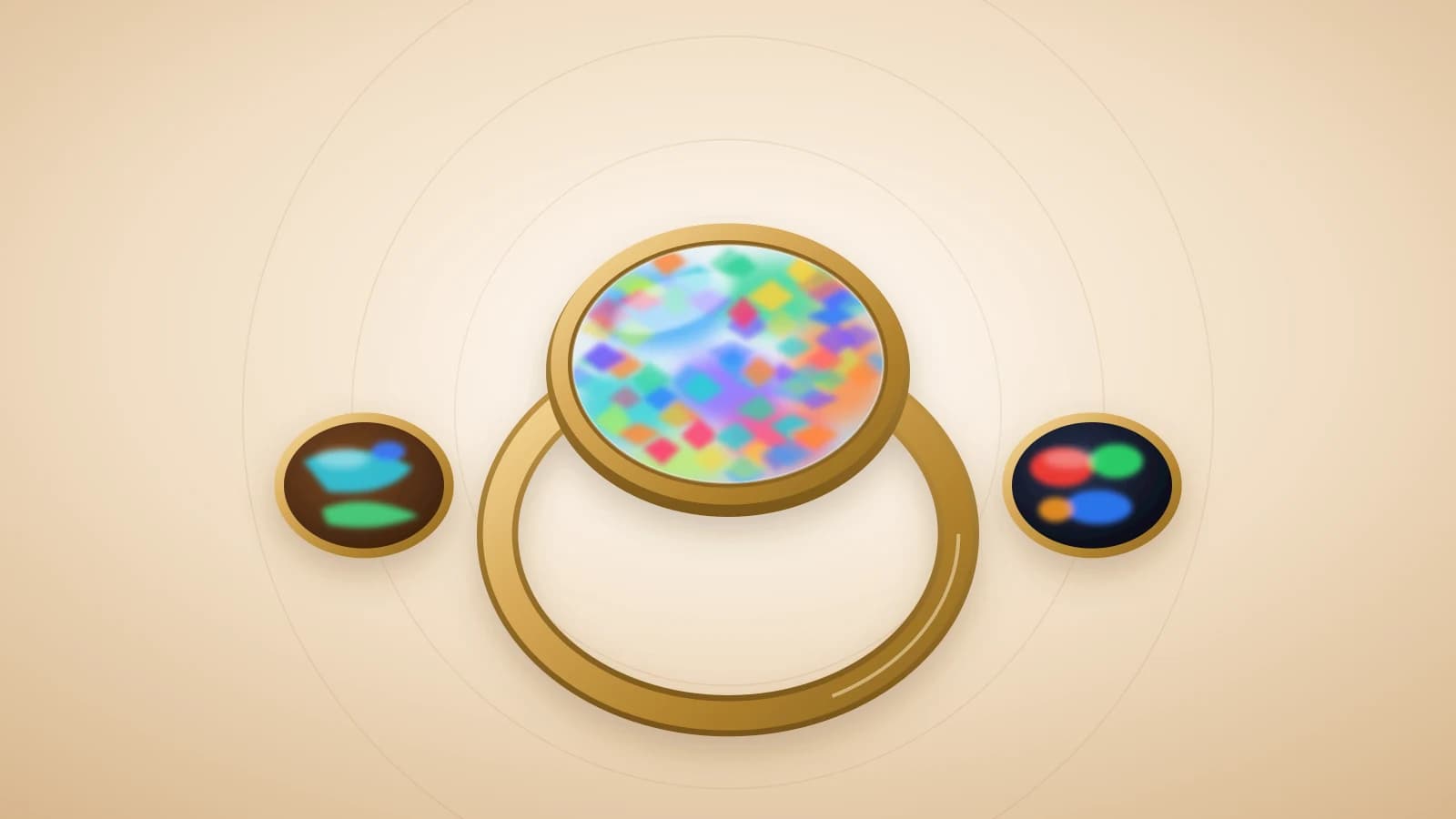
Coloured stones do not behave like gold or diamonds. There is no daily price, no universal grading scale and no liquid dealer market for most of them. What that means at the counter is brutal and simple: a buyer who cannot instantly resell a coloured stone will value it at nothing at all, and will offer you the metal weight for the ring it sits in.
Here is the honest ranking, by birthstone.
Stones that carry genuine resale value. Ruby and sapphire, particularly if unheated and with a laboratory report saying so, and doubly so with a desirable origin such as Burma, Kashmir or Ceylon. Emerald, if it is Colombian and lightly treated, since roughly 95% of emeralds are oiled and the degree matters enormously. Alexandrite, which is genuinely rare and where a strong colour change commands serious money. Paraiba tourmaline. Fine natural spinel, which is rarer than ruby, still priced below it because of an accident of naming, and which many high street buyers cannot identify at all. Jadeite of good quality. Natural pearls, meaning genuinely natural rather than cultured, which are almost always antique and can be worth extraordinary sums.
Stones that will usually be valued at zero or near it. Amethyst, citrine, garnet, peridot, blue topaz, most tourmaline, iolite, and the entire mass market coloured stone category. Not because they are not lovely, but because the rough is abundant and cheap, so a buyer can source a replacement for a few dollars per carat. Your February amethyst ring is worth its gold, plus goodwill.
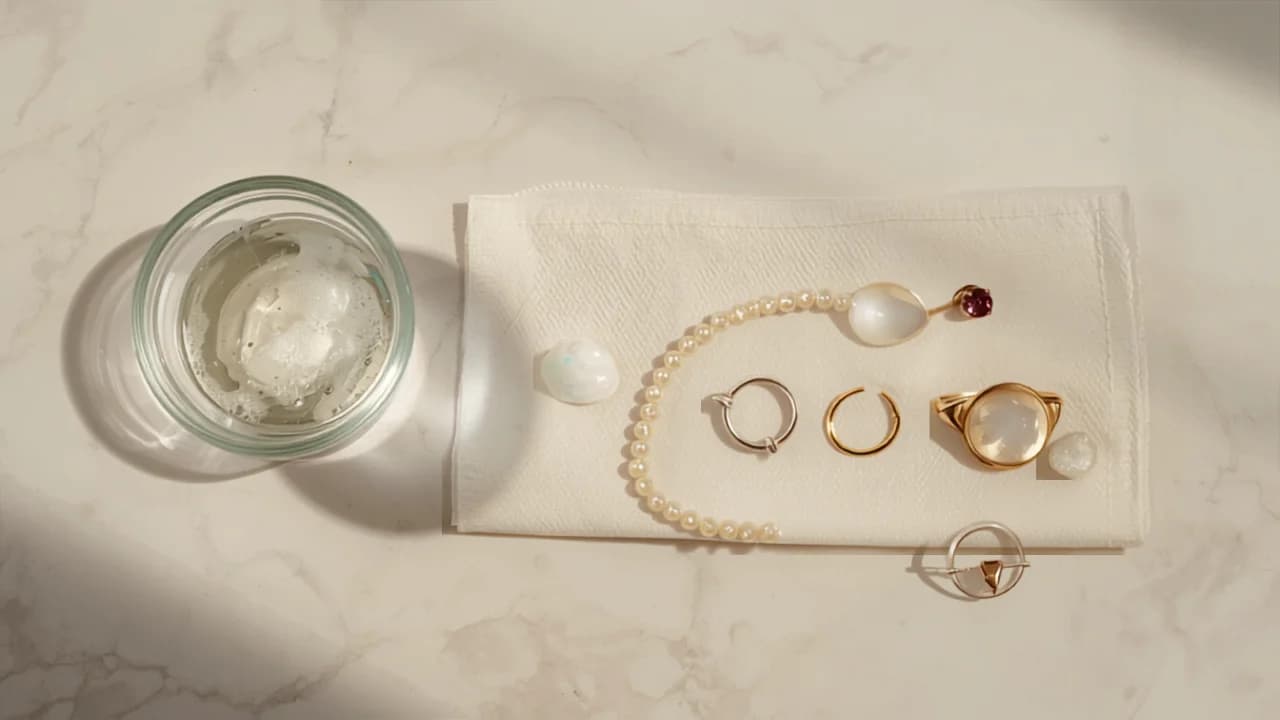
Stones that are worth something but nobody will pay you for it. Opal is the painful case. Fine black opal is genuinely valuable, and yet most buyers will not touch opal because it is fragile, hard to grade and difficult to resell. Moonstone is the same story on a smaller scale. Both need a specialist buyer to see any money at all.
Tanzanite deserves its own warning. It retails well and resells terribly. There is a large gap between the price on a shop ticket and what any dealer will hand you for it, larger than for almost any other stone people own. If you bought tanzanite as an investment, I am sorry.
Cultured pearls resell for a small fraction of retail. A pearl strand that cost $1,500 will often be offered a couple of hundred dollars, and pearls also age, since nacre dulls and silk restringing is a running cost the buyer factors in.
Turquoise is a hidden exception. Most turquoise on the market is stabilised, dyed or howlite pretending, and is worth little. Genuine untreated stone from a closed American mine, Sleeping Beauty being the famous one since it shut in 2012, is a different asset entirely and a specialist will pay for it.
The practical instruction from all of this: if your piece is built around a coloured stone, do not sell it to a general gold buyer. You will be paid for the ring and given the stone for free, whether or not the stone was the reason you bought it. Our gemstone price guide is the sanity check to read before you go.
The pieces worth far more than the counter offer
Some jewelry is quietly worth multiples of what a fast buyer will offer, and the people most likely to sell it cheaply are the people who inherited it and have no idea what it is.
Watch for these before you accept anything.
Signed pieces. Cartier, Van Cleef and Arpels, Tiffany, Bulgari, Boucheron, Georg Jensen, and on the watch side Rolex, Patek and Omega. The signature can be worth more than the materials, and the original box and papers can add a further significant premium. Look for tiny maker's marks inside shanks and on clasps.
Old cut diamonds. Old mine cuts and old European cuts, with their small tables and chunky facets, are graded harshly by modern standards and prized by collectors. A buyer offering you "below modern spec" money for a genuine antique cut is either uninformed or hoping you are.
Anything unheated with a report. Heat treatment is standard and accepted for ruby and sapphire, but an unheated stone of good colour is a different market and can be worth several times its heated equivalent.
Alexandrite, natural pearl, Paraiba and fine spinel. The four things most commonly under recognised at a general counter. If you suspect you have any of them, get an independent identification first. Our gemstone identification tool will not replace a laboratory but it will tell you whether the question is worth asking.
Georgian and Victorian work. Closed back settings, foiled stones, hand cut collets and hairwork mourning pieces have collector markets that scrap value ignores completely. Never let anything genuinely old be melted before a specialist has seen it.
Gold and diamonds are two completely different markets in one ring
People treat "resale value" as a single idea, and it is really two markets glued together, behaving in opposite ways.
Gold is a commodity. It is priced publicly, quoted daily, and a gram of fine gold in your ring is identical to a gram anywhere else. That makes it liquid and honest. It also means there is no negotiation about what it is, only about what percentage of melt a buyer will pay. Gold prices have run high in recent years, which has quietly made a lot of unloved chains worth more than their owners assume.
Diamonds are not a commodity, despite decades of marketing implying they are. Each stone is individual, the wholesale market is a closed trade network, and prices depend on grading nuances you cannot see. That gap between retail price and dealer price is where almost all seller disappointment lives. Our diamond price calculator will get you into the right neighbourhood before you talk to anyone.
And a specific 2026 warning: lab grown diamonds have almost no resale market at all. Wholesale prices for lab grown stones have fallen steeply and continue to fall, many buyers will not take them at any price, and a lab grown centre stone that cost several thousand dollars a few years ago may be offered nothing today. That is not an argument against buying them, since they are a perfectly good way to get a large stone cheaply, and we have written honestly about the lab grown versus natural trade off elsewhere. It is an argument against ever thinking of one as an asset.
Get the paperwork before the offer, not after
The single biggest mistake I see is people getting a valuation after they have already been given a number, which means the number has anchored them.
Do it the other way round.
For a diamond over roughly half a carat, a grading report from a major laboratory is worth having. If there is already one in a drawer somewhere, find it, because a certified stone sells faster and higher than an identical uncertified one.
For any significant coloured stone, a gem laboratory report is more important than an appraisal. It establishes what the stone is and whether it has been treated, which is the fact that swings the value by multiples. An appraisal without it is one person's opinion of an unidentified object.
For estate and probate purposes, understand which type of valuation you are getting, because it changes the number dramatically. An insurance appraisal states retail replacement cost, which is the highest possible figure and not remotely what you will be offered. A fair market value appraisal is the one relevant to selling, and it is often 25% to 50% of the insurance figure. We wrote a full breakdown of that distinction, and of the fees involved, in the guide to what a jewelry appraisal costs. Read it before you pay anyone, because for a modest piece the appraisal can cost more than the sale will yield.
One more practical note: keep the piece insured until the money is in your account. A ring in transit to a mail in buyer, or sitting in a consignment case for four months, is exactly the sort of exposure that people forget about, and our guide to jewelry insurance covers what actually happens in that window.
The counter rules: how not to get ripped off
Most bad outcomes in this market are not fraud. They are ordinary information asymmetry, plus a bit of pressure. These rules remove nearly all of it.
Photograph and weigh everything first. Several angles, hallmarks close up, and a weight from a kitchen scale accurate to a tenth of a gram. This takes ten minutes and gives you an independent record.
Never let the item leave your sight. Legitimate buyers test and weigh in front of you. A piece disappearing into a back room is not automatically sinister, but there is no reason to accept it, so do not.
Do not let anything be melted, cut or dismantled before a price is agreed in writing. This is the one hard rule with no exceptions.
Make them itemise. Ask for the offer broken into metal, centre stone, side stones and any premium for the piece as a whole. A buyer who will not break it down is relying on you not noticing which component they have priced at zero.
Get three offers, from different types of buyer. One jeweller, one specialist, one online platform. It costs you an afternoon and routinely changes the number by a factor of two.
Be visibly willing to walk. The best price improvement I know of is standing up. Nothing about this transaction is urgent unless you make it urgent.
With mail in services, read the return terms before you post. You want insured shipping both ways, documented photography on arrival, a stated timeframe, and free return of your item if you decline the offer. If the return of your own property costs you money, that tells you everything about the business model.
Take identification and expect to show it. Reputable buyers of second hand precious metals are required to record seller details in most places. A buyer who does not want your ID is not doing you a favour.
Selling after a divorce, a death, or a change of heart
Most jewelry does not get sold because someone fancies the cash. It gets sold at difficult moments, which is exactly when people make the worst decisions.
After a divorce. The ring is usually worth less than the emotional weight attached to it, in both directions. Sell it or do not, but do not sell it in the first fortnight. Prices do not move much over a few months and clarity does. If ownership is disputed, settle that before you sell anything, because a sold item is very hard to unwind.
After a death. Take everything to one specialist before anything goes anywhere. Inherited collections are where the underpriced pieces hide: a plain looking brooch with old cut diamonds, a strand of natural pearls sold as costume, a signed piece nobody recognised. Photograph the whole collection first for the family record, since that conversation is easier now than later. Where a valuation is needed for probate or tax, get a fair market value appraisal from a qualified appraiser rather than a buyer's opinion, and take advice from a professional in your jurisdiction, because this article is general information and not tax or legal advice.
Just clearing a drawer. Sort into three piles. Gold by weight goes to a metal buyer. Anything with a real stone or a signature goes to a specialist. Costume and plated goes to a charity shop or a resale app, because the fees and effort will eat any value it has.
What I would actually do, by situation
A plain gold chain, broken earrings, odd bits. Weigh them, check melt value on our gold price calculator, and take them to two local gold buyers. Accept 80% of melt or better. Do not overthink it.
A modern diamond engagement ring. Get one local jeweller quote for a baseline, then run it through a specialist online diamond buyer for competitive bidding. Expect 20% to 40% of the original retail. Find the grading report before you start.
A lab grown diamond ring. Keep it, gift it or wear it. The resale market will disappoint you badly and the metal is most of what you will be offered.
Anything built around a coloured birthstone. Identify the stone properly first. If it is amethyst, citrine, garnet, peridot or blue topaz, accept that you are selling a gold ring and price it accordingly. If it might be unheated sapphire, alexandrite, Paraiba or fine spinel, spend the money on a laboratory report before you accept any offer at all. Our ranking of the most expensive birthstones is a quick way to work out which camp you are in.
An inherited collection. One specialist appointment, nothing melted, nothing sold in the first month.
A signed or antique piece. Regional auction house, or a specialist dealer in that period. Be patient. This is where the difference between a fast sale and a good sale is measured in multiples rather than percentages.
Something you are not sure about. Do nothing yet. Jewelry keeps. The cost of waiting three weeks and getting an identification is close to zero, and the cost of finding out afterwards what you handed over for melt value is not.
If there is a single thread running through everything on this site about what jewellery costs, whether that is resizing, appraising, insuring or selling, it is this. The number you are quoted is the easy part to find and almost never the part that decides the outcome. What decides the outcome is whether anybody in the room, including you, actually knows what the thing is.