Moonstone Meaning, Colours, and Why It Glows: The Complete Birthstone Guide
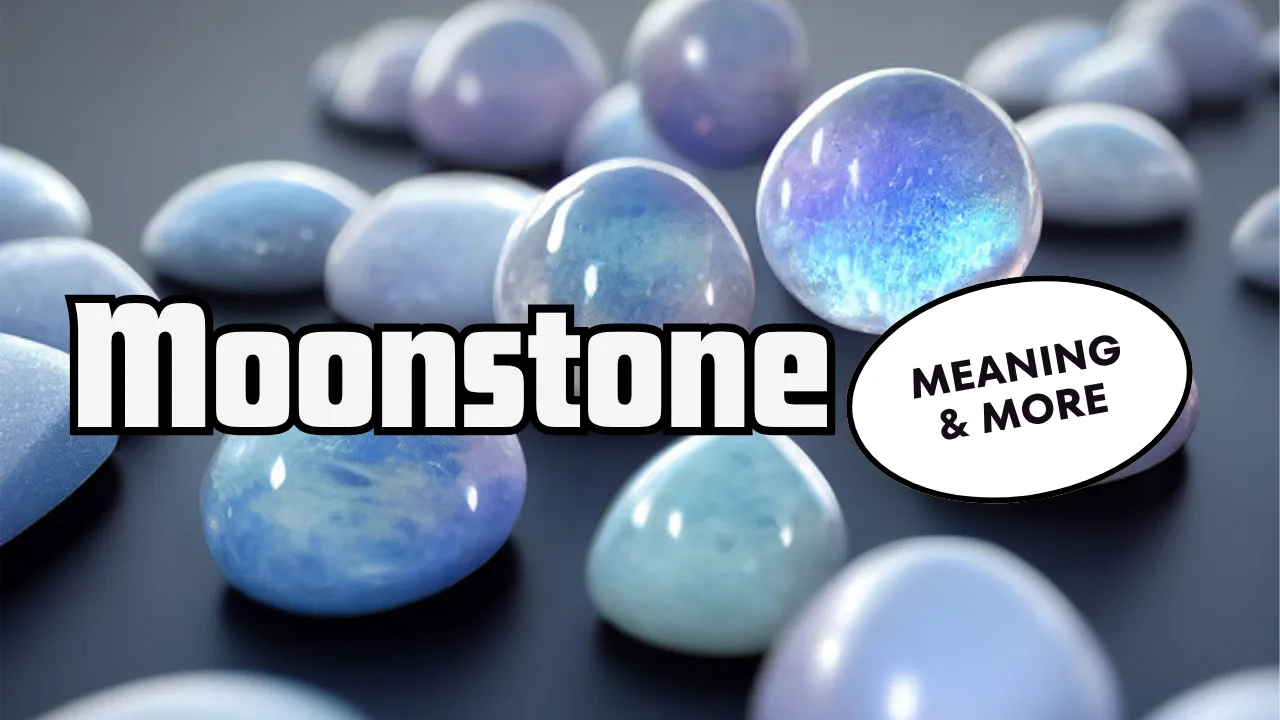
Pick up a good moonstone and tilt it under a lamp. A soft blue light seems to float just below the surface and slide across the stone as you move it, like moonlight caught on water. No other gem in moonstone's price bracket does this. That floating glow is the whole reason the stone has been treasured for thousands of years, and it is also the reason most cheap "moonstone" you see online is a fake that cannot do it at all.
Moonstone is one of June's birthstones, and in our view it is the most underrated one on the entire calendar. Pearl gets the attention and alexandrite gets the price tag, but moonstone quietly gives you a genuine optical phenomenon for the cost of a nice dinner. The catch is that the market is full of imitations, the colour names are a mess, and the single most famous variety, rainbow moonstone, is not technically moonstone at all.
So this is the complete, honest version. What moonstone actually is, why it glows, what it has meant to people across history, the colours and types that matter, what fine moonstone is really worth, how to catch the glass fakes in a few seconds, and how it stacks up against opal, the other glowing gem people constantly confuse it with. No mysticism dressed up as fact, just a clear account of a stone we genuinely love.
Moonstone Meaning in One Sentence
If you only want the quick answer: moonstone has long been a symbol of intuition, new beginnings, and feminine or lunar energy, because its drifting glow reminded people of the changing moon. It was carried as a traveller's stone for safe journeys, especially at night, and it is tied to the moon in nearly every culture that has worked it, from ancient Rome to India.
That is the meaning in a line. The longer story of where that meaning comes from is genuinely interesting, and we will get to it. But first it helps to understand what the stone physically is, because the glow and the symbolism are really the same thing seen from two angles.
What Moonstone Actually Is
Moonstone is a variety of feldspar, which is the most common group of minerals in the Earth's crust. That surprises people, because moonstone feels special and feldspar sounds like something in a kitchen worktop. But the magic is not in the chemistry, it is in the structure.
A gem-quality moonstone is made of two different feldspars, usually orthoclase and albite, that grew together in extremely thin alternating layers as the crystal cooled. Those layers are so fine, thinner than the wavelength of light, that when light enters the stone it scatters between them and bounces back as a soft, glowing sheen. The body of the stone might be colourless, milky white, grey, or peach, but the glow sitting on top of it is the part that matters.
Two practical facts follow from this, and the listings rarely tell you either. First, moonstone sits at only 6 to 6.5 on the Mohs hardness scale, which is on the soft side for a stone you wear daily. Second, and more importantly, it has perfect cleavage, the same built-in plane of weakness we warned about with topaz. A sharp knock in the wrong direction can chip or split it cleanly. We will come back to what that means for wearing it, because it changes which jewellery makes sense.
Why Moonstone Glows: Adularescence Explained
The glow has a name: adularescence. It comes from Adula, a region in the Swiss Alps where a clear feldspar called adularia was found, and it describes that billowy blue or white light that seems to float inside the stone and move as you tilt it.
Here is the part worth understanding, because it is also the best fake test you have. Real adularescence is not a colour painted on the stone or a shimmer sitting on the surface. It is light scattering off those microscopic internal layers, so the glow appears to hover at a depth below the surface and it shifts position as your viewing angle changes. Tilt the stone and the blue sheen rolls across it like a searchlight. A flat, static shimmer that does not move is the tell of glass.
The finest effect is a strong blue adularescence over a near-colourless, transparent body. That combination, classic Sri Lankan "blue sheen" moonstone, is the expensive one and it is getting genuinely scarce as the old deposits run down. The more common look is a white or silvery sheen over a cloudier, milkier body, which is pretty, affordable, and everywhere. Both are real moonstone. The difference is the clarity of the body and the colour and strength of the glow.
Moonstone Meaning and Symbolism Through History
Almost every culture that found moonstone tied it to the moon, which tells you how universally that drifting glow read as lunar to human eyes.
The Romans believed moonstone was made of frozen moonlight and linked it to their lunar deities. In Hindu mythology it was said to be formed from solidified moonbeams, and in parts of India it is still considered a sacred stone, traditionally laid out on a yellow cloth to sell because yellow is a sacred colour. Across many traditions it was a traveller's stone, given to people setting out on journeys, especially journeys by night or by sea, as protection and to bring safe passage home.
The recurring themes are intuition, dreams, emotional balance, fresh starts, and feminine or lunar energy. The "new beginnings" association is the one you will see most in modern jewellery marketing, which is why moonstone turns up so often in pieces given for weddings, new chapters, and milestones. We will be straight with you here: these are cultural and symbolic meanings, not physical properties of the stone. We find the history fascinating and we think it adds real charm to a piece, but moonstone will not balance your hormones or guarantee a safe flight. If you want the deeper history of how gems picked up these protective roles, our piece on talismans and amulets in gemstone lore traces where a lot of it began.
Is Moonstone a Birthstone? Yes, and It Is June's
Moonstone is one of the birthstones for June, alongside pearl and alexandrite. It is sometimes called the traditional or alternative June stone, and it has long been the popular June birthstone in the United Kingdom in particular.
A quick bit of honesty on the official lists, because this trips people up. The modern American birthstone list, drawn up in 1912 and updated since, headlines pearl and alexandrite for June, with moonstone widely accepted as an alternative. So if a strict chart only shows you pearl and alexandrite, that is why. It does not make a June moonstone any less legitimate; it simply did not make the headline list. Any jeweller will happily sell you a moonstone as a June piece, and you would be standing on centuries of tradition by choosing it.
Moonstone is also strongly associated with the zodiac sign Cancer, the sign ruled by the moon, which overlaps neatly with late June. If you were born in June and the pearl-or-alexandrite choice never quite clicked, this is your third door, and it is the cheapest of the three by a wide margin. For the full month overview, our June birthstone hub covers all three stones, and our guide to choosing between pearl and alexandrite handles the other two head to head.
Moonstone Colours and Types
This is where the market gets confusing, so let us sort it out plainly. Moonstone is sold under a pile of colour and trade names, and one of the most popular is not even the same mineral.
- Blue sheen moonstone is the classic and the most valuable. A transparent, near-colourless body with a vivid blue glow floating across it. Historically the best came from Sri Lanka, and fine material is now scarce and priced accordingly.
- White moonstone is the everyday version: a milky, semi-translucent body with a white or silvery sheen. Affordable, widely available, and the one you will see in most high-street pieces.
- Peach or cream moonstone has a warm body colour with a softer, often silvery glow. It has become fashionable and pairs beautifully with rose and yellow gold.
- Grey moonstone, sometimes sold as "new moon" moonstone, has a smoky, semi-transparent body and a cooler look that suits modern settings.
- Rainbow moonstone is the famous one, and here is the honest disclosure: it is not really moonstone. It is labradorite, a different feldspar, with a colourless body and a multicoloured sheen (blues, with flashes of gold, peach, and green). It is genuinely beautiful and the trade name is universal, so we are not telling you to avoid it. We are telling you to know what you are buying, because "rainbow moonstone" and true blue sheen moonstone are different stones at different prices.
Our take: do not get hung up on the names. Judge the stone in front of you. Look at the clarity of the body and the strength and colour of the glow as you tilt it, and buy the one that actually moves your eye. A clean body with a strong floating sheen is worth more than any romantic label. For how moonstone fits into the wider palette of monthly stones, our birthstone colours by month guide lays the whole calendar out.
How Much Is Moonstone Worth?
Most moonstone is inexpensive, and that is exactly why we like it. You can buy a perfectly lovely white moonstone cabochon for a few dollars per carat, and attractive finished jewellery for very modest money. For a gem that performs a real optical trick, that is remarkable value, and it is the main reason moonstone deserves more attention than it gets.
The exception, and it is a big one, is fine blue sheen moonstone. A transparent, colourless stone with a strong, clean blue adularescence and no distracting cracks can run into hundreds of dollars per carat, and the very best Sri Lankan material more. The price is driven by three things: how transparent and clean the body is, how vivid and blue the glow is, and how well the cabochon is cut so that the sheen sits centred and rolls evenly across the dome.
So the honest summary is a split, much like we found with topaz. The word "moonstone" covers both one of the best-value gems on the market and a genuinely collectible rarity, and the gap between them is enormous. If a seller is charging a serious premium, you should be looking at a clear body and a strong blue floating glow to justify it. If you just want the look for everyday wear, the cheap white material delivers most of the charm for a tiny fraction of the cost. Moonstone does not crack the rankings in our most expensive birthstones guide, and for once that is good news for your wallet.
Real Moonstone vs Fake: The Opalite Trap
This is the section that will save you money, because the moonstone market is flooded with imitations and one of them is everywhere.
The big one is opalite. Opalite is man-made glass (or sometimes resin), milky and slightly bluish, and it is sold constantly as "moonstone," "sea opal," or "opalite moonstone." It is cheap to make, it looks vaguely glowy in photos, and it fools a lot of first-time buyers. It is not a gemstone at all. Here is how to catch it and the other fakes:
- Watch the glow move. Real moonstone's blue or white sheen floats below the surface and shifts as you tilt the stone. Opalite has a flat, uniform glow that sits on the surface and does not roll or change position when you move it. This is the single best test.
- Check it against light. Opalite typically glows a warm orange or amber when you hold it up with light coming through it, and turns bluish in reflected light, the same everywhere across the piece. Real moonstone does not flip colour like that.
- Look for tiny inclusions. Natural moonstone often contains small internal cracks, sometimes called "centipede" inclusions because of their stacked, leg-like look. Flawless, perfectly clean, identical "moonstones" sold in bulk are a red flag for glass.
- Be suspicious of perfect bright colour and bulk pricing. Rows of identical, intensely blue, bargain "moonstone" beads are almost always opalite or dyed glass.
None of this means cheap moonstone is fake. Plenty of genuine, inexpensive white moonstone is honestly sold. The point is to make sure you are paying for moonstone and getting moonstone, not paying a gemstone price for factory glass. If you want the wider principle on natural versus made-in-a-lab versus outright imitation, our guide to lab-grown versus natural birthstones draws the lines clearly, and note that moonstone's problem is imitation glass, not honest synthetics.
Moonstone vs Opal: Two Different Glows
People mix these two up constantly, and you can see why. Both are pale, both seem to glow from within, and both feel a little otherworldly. But they are completely different stones with completely different kinds of glow, and once you know the difference you will never confuse them again.
Moonstone is feldspar, and its glow is adularescence: a single, soft, floating sheen, usually blue or white, that drifts across the stone as one body of light. Think of it as moonlight on water, one moving glow.
Opal is hydrated silica, and its glow is play-of-colour: distinct flashes and flecks of spectral colours, reds, greens, blues, oranges, that flash on and off as you move it. Think of it as confetti or fireworks, many separate sparks of colour. That play-of-colour comes from light diffracting through a microscopic grid of silica spheres, an entirely different mechanism from moonstone's layered scattering.
A few more practical differences worth knowing:
- Birth month. Moonstone is a June stone. Opal is the October birthstone. So if you are buying for a birthday, they are not interchangeable.
- Durability. Both are soft (opal is about 5.5 to 6.5 Mohs, moonstone 6 to 6.5). Opal can also "craze," meaning it can dry out and develop fine surface cracks over time, which moonstone does not do. Moonstone's weakness is its cleavage and the resulting risk of chipping. Neither is a knock-about stone.
- The look. If you want one calm, drifting blue glow, that is moonstone. If you want a flickering rainbow of colour flashes, that is opal.
Our opinion: they are not competitors so much as two answers to two different moods. Moonstone is serene and lunar; opal is playful and electric. If you are torn, our deep dives into opal colours and how valuable an opal really is will tell you whether opal is the one calling you, and the October birthstone guide covers it in full.
How To Wear Moonstone Without Wrecking It
Because moonstone is soft and has cleavage, where you wear it matters more than with a tougher stone. We would not talk you out of a moonstone ring, but we would talk you into being sensible about it.
Earrings and pendants are the safe, brilliant choice. They hang away from impact, they catch the light beautifully, and the glow is shown off best when the stone can move a little. This is where moonstone truly shines and where we steer most buyers.
Rings are fine with the right setting and the right expectations. Favour a bezel setting, which wraps a metal rim around the stone and protects the vulnerable edges, over high prongs that leave it exposed. Treat a moonstone ring as a piece you take off for the gym, the garden, and the washing up. It is not the stone for a single everyday ring that takes constant knocks.
Cleaning is simple and gentle. Warm water, mild soap, a soft cloth. Never use an ultrasonic or steam cleaner, because the vibration and heat can worsen those internal cleavage cracks. Keep it away from hard knocks and store it apart from harder gems so they do not scratch it.
Do this and a moonstone will last beautifully for decades. Ignore it, wear it as a daily knock-about ring, and you will eventually find a chip along that cleavage plane. The stone is not fragile in a vase-on-a-shelf sense, it just rewards a little common sense.
Our Honest Take on Moonstone
We will say plainly what we hinted at up top: moonstone is the most underrated birthstone we cover. It gives you a real, named optical phenomenon, adularescence, for pocket money, and a fine blue sheen stone is one of the quietly great looks in all of jewellery. For June babies who never warmed to pearl or could not justify alexandrite, it is the obvious and far cheaper third option, and almost nobody mentions it.
The two things to keep your head about are the fakes and the names. Buy from a seller who lets you see the glow move, remember that "rainbow moonstone" is labradorite, and do not pay a blue-sheen premium for milky white material. Get those right and you are buying one of the best value-for-wonder gems on the market.
If we were buying one piece, we would pick a pair of moonstone earrings or a simple bezel-set pendant in a body clean enough to show a strong floating sheen, and we would happily wear it for the rest of our lives.
Quick Answers
What does moonstone mean? It symbolises intuition, new beginnings, and feminine or lunar energy, and it was historically carried as a traveller's stone for safe journeys. These are cultural and symbolic meanings, not physical properties.
What birthstone is moonstone? Moonstone is a birthstone for June, alongside pearl and alexandrite, and is especially popular as the June stone in the United Kingdom. It is also linked to the zodiac sign Cancer.
Why does moonstone glow? The glow is called adularescence. Light scatters off microscopically thin alternating layers of two feldspars inside the stone, producing a soft blue or white sheen that floats and moves as you tilt it.
Is rainbow moonstone real moonstone? Not strictly. Rainbow moonstone is labradorite, a related feldspar, sold under the moonstone trade name. It is a real, attractive gem, just a different stone from true blue sheen moonstone.
How can I tell real moonstone from fake? Tilt it and watch the glow. Real moonstone's sheen floats below the surface and moves with the angle; opalite glass has a flat glow that does not move and often turns orange in transmitted light. Natural moonstone also tends to have tiny internal cracks.
Is moonstone valuable? Most moonstone is inexpensive and excellent value. Fine, transparent blue sheen moonstone is the exception and can be genuinely valuable and increasingly scarce.
What is the difference between moonstone and opal? Moonstone (feldspar) shows one drifting blue or white sheen called adularescence. Opal (silica) shows flashing flecks of rainbow colour called play-of-colour. Moonstone is June's birthstone; opal is October's.
Sources and Further Reading
- George Frederick Kunz, The Curious Lore of Precious Stones, 1913, for the historical lore and the lunar and traveller's-stone traditions. Our summary of the Kunz book gives the overview first.
- For how the modern birthstone list was drawn up and where moonstone sits within it, see birthstone origins and the 1912 list.
- The full June birthstone hub covers pearl, alexandrite, and moonstone together, and the birthstone chart shows every month at a glance.
Moonstone asks almost nothing of your budget and gives back a glow that genuinely stops people in their tracks. For June, that is a quiet bargain, and one we think far more people should know about.
Wondering how it stacks up against every other gem? Compare values in our gemstone price guide and toughness on the sortable Mohs hardness table.