Opal: Meaning, Colours, and the Bad-Luck Myth a Novel Invented
Every gem carries some folklore, but opal is the only one whose meaning got reversed by a work of fiction, and we can name the book.
For roughly two thousand years opal was the lucky stone, the one Roman senators would not part with and medieval writers credited with the powers of every other gem combined. Then in 1829 a bestselling novel used an opal as a plot device, Europe took the hint entirely too literally, and the most optimistic stone on the birthstone calendar spent the next two centuries dogged by a superstition it never earned.
This is the honest, complete guide to October's birthstone. What opal actually means and where the symbolism comes from, why the bad-luck story is a traceable smear rather than ancient wisdom, what an opal physically is (the answer involves water, and explains almost everything else about the stone), why it flashes colour when no other gem does, the types worth knowing from white to black to boulder to fire, the two modern buying traps, and how to care for a stone that is tougher than its reputation but softer than most of its neighbours.
Opal Meaning in One Sentence
If you only want the quick answer: opal is the stone of hope, purity, love, and creativity, prized since Roman times as the luckiest of gems because it carries every colour of the rainbow, and every virtue those colours stand for, in a single stone.
That all-colours idea is the spine of opal symbolism. Pliny the Elder, writing in the first century, described opal as combining the fire of ruby, the purple of amethyst, and the sea-green of emerald, all glittering together. Ancient and medieval writers reasoned that a stone showing the colours of every gem must hold the powers of every gem, which made opal less a single talisman and more a whole charm bracelet in one cabochon. Hope and purity stuck as its core meanings, with love and inspiration close behind.
The word itself likely traces from the Sanskrit upala, simply "precious stone," through the Greek opallios and Latin opalus. When your name just means "gem," you were clearly never meant to be the unlucky one.
What Is Opal? (The Stone That Is Part Water)
Here is the fact that explains nearly everything about opal: it is hardened silica gel, and between about 3 and 21 percent of its weight is water. Most gem opal sits in the 6 to 10 percent range.
Opal formed when silica-rich water seeped into cracks and voids in rock, then slowly dried and solidified over millions of years. It never grew a crystal structure at all. Where quartz, sapphire, and diamond are orderly crystal lattices, opal is amorphous, a solidified gel, which is why gemologists class it as a mineraloid rather than a true mineral. October's birthstone is, in a real sense, fossilised water.
That origin story sets its personality. The water content makes opal lighter and softer than most gems, at roughly 5.5 to 6.5 on the Mohs scale, and it is why extreme dryness or sudden heat can, in some stones, cause the fine cracking called crazing. It is also why opal loves gentle treatment and why we will spend a section on care later. You can see how that hardness compares to every other stone on our sortable Mohs hardness table.
Why Opal Plays With Light Like Nothing Else
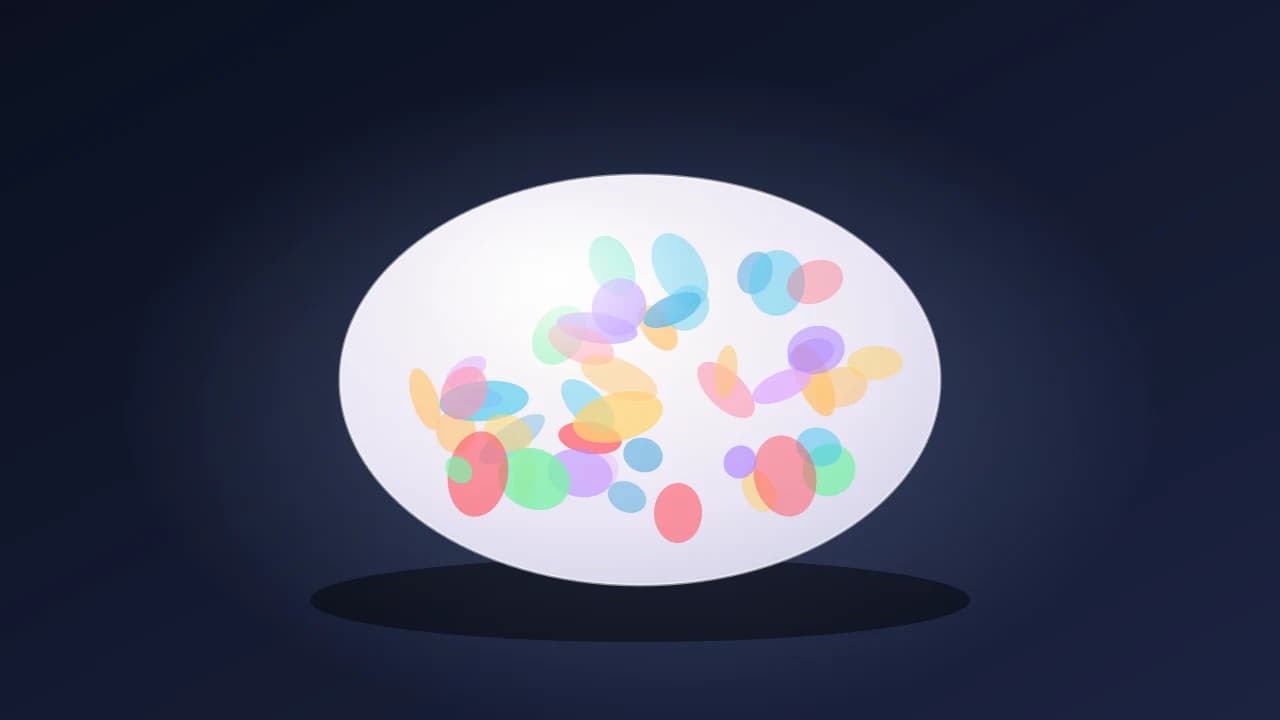
The colour show has a proper name, play-of-colour, and opal is the only gem that does it: patches of pure spectral colour that flash, roll, and vanish as the stone moves.
Nobody knew why until the 1960s, when Australian researchers finally put opal under an electron microscope. The answer turned out to be beautifully simple. Precious opal is built from millions of tiny silica spheres packed in orderly rows, and when the spheres are uniform and the right size (a few hundred nanometres), the gaps between them split white light into pure colours, the same physics that puts a rainbow on the back of a CD. Sphere size sets the colour: smaller spheres flash blue and green, larger ones flash orange and red. Because red needs the largest, rarest sphere size, stones with strong red flash are the most valuable, and an opal showing every colour including red is the jackpot.
Common opal, called potch, has the same ingredients with disorderly spheres, so it shows a single milky colour with no fire. The dividing line between a five-dollar stone and a five-figure one is literally microscopic tidiness. We covered the full palette, from white to blue to pink, in our dedicated guide to opal colours if you want the deep dive.
Is Opal Bad Luck? The Smear With a Publication Date
Now the section this post exists for, because "isn't opal unlucky?" is still the first question October babies get asked.
Start with the long record. To the Romans, opal was the symbol of hope and purity and the luckiest gem a person could own. Pliny tells the story of the senator Nonius, who owned an opal the size of a hazelnut that Mark Antony wanted for Cleopatra. Rather than sell it, Nonius chose exile and left Rome with little more than the stone. People do not go into exile for an unlucky gem. Through the Middle Ages opal stayed a favourite, credited with the combined virtues of every gem whose colour it showed. Blonde women wore it to protect their hair's colour. Writers called it the queen of gems.
Then came 1829 and Sir Walter Scott's novel Anne of Geierstein. In it, the Lady Hermione wears an opal that burns with supernatural fire, loses its brilliance when holy water touches it, and shortly afterwards she is reduced to ashes. Scott never wrote "opals are unlucky," but the reading public took the plot device and ran. The story goes that within a year opal prices in parts of Europe had collapsed by half, and jewellers spent decades unable to move them. Gem dealers with rival stones to sell, diamond traders prominent among them, saw no reason to correct the record and every reason to repeat it. A later legend about the Spanish king Alfonso XII, whose gift of an opal ring was followed by a string of family deaths, gets wheeled out as confirmation, though his relatives died during a cholera epidemic that killed over a hundred thousand Spaniards, opal ring or not.
The rehabilitation came from the top. Queen Victoria adored opals, wore them throughout her reign, and gave them as wedding presents to her daughters, in part because Prince Albert loved them and in part to support the newly discovered Australian fields. When the finest opals ever seen started coming out of Australia in the late 1800s, the market recovered, and the "cursed" gem quietly became a luxury again.
So the honest answer: opal's bad luck is not ancient wisdom. It is a two-century-old rumour started by a novel and amplified by competitors, pushing against two thousand years of the stone meaning exactly the opposite. We wrote more about how gem superstitions actually spread in our guide to talismans and amulets. Wear the opal.
The Types of Opal Worth Knowing
Opal is a family, and the type matters more to price than almost anything else.
- White opal is the classic: light body, soft play-of-colour. It is the most common precious opal, the affordable entry point, and most of what you will see in high-street jewellery.
- Black opal is the king. A dark body tone makes the colour flashes blaze by contrast, and the classic source is Lightning Ridge in New South Wales. Fine black opal is one of the most valuable gems on Earth, which surprises people who think of opal as cheap. It out-prices diamond per carat at the top end, a point we ranked in our most expensive birthstones piece.
- Boulder opal comes from Queensland, thin veins of precious opal left attached to their ironstone host rock. The dark backing gives black-opal drama at a fraction of the price, and each stone's shape is one of a kind.
- Crystal opal is transparent to translucent with colour floating inside the body, ghostly and often spectacular.
- Fire opal is the odd one out, a Mexican specialty defined by its body colour, glowing orange to red, rather than by play-of-colour, which it often lacks entirely. It is usually faceted like a normal gem rather than cut as a cabochon.
- Common opal (potch) shows no play-of-colour: pink, blue, green, milky. Pretty, honest, and cheap.
For what each type should cost, our how valuable is an opal guide breaks down the price ladder in detail, and the wider gemstone price guide puts opal next to everything else.
Where Opal Comes From
For most of modern history the answer was simply Australia, which at its peak supplied around 95 percent of the world's precious opal and still dominates the top of the market. The names on the map are half the romance: Lightning Ridge for black opal, Coober Pedy (where summer heat drives miners to live underground) for white, Queensland's boulder country for ironstone-backed stones. Opal is, fittingly, Australia's national gemstone.
The big modern shake-up came from Ethiopia. Deposits found in Wollo province in 2008 flooded the market with bright, often gorgeous, and much cheaper opal. Most of it is hydrophane, a porous type that drinks water like a sponge. Soak an Ethiopian opal and it can temporarily go glassy and lose its play-of-colour until it dries out over days or weeks. That porosity also makes it easy to dye and smoke-treat, which brings us to the traps.
Mexico owns the fire opal story, and smaller amounts of precious opal come from Brazil, the United States, and elsewhere. But if a seller says "Australian solid" they are naming the premium product, and the price will say so too.
Real vs Fake: The Three Opal Traps
Opal has one advantage over almost every gem we cover: its play-of-colour is nearly impossible to counterfeit convincingly. But there are three specific things to check.
Trap one: lab-created opal. Gilson-type synthetic opal has existed since the 1970s, and it is genuinely pretty. The tells are a pattern that looks too organised, colour patches in columns like lizard skin or chicken wire when viewed from the side, and a price too good to be true. It is legitimate when sold as "lab-created," and our general rule from the lab-grown versus natural birthstones guide applies: the material is fine, paying natural prices for it is not.
Trap two: doublets and triplets. These are real but thin. A doublet is a slice of genuine opal glued to a dark backing (the dark base mimics black opal); a triplet adds a clear dome on top. Nothing dishonest about either at doublet prices, but a doublet sold as solid black opal is a several-thousand-percent markup on glue. The test takes five seconds: look at the stone from the side. Glued layers show as straight, suspiciously neat lines. A stone set in jewellery with a closed back that hides the side view deserves a direct question.
Trap three: treated and dyed hydrophane. Ethiopian hydrophane's porosity means it can be smoke-treated to fake a black body tone or dyed shocking purple and blue. Vivid purple "opal" at bargain prices is dyed, full stop. Ask two questions in writing: is it natural, and is it treated? A trustworthy seller answers both without blinking.
And a bonus non-trap that fools people in the other direction: opalite, the man-made milky glass with a blue glow sold in crystal shops, contains no opal at all despite the name. It is the same glass impostor we flagged in our moonstone guide, and it fakes both stones equally happily.
Hardness, Water, and Care: Tougher Than Its Reputation, Softer Than Its Neighbours
The bad-luck myth survives partly because opal genuinely does need gentler handling than a sapphire, and every cracked stone feeds the legend. So here is the honest care picture.
At 5.5 to 6.5 Mohs, opal is roughly as scratchable as glass. It will pick up scuffs in a daily-wear ring stacked against harder stones, and a hard knock can chip it. None of this makes it unwearable; it makes it a stone for slightly considered wear. Pendants and earrings are carefree homes. For rings, choose a bezel or a recessed setting, and make opal jewellery the last thing on and first thing off.
On water, the rules depend on what you own, which is why the FAQ answers online contradict each other. A solid natural opal is fine in water; despite the internet's nerves, water does not harm it. Doublets and triplets should stay dry, because prolonged soaking can cloud them or lift the glue. Ethiopian hydrophane will not be damaged by a splash but can drink water and sulk, colourless, for days, so keep it out of the washing-up too. All opals dislike sudden heat, prolonged desert-dry storage (a safe-deposit box for years, for example), ultrasonic cleaners, and harsh chemicals. Warm soapy water and a soft cloth do everything you need.
One more honest note: a small minority of opals craze, developing fine internal cracks as they dry, sometimes years after cutting. Reputable dealers cure rough slowly and stand behind their stones, which is one more reason to buy opal from someone who specialises in it.
Opal as the October Birthstone
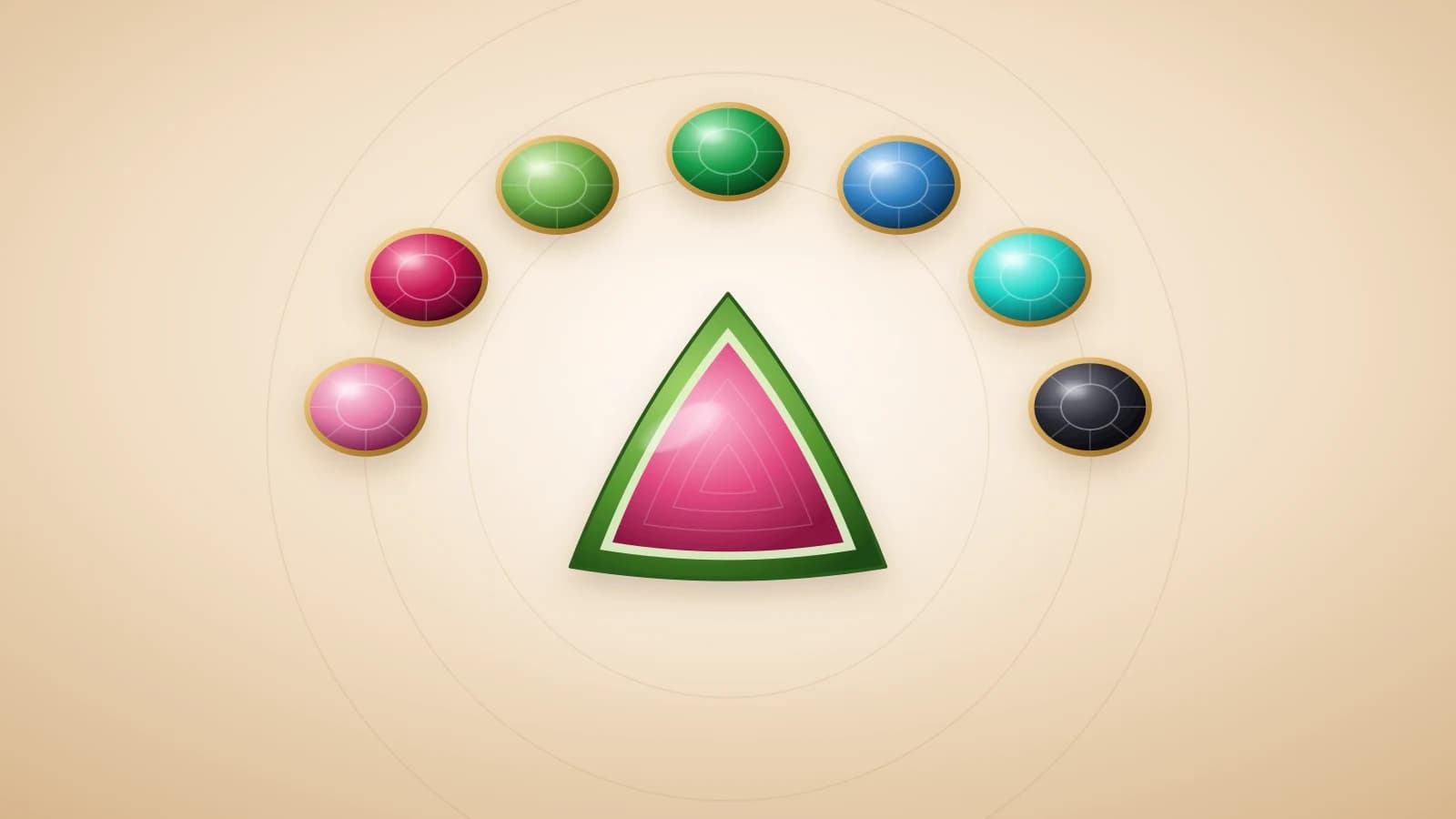
Opal is the traditional birthstone for October and has held the month through every version of the list, joined by tourmaline as the modern addition. If you have ever wondered why October gets two stones, we cover the 1912 and 1952 list politics on the October birthstone pillar, along with tourmaline's own claim to the month.
October babies also get the best comeback in the birthstone calendar: your stone was considered the luckiest in the world for twenty centuries, and the "unlucky" version has a publication date. Opal is also the 14th wedding anniversary gem, and because its glow gets confused with June's moonstone surprisingly often, we wrote a full moonstone versus opal comparison covering the one-sheen-versus-many-sparks test.
How to Buy an Opal Without Regrets
Five rules cover almost everything:
- Buy play-of-colour, not size. A small stone with vivid multi-colour fire beats a large one with weak flash every time. Red flash carries the premium; a stone showing red among its colours is the rarer article.
- Check the body tone. The darker the body, the more the colours pop and the higher the price class: black beats boulder beats white, all else equal.
- Prefer solid stones for anything sentimental. Doublets and triplets are honest budget options, but they are not heirlooms. Check the side view for glue lines.
- Ask about origin and treatment in writing. "Natural solid Australian opal, untreated" is a sentence a good dealer will happily put on the receipt. For Ethiopian stones, expect hydrophane behaviour and pay hydrophane prices.
- View it in more than one light. Opal performs differently under a jeweller's spotlight and a grey sky. A good stone stays alive in ordinary daylight; a weak one only wakes up under the shop lamp.
Spend on the stone's fire rather than its carats, set it protectively, and an opal will outlast the superstition by another two thousand years.
Sources and Further Reading
- Pliny the Elder, Natural History, Book 37, on opalus and the senator Nonius.
- George Frederick Kunz, The Curious Lore of Precious Stones (1913), on opal's reversal of fortune in the nineteenth century. Scanned PDF: Internet Archive. Our overview of the book is here.
- J. V. Sanders' CSIRO electron-microscope work in the 1960s, which first explained play-of-colour via ordered silica spheres.
Wondering how opal stacks up against every other gem? Compare values in our gemstone price guide and toughness on the sortable Mohs hardness table.