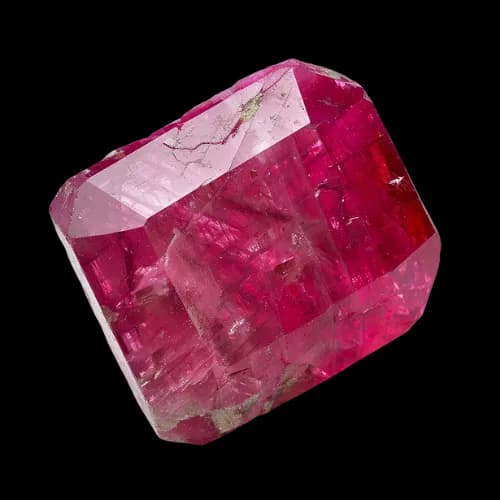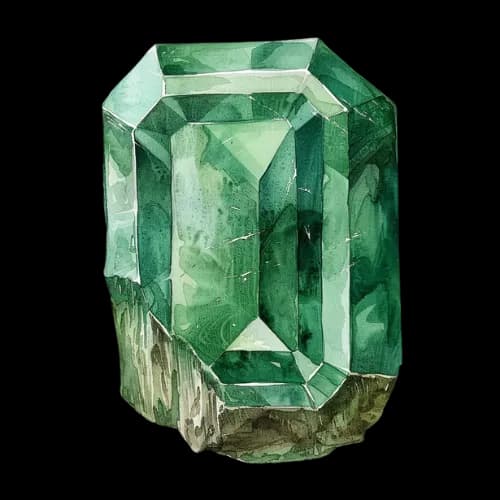
The same stone could tell an ancient priest the future, serve a medieval physician as a prescription, and guard a Renaissance noble against poison at dinner. That is the territory of George Frederick Kunz's 1913 classic "The Curious Lore of Precious Stones", a book about what people have believed gems could do, written by a man with the standing to take those beliefs seriously without swallowing them whole. Kunz dedicated the work to J. Pierpont Morgan, and across its chapters he documents how precious stones shaped human culture, religion, and superstition, with names, dates, and sources attached. This summary walks through the book's major claims so you can decide whether the full text deserves a place on your shelf. We think it does.
Want the original text? Read the scanned PDF of Kunz's book on the Internet Archive: The Curious Lore of Precious Stones (1913): PDF
The Author and His Mission
Kunz had the best seat in the house. As the leading gem expert for Tiffany & Company and curator of precious stone collections for major museums, he handled some of the finest gems in the world and heard the stories that traveled with them. The book distills 25 years of research, draws on specimens from the Morgan Collection at the American Museum of Natural History, and remains the most comprehensive study of gemstone folklore ever assembled.
What separates it from a pile of old wives' tales is method. Kunz does not simply repeat the legends. He traces each belief to its sources and explains what cultural work it was doing, which is the difference between collecting superstitions and understanding them.
The Deep Roots of Gemstone Superstition
Kunz opens with the question sitting under the whole subject: why have humans always attributed supernatural powers to stones? His answer begins with permanence rather than beauty. Flowers fade and seasons turn, but the ruby set into an ancient crown shines exactly as it did the day it was cut. To early observers, that durability read as immortality, and immortal things read as divine.
The book's more startling point is that medieval scholars did not debate whether gems had powers. That part was settled fact. They spent their energy explaining HOW the powers worked. Anselmus De Boot, court physician to Rudolph II of Germany, taught that God, angels, and even demons could inhabit precious stones: good angels entered gems to protect humans, while evil spirits took up residence to lead people astray. Within its era this was not superstition. It was the legitimate science of the day.
Talismans and Amulets: The Original Jewelry
One of the book's strongest sections argues that protection came before decoration. Kunz suggests jewelry itself may have originated in the talismanic use of stones rather than in any urge to look good. Every culture he studied, from ancient Egypt to pre-Columbian America, used gems as protective amulets, and the sheer consistency of that habit across unconnected civilizations is his quiet proof of how deep it runs.
The book details specific stones and their protective powers:
- Turquoise: Protected riders from falls and changed color to warn of danger
- Carnelian: Stopped bleeding and calmed anger
- Emerald: Strengthened memory and protected from evil spells
- Diamond: Made the wearer invincible in battle (but only if obtained freely, not bought)
- Ruby: Protected from poison and plague
- Sapphire: Preserved chastity and detected fraud
The High Priest's Breastplate: A Sacred Puzzle
Kunz devotes significant attention to the twelve stones of Aaron's breastplate, described in Exodus. Scholars have argued over this artifact for millennia for one simple reason: ancient Hebrew gem names do not map cleanly onto modern terminology. Kunz's answer to the problem is honest rather than tidy. He provides two different interpretations, one for the original Mosaic breastplate and another for the Second Temple period, on the grounds that gem knowledge changed over the eight centuries between them.
His proposed identifications include:
- Odem (First stone): Red jasper or carnelian
- Pitdah: Light-green serpentine or peridot
- Bareketh: Green feldspar or emerald
- Nophek: Almandine garnet or ruby
- Sappir: Lapis lazuli (not sapphire as we know it)
- Yahalom: Onyx (not diamond as often translated)
- Leshem: Brown agate or sapphire
- Shebo: Banded agate
- Ahlamah: Amethyst
- Tarshish: Yellow jasper or topaz
- Shoham: Malachite or beryl
- Yashpheh: Green jasper or jade
Each stone bore the name of one of the twelve tribes of Israel, and each was believed to light up when God communicated through it.
Birth Stones: From Sacred to Personal
If one piece of ancient gem lore survives intact in your jewelry box, it is the birthstone, and Kunz supplies its paper trail. He traces the custom to the writings of Josephus in the first century and St. Jerome in the fifth century, who first connected the breastplate stones to the twelve months and zodiac signs. The actual practice of wearing birthstones came much later, in 18th-century Poland, possibly influenced by Jewish gem traders.
The original custom will surprise anyone who owns a single pendant. People acquired all twelve stones and wore each one during its corresponding month, when its power was believed to peak. Wearing only your own birth month's stone is the later simplification, not the ancient rule. Kunz also records that the list itself kept moving: turquoise replaced other stones for December, ruby was added for July, and diamond became April's stone despite appearing nowhere in the original biblical lists. The birthstone chart you know is a living document with edits.
Crystal Gazing and Luminous Stones
The book contains extensive sections on crystal balls and the ancient art of scrying, and Kunz's explanation is more psychological than magical. Fixed gazing into a crystal can induce trance states, and practitioners interpreted what surfaced in those states as visions of the future. He describes the famous "shew stone" of Dr. John Dee, Elizabeth I's astrologer, and traces crystal divination traditions from Japan to ancient Rome.
The accounts of luminous stones, gems that allegedly glowed in the dark, are harder to file away. Some cases were plain fraud, with phosphorescent paint doing the work. Others resisted easy explanation, including diamonds that continued glowing after exposure to light. We now recognize that as phosphorescence. Medieval observers recognized it as proof of an imprisoned spirit, and given what they had to work with, you can follow the reasoning.
Medical Marvels: Gems as Medicine
One of the most extensive sections covers the therapeutic use of gems, a practice that persisted into the 19th century. Kunz documents hundreds of medical uses:
- Bloodstone: Stopped nosebleeds and hemorrhages
- Amber: Cured throat ailments and protected from plague
- Pearl powder: Treated heart conditions and melancholy
- Emerald: Cured eye diseases and epilepsy
- Sapphire: Healed boils and restored eyesight
- Ruby: Prevented nightmares and cured liver problems
The delivery methods were precise. Physicians prescribed gems to be worn against the skin, ground into powder and consumed, or soaked in wine to create medicinal tinctures. Modern medicine dismisses these treatments, and Kunz largely does too, but he adds an honest caveat: the placebo effect and auto-suggestion might have produced genuine healing in believers. A treatment that works because you believe in it still, in a narrow sense, works.
Religious Significance Across Cultures
Gems ran through religious practice everywhere Kunz looked. Christian churches adorned reliquaries with gems in the belief that they amplified the holy relics' power. The famous Santo Cáliz (Holy Grail) of Valencia was thought to be carved from a single emerald. Buddhist and Hindu traditions assigned specific gems to chakras and spiritual states.
The individual artifacts he describes are the highlight of the section:
- The Sacro Catino of Genoa, claimed to be the dish from the Last Supper
- Toledo Cathedral's spherical emerald, stolen during the Napoleonic wars
- Japanese magatama (curved jewels) found in ancient graves
- Tibetan prayer beads made from human skulls and precious stones
Phenomenal Gems: Nature's Light Shows
Kunz reserved particular affection for what he called "phenomenal gems", stones displaying optical effects like stars, cat's eyes, or color changes. His argument is that ancient peoples read these effects as proof of divine presence within the stone, and the examples make the case for him. Star sapphires and rubies, with their six-rayed stars, were thought to contain the Star of David. Alexandrite, which changes from green in daylight to red in candlelight, was believed to reveal truth from lies. When a stone visibly does something, belief follows close behind.
Cultural Insights and Global Perspectives
The book's greatest strength is its range. Kunz draws from:
- Egyptian texts describing amulet preparation
- Babylonian cylinder seals with gemstone prescriptions
- Chinese jade lore spanning 4,000 years
- Indian Ayurvedic gem therapy
- Native American turquoise traditions
- European medieval lapidaries
- Arabian treatises on gem magic
Read side by side, the sources show two things at once: beliefs about gems that repeat across cultures with no contact between them, and regional traditions that belong to one people alone. The repeats are the interesting part. When ancient Egypt and pre-Columbian America independently arrive at "wear the stone, stay safe," that tells you something about human beings, not about stones.
The Power of Suggestion and Modern Relevance
Writing in 1913, Kunz sounds surprisingly current on psychology. He suggests that many gemstone "powers" worked through auto-suggestion: someone who truly believed their turquoise protected them from falls probably rode more carefully, and the stone got the credit. He also engages the newest science of his own day, discussing radioactivity and wondering whether some stones might emit energies science had not yet detected.
That balance is the book's character in miniature. Kunz respects the ancient wisdom while keeping his scientific skepticism switched on, and he never mocks. His working question is not how people could be so credulous, but what truths their beliefs might contain.
Notable Stories and Anecdotes
The book is dense with historical anecdotes, and these are the ones that stick:
- A Hungarian countess who murdered hundreds of young women to bathe in their blood, believing it would preserve her youth like certain gems
- Napoleon's carnelian seal; he never lost a battle while wearing it
- The cursed Delhi Purple Sapphire, which brought misfortune to everyone who owned it
- Stones bearing natural images of Christ or the Virgin Mary, regarded as miracles
- The tradition of swallowing pearl powder at Chinese imperial banquets
- Medieval nobles whose servants tasted their wine from cups of "unicorn horn" (actually narwhal tusk), believed to neutralize poison
The Science Behind the Superstition
Kunz keeps hunting for the rational kernel inside each belief, and the pattern he finds is association. Red stones were linked with blood and therefore used to treat bleeding. Green stones resembled plants and were assigned healing. Transparent stones stood for clarity of mind. Hard stones like diamond symbolized strength and invincibility. The logic is wrong by modern standards and completely coherent by ancient ones.
He pushes one step further with color itself, noting that blue calms, red energizes, and green soothes. Ancient peoples, he suggests, had worked out a rough color psychology by pure observation, centuries before anyone gave the idea a name.
Legacy and Lasting Impact
"The Curious Lore of Precious Stones" established the scholarly study of gem folklore, and more than a century later it remains the definitive reference. Its fingerprints are easy to find: on the modern birthstone tradition, on New Age crystal healing practices, on how museums curate and present gem collections, on historical fiction and fantasy, and on how anthropologists read material culture. Very few 1913 reference books are still the starting point in their field. This one is.
Really More Than Just Pretty Stones
What Kunz documents, page after page, is that gems have served as medicine, protection, religious artifacts, and windows into the divine, and that for most of human history nobody found this strange. Stones started wars, sealed marriages, and were credited with saving lives. The line between science and magic was blurry at best; what we now file under superstition was once front-line medical practice, and what we dismiss as folklore carried generations of observational wisdom.
Here is why the book holds up in an age when we know the atomic structure of diamonds and synthesize rubies in laboratories: the knowledge has not flattened the wonder. An engagement ring still carries the echo of an ancient protection ritual. A birthstone pendant still ties its wearer to centuries of astronomical observation and religious tradition. A museum gem hall is still a room full of objects that people once trusted with their lives.
Kunz's real subject was never the stones. It was us: our hopes, our fears, and the durable human need to find power in a beautiful object, whether that object is a Babylonian seal or a pretty rock formed billions of years ago. Open the scanned PDF linked at the top of this page and you will find that need on every page, patiently documented by a man who loved the stones and understood the people wearing them.