Why Ruby Became the "King of Gems": The History, Meaning and Myths Behind July's Birthstone
Here is a fact that surprises almost everyone. For most of recorded history, the most valuable gemstone on earth was not the diamond. It was the ruby.
Diamond was hard to cut and, until the modern era, frankly not that pretty in the rough. Ruby needed no such excuse. A fine red ruby was already the colour of blood, of fire, of life itself, and people paid accordingly. In medieval and Renaissance Europe a top ruby could change hands for several times the price of a diamond of the same size. July's birthstone did not inherit its crown. It earned it over two thousand years, and the title that stuck was ratnaraj, Sanskrit for "king of gems".
Our short take, if you only read this far: ruby is the rare case where the marketing, the myth, and the mineralogy all point the same direction. The colour really is special, the history really is deep, and the good stones really are rare. Now the long version.
What Ruby Actually Is (And Why That Matters for July)
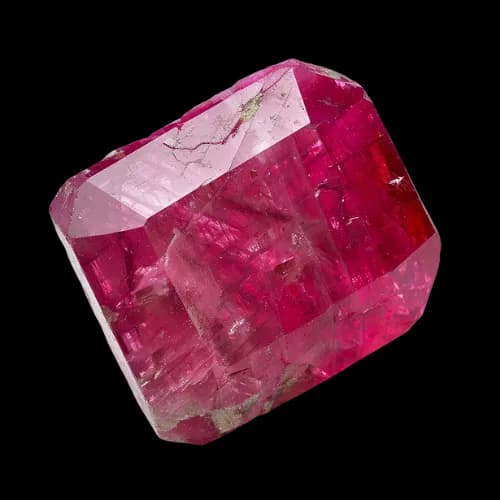
Ruby and sapphire are the same mineral. Both are corundum, crystalline aluminium oxide, one of the hardest natural substances we know at 9 on the Mohs scale, beaten only by diamond. The single difference between a ruby and a blue sapphire is a trace of chromium. Swap the iron and titanium that make sapphire blue for a pinch of chromium, and the same crystal turns red.
That chromium is the whole story. It is what produces the pure, slightly fluorescent red that the trade calls "pigeon's blood", and it is the reason the best rubies seem to glow from inside even in dim light. The chromium absorbs green and blue light and re-emits red, so a ruby in sunlight is quietly adding to its own redness. No other red gem does this the same way.
For July babies this is good news on a practical level too. At hardness 9, ruby is one of the few birthstones you can wear every single day in a ring without babying it. Compare that to June's pearl and alexandrite, where pearl scratches if you look at it wrong. Ruby is built for a life of being worn.
Ruby Was Worth More Than Diamond for a Very Long Time
We are so used to "a diamond is forever" that it is easy to forget how recent that ranking is. Before the late nineteenth century, when South African mines flooded the market with diamonds, ruby sat at or near the top of the price ladder.
George Frederick Kunz, the gemmologist whose 1913 book The Curious Lore of Precious Stones is our regular primary source, was blunt about it. He records that a fine ruby of a few carats commanded a higher price than a diamond of equal weight, and that the very best Burmese stones were considered almost beyond price. This was not sentiment. It was supply. Gem-quality ruby of real size and clean colour is genuinely scarcer than diamond, and always has been.
That scarcity still holds. A flawless five carat diamond is an expensive but findable thing. A flawless five carat untreated Burmese ruby is a museum object. When you read that ruby is one of the most valuable coloured stones per carat, that is not hype carried over from history. It is still true at the top of the market today.
The Lore: Inner Fire, Living Stones, and Blood
This is the part we find genuinely interesting, because the old beliefs about ruby cluster around one idea: the stone was alive.
Kunz collects the medieval conviction that a true ruby contained an inextinguishable inner fire. The test, repeated in lapidary texts for centuries, was that a real ruby thrown into water would make it boil, or that its glow would shine through cloth and even through the flesh of a hand cupped around it. None of this is true, of course. But it tells you how the red was experienced. People did not see a coloured rock. They saw contained fire.
From there the symbolism almost writes itself:
- Life and blood. The colour tied ruby to the heart, to vitality, and to courage. Warriors in Burma were said to insert rubies under the skin before battle, believing the stone made them invulnerable.
- A warning system. A widely repeated belief, which Kunz notes, held that a ruby would darken or cloud when danger or illness approached its owner, then clear again when the threat passed. Catherine of Aragon's ruby was said to have dimmed before her fall.
- Power and rank. Because it was the most expensive stone, ruby naturally became the stone of kings, and a "king of gems" worn by an actual king closed the loop nicely.
Our honest opinion on the folklore: the "boiling water" and "glows through flesh" claims are obvious nonsense, and Kunz, to his credit, reports them as beliefs rather than facts. But the "darkening before danger" idea has a sliver of real psychology behind it. A worried person checks their treasured possessions more often, and notices every shift of light in a stone. The ruby was not predicting disaster. Its owner was already anxious. The stone just gave the anxiety somewhere to land.
Burma, the "Pigeon's Blood", and the Geography of the Best Reds
If you want to understand ruby value, you have to understand Burma, now Myanmar. The Mogok valley has produced the world's finest rubies for more than five centuries, and the term "Burmese ruby" still functions as a quality benchmark rather than a strict address.
The prized colour is "pigeon's blood", a pure red with a faint blue undertone and strong fluorescence, no brown, no orange. It is one of the most abused terms in the gem trade, slapped onto stones that do not deserve it, so treat it with suspicion unless a serious lab has written it on a report.
Other sources matter too, and the honest buyer should know them. Thailand produces darker, slightly garnet-toned rubies. Mozambique has, in the last fifteen years, become a major source of excellent material that increasingly rivals Burma. Sri Lanka tends toward lighter, pinker stones. None of this makes a non-Burmese ruby a bad ruby. It just means origin is one of the levers that moves the price, and a beautiful Mozambique stone can be a genuinely smart buy.
For the wider story of how stones earned their reputations and their places on the birthstone list, our birthstone history hub is the place to go next.
The Buying Reality: Treatments, Synthetics, and What to Actually Ask
Here is where we get practical, because ruby is one of the most treated and most imitated gems on the market, and a July shopper who does not know the questions will overpay.
Treatment. The large majority of rubies sold today are heat treated to improve colour and clarity. This is standard, stable, and broadly accepted, but it must be disclosed and it affects value. The more aggressive treatments are the ones to watch:
- Heat only. Routine and accepted. Fine.
- Lead-glass filling. A cheap process that fills fractures with glass to fake clarity. These "composite rubies" are barely rubies and should cost very little. Acid and even hot water can damage them. Avoid unless you know exactly what you are buying and the price reflects it.
- Beryllium diffusion. Adds colour from the outside in. Legitimate if disclosed, but worth far less than naturally coloured material.
Synthetics. Lab-grown ruby has existed since the early twentieth century. The Verneuil flame-fusion process made synthetic ruby one of the first man-made gems sold at scale, which Kunz himself was already writing about in 1913. Modern lab ruby is chemically identical to natural and, frankly, often more flawless. We have no problem with it as an honest, affordable choice, the same position we took in our piece on lab-grown versus natural birthstones. The only sin is selling it as natural.
Three questions we would ask before paying real money for a ruby:
- Is it natural or lab-grown? Both are fine. Not knowing which is not.
- What treatment has it had? "Heat only" is normal. "Glass filled" should change the price dramatically.
- Is there an independent report? For any ruby over a carat, you want a GIA or comparable lab report stating origin, treatment, and whether the colour is natural.
When you are ready to look at settings and pieces, the birthstone jewelry hub is our starting point, and the July birthstone page covers the month's full lineup including the lesser-known alternatives.
So Why Did Ruby "Win" July?
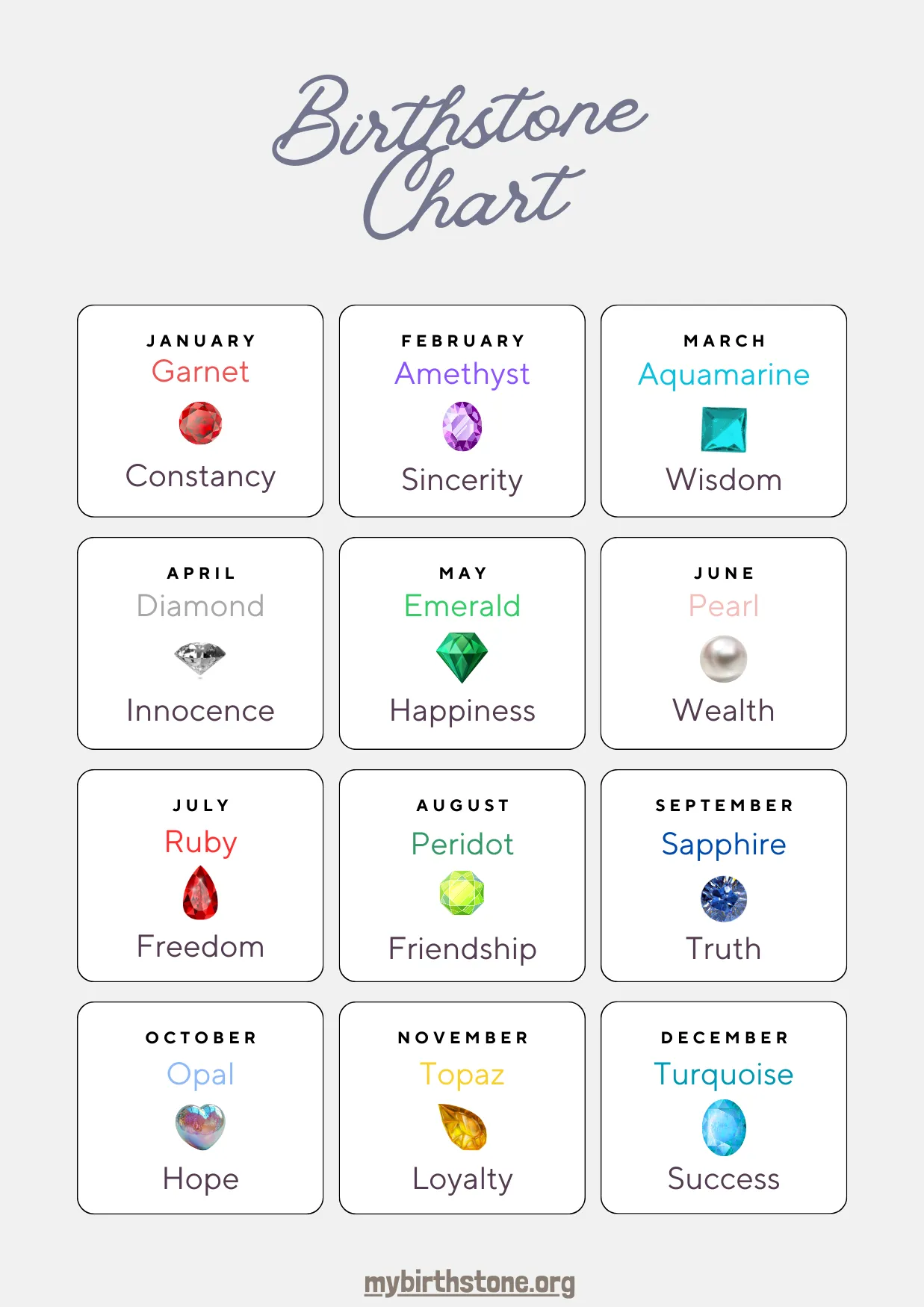
The modern birthstone list was standardised by the American jewellery trade in 1912, the same meeting that fixed diamond to April and pearl to June. Ruby for July was an easy call, and for once the committee was following genuine tradition rather than inventing one.
Three things lined up. First, ruby already carried two thousand years of association with the sun, fire, and high summer, which suits July perfectly. Second, it had unbroken historical prestige as the king of gems, so no jeweller was going to argue. Third, there was a real and growing supply from Burma and elsewhere, which matters, because you cannot build a commercial birthstone around a gem nobody can buy.
Kunz, writing just a year after that 1912 list was adopted, was sceptical of the whole standardising exercise and worried it would reduce ancient symbolism to a sales tool. On ruby, though, we think the tradition survived the commercialisation better than most. The stone was the king of gems long before any committee said so, and it would be the king of gems if every committee disbanded tomorrow.
What This Means If You Are Born in July
A few closing opinions, the kind we would give a friend shopping for a July birthday:
- Spend on colour before size. A smaller stone with true, glowing red beats a larger stone that reads brownish or pink. Colour is where ruby earns its name.
- Embrace the everyday wear. Hardness 9 means a ruby ring can be a daily ring. This is one of the few prestige gems you do not have to keep in a drawer.
- Do not fear lab-grown or Mozambique. Both can give you the red you actually want at a price that does not require a remortgage. Origin snobbery is the most expensive habit in this hobby.
- Get the paperwork on anything serious. The ruby market rewards informed buyers and quietly punishes everyone else.
If you want the broader picture of how birthstones came to be assigned in the first place, read our birthstone origins and 1912 list piece. And if you enjoy the old lore, the whole Kunz series lives on the blog and we are working through the book one gem at a time.
Sources and Further Reading
- George Frederick Kunz, The Curious Lore of Precious Stones, 1913. The ruby and corundum material runs through the chapters on talismanic and luminous stones. We also wrote a plain-English summary of the whole book.
- For how the modern month-by-month list was assembled, see our birthstone origins history.
- For the natural versus synthetic question across all gems, see lab-grown versus natural birthstones.
- For July's full lineup and jewellery options, the July birthstone hub and the birthstone jewelry collection.
The simplest way to think about ruby is this. It is the one prestige gem where the legend, the price, and the science have agreed with each other for two thousand years. The king of gems is not a slogan. It is a job ruby has been doing since long before anyone thought to put it on a birthday card.
Wondering how it stacks up against every other gem? Compare values in our gemstone price guide and toughness on the sortable Mohs hardness table.