Birthstones: The Origin Story (Breastplate, Zodiac, and the Modern List)
Birthstones feel personal. As if nature stamped a gemstone onto your birthday.
But the tradition didn’t drop out of the sky fully formed. It was assembled—slowly—out of religion, astrology, commerce, and human superstition.
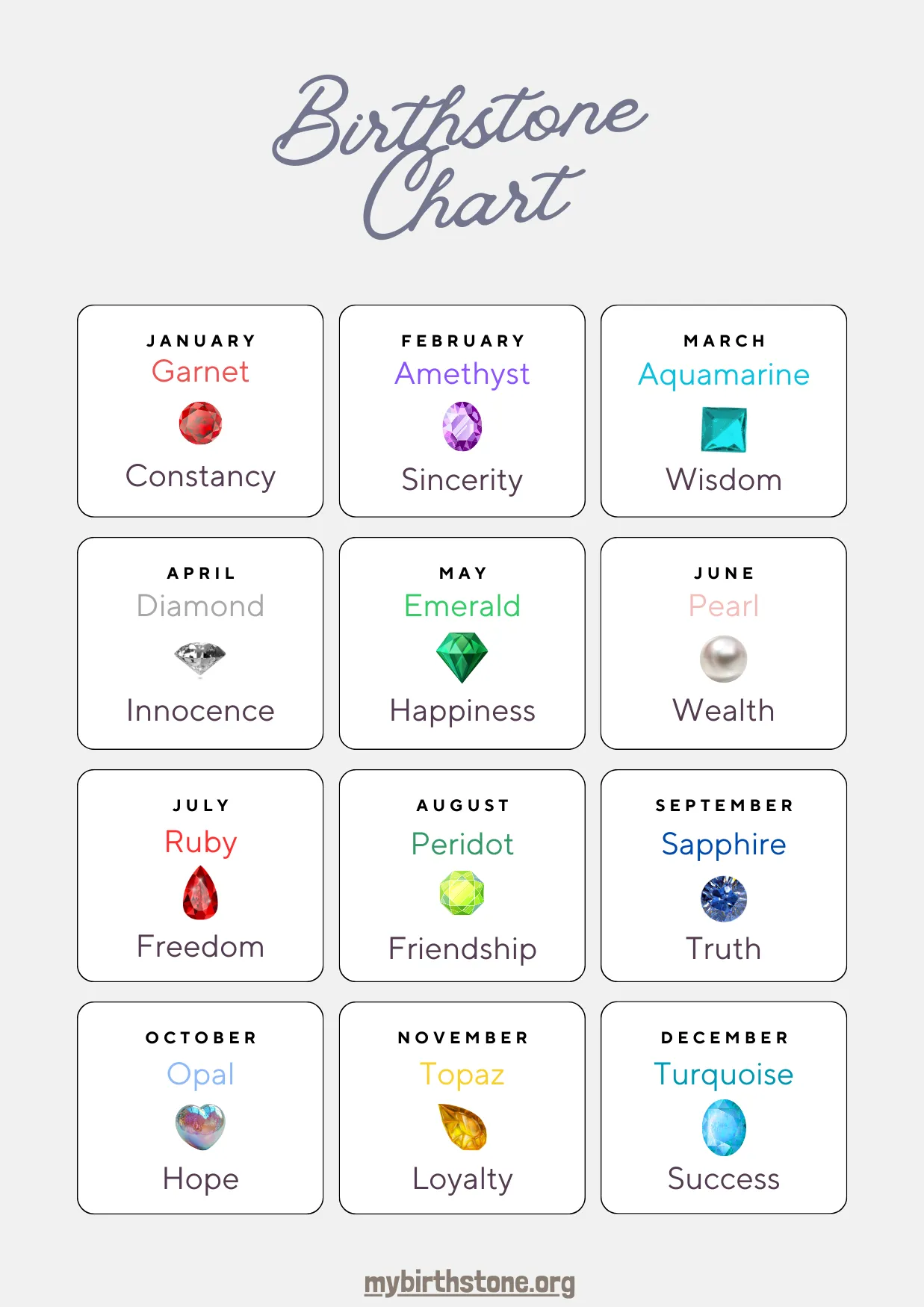
If you want the practical version first: use our birthstone chart to find your month, then go deeper with birthstone history for the cultural backstory.
What are birthstones?
Birthstones are gemstones associated with the twelve months of the year. In modern practice, you wear (or gift) the stone linked to a person’s birth month—like garnet for January or opal for October.
That “one month, one stone” idea is modern. Historically, the meaning came first, and the month assignment came later.
Where did birthstones come from?
Most origin stories trace back to a sacred list of twelve stones—then to a second list—then to centuries of interpretation:
- The Breastplate of Aaron (Exodus): twelve gemstones connected to the twelve tribes of Israel.
- The New Jerusalem stones (Revelation): another twelve-stone list that later writers used as a reference.
- Zodiac mapping (later tradition): twelve stones matched to twelve signs, because humans love systems that feel cosmic.
- Month mapping (later still): the twelve stones were assigned to the twelve months, and “birthstones” emerged as a wearable custom.
This is why birthstone history can feel like a family tree. Same ancestors. Different branches.
The missing step: how twelve stones became “your” stone
Here’s the subtle shift that matters.
Ancient lists were collective: twelve stones for a people, a temple, a vision of heaven. The modern birthstone idea is individual: one stone for you.
George Frederick Kunz (a leading early 1900s gem authority) describes a tradition where people may have owned all twelve stones and wore them in rotation, month by month, to match the season or zodiac “influence”—a practice that makes the stones feel like a calendar you can wear.
Birthstones vs zodiac stones (they’re cousins, not twins)
You’ll see three terms get mixed together:
- Birthstones: month-based.
- Zodiac stones: sign-based (Aries, Taurus, etc.).
- Planetary stones: symbol systems linking gems to planets and their “virtues.”
They overlap because they share the same organizing trick: twelve slots, twelve symbols, twelve stones. But the intent differs.
If you want to choose by sign instead of month, start at Find your birthstone and treat it like a second lens—not a contradiction.
Why the modern list doesn’t perfectly match the old lists
If you’ve ever wondered why diamond is April’s stone, or why December seems to have multiple “official” options, you’ve run into the real story: the list evolved.
Kunz notes substitutions that became common over time—stones added, removed, or reassigned as tastes and availability changed. That’s not a bug. It’s how traditions survive.
Today, month hubs like January birthstone and October birthstone usually reflect a blend of “traditional” and “modern” conventions, plus newer alternatives that better fit how people actually buy jewelry.
The 1912 standardization (why it mattered)
In the early 1900s, jewelers wanted consistency. That’s how you get a widely adopted modern list: easier to sell, easier to gift, easier to teach.
Standardization didn’t erase earlier traditions—it simply created a baseline most people recognize today.
How to use birthstone history without getting lost in it
If your goal is a meaningful piece of jewelry, you don’t need a PhD in lapidaries. You need a simple decision tree:
- Start with the modern month stone on the birthstone chart.
- If you want deeper symbolism, read the month story (example: January birthstone).
- If the stone isn’t practical for your lifestyle, choose an alternative for durability or budget.
- When you’re ready to shop, use birthstone jewelry to narrow styles and settings.
Because the point isn’t to “get the list right.” It’s to choose a stone that fits the person wearing it.
Sources / further reading
- Kunz, George Frederick. The Curious Lore of Precious Stones (1913), scanned PDF: https://dn720605.ca.archive.org/0/items/b28997839/b28997839.pdf
- Our overview of Kunz’s book: /blog/curious-lore-of-precious-stones-summary/
- Modern month-by-month reference: /birthstone-chart/