Talismans and Amulets: The Forgotten Origin of Gemstone Jewelry
Jewelry didn’t begin as decoration.
It began as a promise: this keeps me safe.
That one idea—protection you can wear—threads through the history of gemstones, and it’s one of the clearest bridges between ancient gem lore and today’s birthstone tradition.
What’s the difference between a talisman and an amulet?
People use the words interchangeably, but historically they often carried different flavors:
- Amulet: something worn to ward off harm (illness, bad luck, evil influences).
- Talisman: something worn to draw in a benefit (victory, love, favor, protection with a purpose).
Both depend on belief. And belief has always been a powerful technology.
Why gemstones were perfect “protective objects”
Gems offered three things ancient people prized:
- Durability: a stone outlasts a person, a kingdom, even a religion.
- Rarity: scarcity makes objects feel chosen.
- Optical effects: shine, fire, stars, and color-change look like “proof” something is happening inside the gem.
When a stone looks alive, it’s easy to imagine it acts alive.
The practical reality: stories travel faster than science
Historically, gemstone virtues weren’t verified the way we’d verify medicine now. They were compiled, repeated, and refined—passed along by travelers, priests, healers, merchants, and collectors.
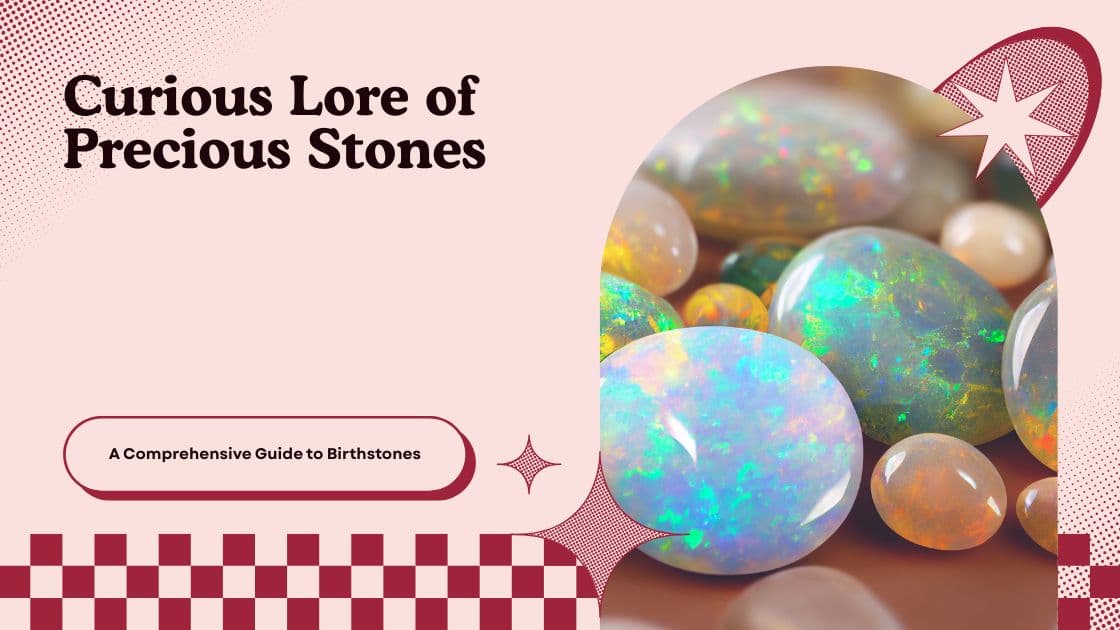
George Frederick Kunz’s The Curious Lore of Precious Stones is one of the biggest attempts to document these beliefs as cultural history: what people wore, why they wore it, and what they thought it could do.
Famous talisman stones (and the “jobs” they were given)
Across different traditions, certain stones became repeat performers in the protective role:
- Turquoise: protection in travel and riding; often treated as a warning stone (linked with December birthstone).
- Carnelian: courage, steadiness, “blood” associations.
- Emerald: truth, foresight, and protection (often linked with May birthstone).
- Diamond: invincibility claims and purity symbolism (linked with April birthstone).
These are historical beliefs, not modern guarantees. But they explain why people cared enough to wear gemstones every day.
How talismans quietly became “birthstones”
Birthstones make more sense when you see the pipeline:
- A stone gets a reputation (“this protects,” “this heals,” “this attracts love”).
- Systems assign stones to zodiac signs and months to make the choice feel ordered.
- The custom becomes personal: your month, your stone, your story.
So when someone searches “what is my birthstone,” they’re not only asking for a list. They’re asking for a permission slip to make meaning.
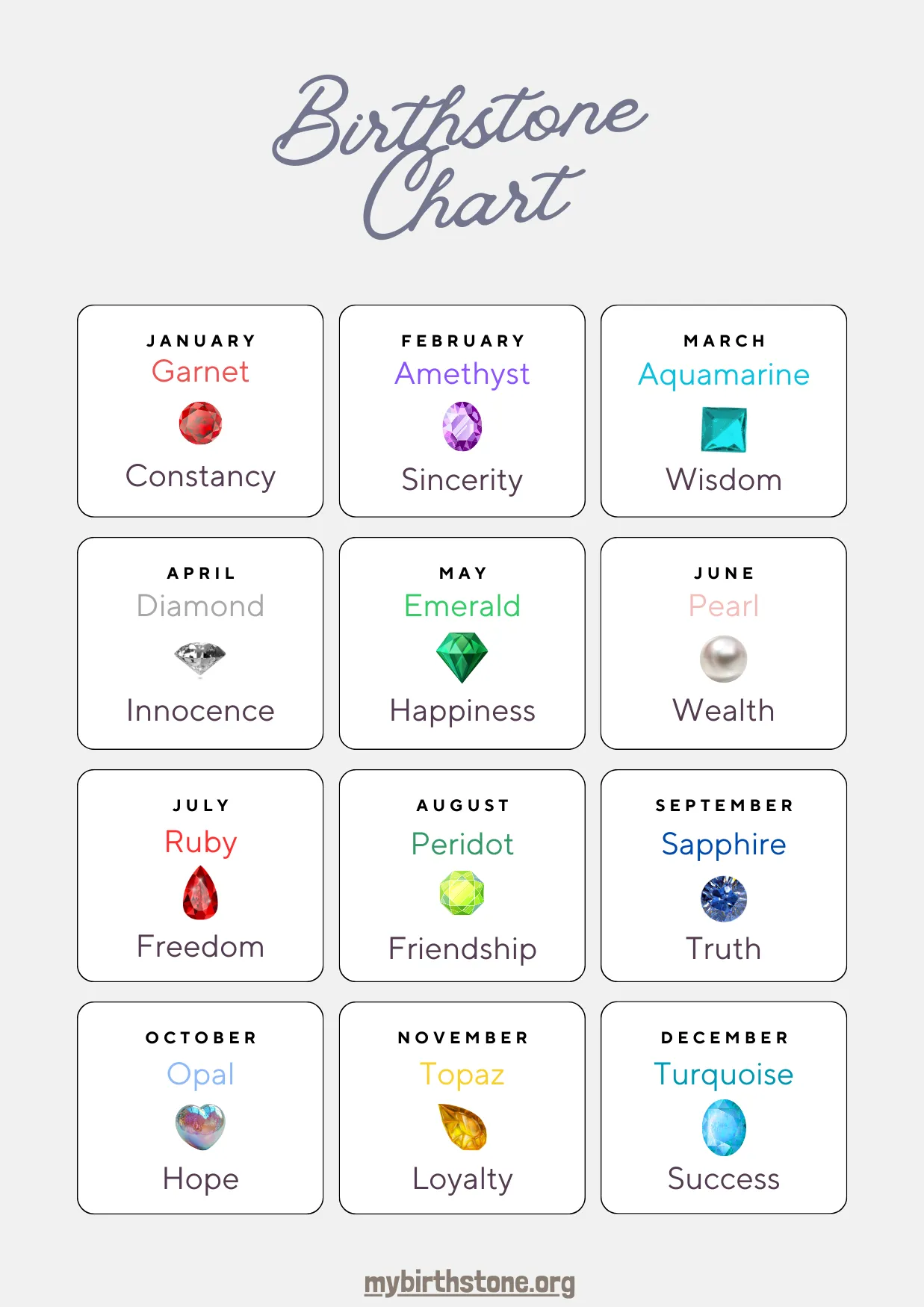
If you want the straight reference first, start with the birthstone chart. If you want the long story, see birthstone history.
What to do with this (in a modern, practical way)
If you love the romance of talismans but also live in 2025, here’s a grounded approach:
- Choose the month stone for symbolism.
- Choose the setting for real-world durability (rings take more impact than pendants).
- Treat “meaning” as storytelling, not proof.
When you’re ready to browse styles, start at birthstone jewelry and pick the piece that matches how the person actually lives.
Sources / further reading
- Kunz, George Frederick. The Curious Lore of Precious Stones (1913), scanned PDF: https://dn720605.ca.archive.org/0/items/b28997839/b28997839.pdf
- Our overview of Kunz’s book: /blog/curious-lore-of-precious-stones-summary/