If you compared lab grown and natural diamonds five years ago, you got one answer. Compare them today and you get a different one, because in between, the price of lab grown diamonds fell off a cliff. A stone that cost 30 percent less than natural in 2018 now costs 80 to 90 percent less. That is not a discount, that is a different product category, and it has quietly rewritten the rules for anyone buying an engagement ring.
So here is the honest version of the comparison, the one that respects both your budget and your intelligence. What a lab grown diamond actually is, whether anyone can tell, what the price gap really looks like in 2026, the resale question nobody in the trade answers straight, and which stone makes sense for which buyer. We sell nothing, so we have no horse in this race.
First, the Fact That Settles Half the Argument
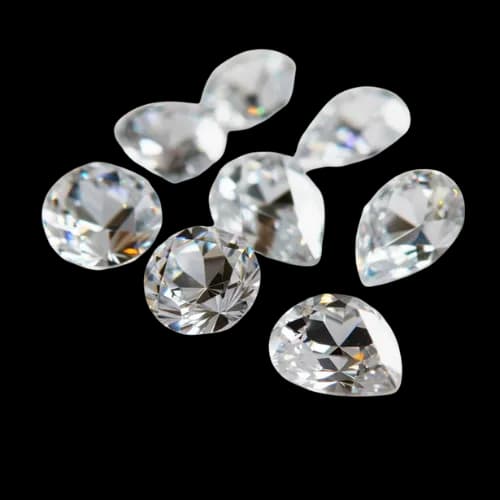
A lab grown diamond is a diamond. Not an imitation, not a simulant, not "basically a diamond." It is crystallised pure carbon with the same chemical composition, the same crystal structure, the same hardness of 10 on the Mohs scale, and the same optical behaviour as a stone pulled out of the ground. The American Federal Trade Commission acknowledged as much back in 2018, when it removed the word "natural" from its official definition of a diamond.
This is the key difference between this comparison and our moissanite vs diamond guide. Moissanite is a different mineral that happens to look diamond-like. A lab grown diamond is the same mineral made in a different place. If you are weighing all three, read both guides, because the trade-offs are completely different.
Lab diamonds are made in two ways. HPHT (high pressure, high temperature) presses, which recreate the conditions of the deep Earth around a tiny diamond seed, and CVD (chemical vapour deposition) chambers, which rain carbon atoms onto a seed plate from a heated gas. Both methods produce real gem-quality diamonds in a few weeks rather than a few billion years. Neither method produces a "perfect" stone by default, by the way. Lab diamonds come out with their own inclusions and colour tints and are graded on exactly the same 4Cs scale as mined stones.
Can Anyone Actually Tell the Difference?
By eye, no. Not you, not your friends, and not a jeweller with a loupe. This is worth stating plainly because it is the single most asked question, and the trade tends to fudge the answer.
A handheld diamond tester reads a lab grown diamond as a diamond, because it is one. The only reliable way to separate them is specialised laboratory equipment that reads growth patterns and trace fluorescence, which is why grading labs can do it and the person at the next desk cannot. In practice, the giveaway is paperwork, not optics: certified lab diamonds carry a microscopic laser inscription on the girdle with their report number, visible only under magnification.
Our opinion, for what it is worth: if a difference requires a machine to detect, it is not a difference your eyes will ever enjoy or regret. Whatever you decide, you are deciding about meaning and money, not appearance.
The Price Gap in 2026, With Real Numbers
This is where the comparison stopped being close. A decent 1 carat natural diamond, somewhere around G colour and VS clarity with a good cut, still runs roughly 4,000 to 6,000 dollars. The equivalent lab grown stone now sells for roughly 500 to 1,000 dollars retail, and prices keep drifting down as production scales.
The gap widens as stones get bigger, because rarity is what you pay for in natural diamonds and rarity is exactly what lab production removes. A 2 carat natural stone might be 15,000 to 25,000 dollars. A 2 carat lab grown equivalent can be found for 1,500 to 3,000. At 3 carats the natural stone costs more than many cars, while the lab stone costs less than many sofas.
Run your own numbers in our diamond price calculator, which estimates both natural and lab grown values from the 4Cs, and check what different carat weights actually look like on a hand with the diamond size chart. The practical effect of the crash is simple: for the same budget, lab grown buys you roughly three times the diamond, or the same diamond plus a honeymoon.
The Resale Question, Answered Straight
Here is the part the lab grown sales pitch skips, and the part the natural diamond sales pitch exaggerates. Both deserve daylight.
Lab grown diamonds have close to no resale value. The wholesale price keeps falling, supply is effectively unlimited, and no dealer wants last year's stone at last year's price. Treat a lab diamond like a wedding dress or a phone: bought to be used and loved, not as an asset. If you paid 900 dollars, this stings very little. That is the quiet genius of the low price, it makes the resale question almost irrelevant.
Natural diamonds hold value better, but "better" needs honesty too. Walk out of a shop with a natural diamond and try to sell it back, and you will typically be offered 30 to 50 percent less than you paid, immediately. What natural stones do have is a floor. There is a global secondhand market, prices for fine stones recover and drift upward over decades, and an heirloom-quality natural diamond will always be worth something real. A natural diamond is a bad investment but a genuine store of value. A lab diamond is neither, it is a purchase.
In our experience the resale argument matters for exactly one kind of buyer: the person spending serious money who wants the option of passing the stone down or trading it up. For everyone else it is a debating point, not a budget line.
What About Certificates and Grading?
Insist on a graded stone either way. For lab grown diamonds, IGI grades the large majority of the market and does it well; GIA also issues full lab grown reports now. The report confirms the 4Cs and, crucially, states that the stone is laboratory grown, which protects you twice. It proves what you bought, and it prevents anyone, including a future buyer or insurer, being misled.
One practical warning while we are here. The danger in 2026 is not being sold a lab diamond disguised as moissanite or glass, it is being sold a lab diamond priced as a natural one. The stones are identical to the eye, the price difference is enormous, and that combination attracts exactly the behaviour you would expect. Buy certified, check the girdle inscription against the report, and if a "natural" diamond is priced suspiciously close to lab grown levels, walk away. Bargains exist; 80 percent bargains do not.
The Ethics and Environment Question, Without the Marketing
Both sides oversell here. Lab grown marketing implies a guilt-free stone, but growing diamonds takes serious energy, and a CVD reactor running on a coal-heavy grid is not automatically green. Natural diamond marketing leans on tradition and on the genuine livelihoods mining supports, while staying quiet about land disruption and the industry's uglier history.
The fair summary: a lab diamond from a producer using renewable energy has the lightest footprint available. A natural stone with a clear, documented origin from a well-regulated source is a defensible choice that supports real mining communities. An untraceable stone of either kind is where the actual problems live. If ethics drive your decision, ask the seller where and how the stone was produced, and judge the answer, not the category.
So Which Should You Buy?
Buy lab grown if your priority is the diamond itself: the look, the size, the fire, the daily-wear durability. You get the identical material for a fraction of the price, and the money you keep is real. This is, in our view, the default answer for most engagement ring buyers in 2026, and there is nothing second-best about it.
Buy natural if the story is the point. A stone formed billions of years ago, rarity you can feel, value that survives decades, an heirloom for the next generation. Those are real things, they are just emotional and financial rather than optical, and they cost five to ten times more. If that premium feels meaningful rather than painful, the natural stone will make you happier, and no spreadsheet should talk you out of it.
Buy moissanite if even lab grown prices feel like more than a ring should cost, you want maximum sparkle per dollar, and you do not mind owning a stone that is its own mineral rather than a diamond. The full moissanite comparison covers that trade in detail.
And whichever you choose, remember the diamond is the April birthstone with several thousand years of myth behind it. Our April birthstone guide covers the lore, and our lab grown vs natural birthstones guide applies this same honest framework to every other stone, where the answer often flips.
Quick Answers
Are lab grown diamonds real diamonds? Yes. Same carbon, same crystal structure, same hardness, graded on the same scale. The FTC and the major gem labs all treat them as diamonds.
Can a jeweller tell a lab grown diamond from a natural one? Not by eye, and not with a standard handheld tester. Only laboratory equipment reading growth structure can separate them, plus the laser inscription on certified stones.
How much cheaper are lab grown diamonds? Roughly 80 to 90 percent at typical engagement ring sizes in 2026, and the gap grows with carat weight.
Do lab grown diamonds lose value? Yes, expect close to zero resale value. Natural diamonds also resell well below retail, but they keep a genuine floor value and fine stones appreciate over decades.
Do lab grown diamonds look cloudy or fade over time? No. They are pure crystallised carbon and are as permanent as mined diamonds. A diamond that clouds or fades is not a diamond of either kind.
Is a lab grown diamond good for an engagement ring? Yes, arguably the best value in fine jewellery right now: identical material, identical durability, a fraction of the price. Just buy a certified stone and know that its value is in the wearing, not the reselling.