April Birthstone
Diamond
The birthstone of enduring love, strength, and brilliance — forged billions of years ago
Quick answer: The birthstone for April is Diamond.
Diamond is both the modern and traditional birthstone for April, admired for its unmatched hardness, exceptional brilliance, and timeless symbolism of eternal love and commitment.
What Is the Birthstone for April?
The April birthstone is diamond. The most celebrated gemstone on Earth, diamond has captivated humanity for thousands of years with its unrivaled brilliance, fire, and durability. Formed deep within the Earth's mantle under extreme heat and pressure, each diamond is a one-to-three-billion-year-old miracle of nature.
The name "diamond" comes from the Greek adamas, meaning "invincible" or "unconquerable" — a testament to its extraordinary hardness. As the only gemstone composed of a single element (pure carbon), diamond is both beautifully simple in composition and endlessly complex in the way it interacts with light.
Today diamond remains the world's most sought-after gemstone, synonymous with engagement rings, milestone celebrations, and the pinnacle of fine jewelry. For those born in April, it represents clarity of purpose, inner strength, and bonds that endure forever.
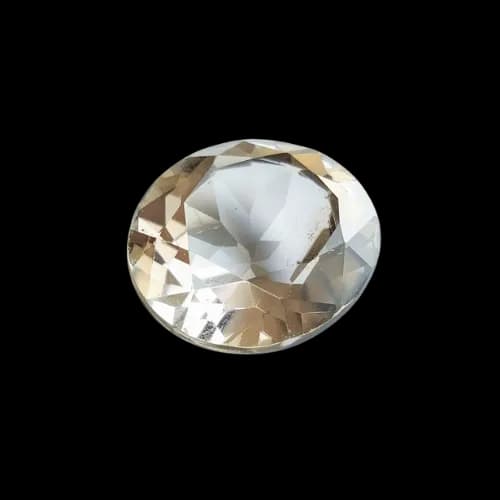
Diamond Meaning & Symbolism
Across cultures and centuries, diamond has carried powerful meanings that resonate with those born in April.
Enduring Love
The ultimate symbol of eternal commitment. Diamonds represent bonds that are unbreakable, making them the world's most popular engagement stone.
Strength & Courage
Named "unconquerable" by the Greeks, diamond embodies resilience, inner power, and the courage to face any challenge.
Clarity & Truth
Diamond's flawless transparency symbolizes clear thinking, honest communication, and the pursuit of truth in all things.
Purity & Innocence
The colorless diamond represents pure intentions, a clean slate, and the fresh beginnings associated with spring and April.
Abundance & Prosperity
Throughout history, diamonds have been the gemstone of kings, queens, and emperors — symbols of wealth, power, and success.
Healing & Balance
Diamond is believed to amplify energy, bring emotional equilibrium, and enhance the positive qualities of its wearer.
Diamond Colors & Varieties
Far from being a single colorless stone, diamonds come in a stunning array of natural colors and styles:
Colorless
D–F Grade (Pure White)
The classic diamond — completely free of color. Graded D through F, these are the most traditionally valued and sought-after.
Fancy Yellow
Canary to Golden
The most common fancy color diamond. Intense "canary" yellows are highly valued for their warm, sun-like brilliance.
Fancy Pink
Blush to Vivid Pink
Extremely rare and valuable, pink diamonds are among the most coveted gemstones on Earth. The closed Argyle mine produced the finest.
Fancy Blue
Sky to Deep Blue
Colored by trace amounts of boron, blue diamonds are extraordinarily rare. The Hope Diamond is the most famous example.
Black Diamond
Opaque Black
Naturally occurring carbonados with a bold, modern aesthetic. Popular in contemporary jewelry for their dramatic contrast.
Champagne
Light Brown to Cognac
Warm brown diamonds with rich, earthy tones that have surged in popularity for their unique beauty and accessible pricing.
Why Is Diamond the April Birthstone?
The connection between diamond and April has ancient roots. April marks the full flowering of spring in the Northern Hemisphere — days lengthen, light returns, and the natural world bursts with renewed energy. Diamond, with its extraordinary ability to capture and refract light into dazzling rainbows, perfectly embodies this season of brilliance and renewal.
The modern birthstone list was officially standardized in 1912 by the American National Association of Jewelers (now Jewelers of America). They confirmed diamond as the April birthstone, formalizing a tradition that dated back to ancient Hindu texts and the Breastplate of Aaron in biblical tradition, where diamond represented one of the twelve tribes of Israel.
Diamond also connects to both April zodiac signs: Aries values its association with fearless action and leadership, while Taurus resonates with its symbolism of enduring strength, luxury, and lasting value.
The History of Diamond
The first diamonds were discovered in India around the 4th century BCE, where they were gathered from rivers and streams. For centuries, India was the world's only source of diamonds. Ancient Hindus believed diamonds were created when lightning struck rock, and they placed diamonds in the eyes of devotional statues. Roman warriors wore diamonds as talismans, believing them to provide strength and invincibility in battle.
During the Middle Ages, diamonds were prized not for their brilliance (early cutting techniques could not unlock their fire) but for their hardness and supposed magical properties. They were believed to cure ailments, ward off evil, and protect against poison. Only kings were permitted to wear diamonds, as they symbolized divine right and supreme authority.
The diamond trade transformed in the 1700s when deposits were found in Brazil, and again in the 1860s with massive discoveries in South Africa. The famous Cullinan Diamond — the largest gem-quality rough diamond ever found at 3,106 carats — was unearthed in South Africa in 1905 and cut into several stones, the largest of which are set in the British Crown Jewels.
The modern diamond engagement ring tradition gained widespread popularity in 1947 when De Beers launched their iconic advertising campaign. Today, diamonds continue to be the world's most coveted gemstone, with major sources in Russia, Botswana, Canada, and Australia producing billions of dollars' worth of rough diamonds annually.
Diamond Properties
⚛Physical Properties
- Mineral
- Diamond (pure carbon)
- Hardness
- 10 on Mohs scale (hardest natural substance)
- Crystal System
- Cubic (isometric)
- Refractive Index
- 2.417-2.419
- Chemistry
- C
- Color Range
- Colorless to yellow, also blue, pink, green, orange, red, brown, black
🌎Where Diamond Is Found
Diamonds are mined across the globe, with each region producing stones of distinct character:
How to Care for Diamond Jewelry
Diamond is the hardest natural substance, but proper care ensures maximum brilliance and setting integrity:
Clean diamond jewelry with mild soap and warm water using a soft brush; professional cleaning recommended.
Ultrasonic cleaners are generally safe for most diamonds.
Steam cleaning is generally safe for most diamonds.
Diamonds are resistant to most chemicals, but avoid chlorine bleach.
Store separately to prevent scratching other gemstones.
Avoid touching the diamond's surface to prevent oil buildup.
How to Choose Diamond Jewelry
When shopping for diamond jewelry, understanding the 4Cs is essential. Cut has the greatest impact on a diamond's beauty — a well-cut diamond will sparkle brilliantly even if color and clarity are not perfect. For April birthday gifts, consider what matters most to the recipient.
- 1. Cut first: Prioritize Excellent or Ideal cut grades. A well-cut diamond maximizes brilliance, fire, and scintillation.
- 2. Color: For colorless diamonds, G–H grades offer excellent value. For fancy colors, intensity is the key value driver.
- 3. Clarity: VS1–VS2 diamonds are eye-clean and offer the best balance of quality and value.
- 4. Setting: Solitaire, halo, and three-stone settings are classic. Bezel settings offer the best protection for active lifestyles.
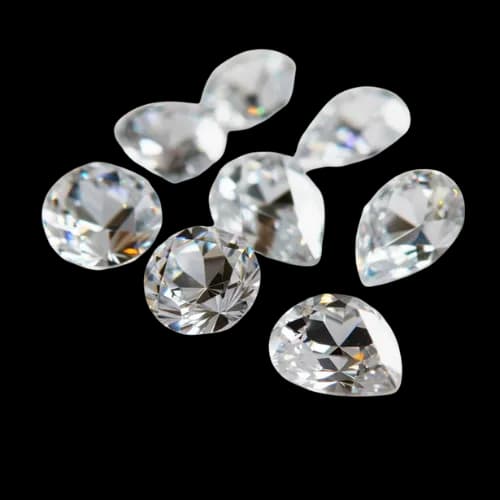
Fascinating Facts About Diamond
Most natural diamonds formed between 1 and 3 billion years ago, deep within the Earth's mantle at depths of 87 to 120 miles, under extreme pressure and temperatures.
Diamonds are so hard that the only thing that can scratch a diamond is another diamond. They're approximately 58 times harder than the next hardest mineral, corundum (sapphires and rubies).
Some stars that died and became white dwarfs left behind their carbon cores, which crystallized into diamond. Scientists believe that the core of the star Lucy in the constellation Centaurus is essentially a diamond of 10 billion trillion trillion carats.
Diamonds are evaluated based on the "4Cs": Cut, Color, Clarity, and Carat weight. This standardized grading system was established by the Gemological Institute of America (GIA) in the 1950s.
April Birthstone by Date
No matter which day in April you were born, diamond is your birthstone. Here's how each part of the month connects to diamond's energy:
April 1–10
Aries
Early April births channel diamond's bold leadership energy and the pioneering spirit of spring's full arrival.
April 11–19
Aries
Mid-April Aries connect to diamond's themes of courage, clarity, and unstoppable determination.
April 20–30
Taurus
Late April Taureans harness diamond's enduring strength, appreciation for beauty, and lasting value.
View All April Dates
April Birth Flower: Daisy & Sweet Pea
April's birth flowers — the daisy and sweet pea — share diamond's themes of purity, innocence, and joyful new beginnings. The daisy's simple brilliance echoes diamond's clear, radiant sparkle.
Explore April's Birth Flowers