The Rich History of Diamond
From Indian riverbeds to De Beers: the story of April's hardest gemstone
The Ancient Origins of Diamond
Diamond enters the historical record in India. Traders worked alluvial deposits along the Krishna, Godavari, and Penner rivers for centuries before anyone in the West had heard of the stone, and the Gemological Institute of America dates organized diamond trading in India to roughly the 4th century BCE. There was no cutting technology yet, so early diamonds were worn much as they were found: natural octahedral crystals valued as much for their unmatched hardness as for their sparkle.
The Sanskrit word for diamond, "vajra," also means thunderbolt, and it was the weapon of Indra, king of the gods. That single word tells you most of what you need to know about how ancient India regarded the stone: not as decoration first, but as concentrated power. George Frederick Kunz, in his 1913 study "The Curious Lore of Precious Stones," records a belief that placed diamond above every other gem. People once believed the diamond was to the pearl as the sun is to the moon, one the "king-gem" and the other the "queen-gem," the diamond prized as an emblem of fearlessness and invincibility.
Diamond's reputation traveled slowly but it traveled. By the 1400s, stones mined in India were reaching western Europe through Venice's medieval markets, the first thin trickle of a trade that would eventually reshape entire economies. Because no one could yet facet a diamond with real precision, these early stones were valued in their rough, natural state, prized as much for what they represented as for how they caught the light.
That scarcity mattered. A diamond that reached Europe had usually traveled overland for months, changing hands through a chain of merchants before it ever reached a royal court, and its price reflected every mile of that journey. Owning one was less a fashion statement than a declaration of standing, reserved almost entirely for monarchs, high clergy, and the small circle of nobility wealthy enough to compete for a vanishingly rare commodity.
Diamond Through the Medieval and Renaissance Periods
Medieval Europe inherited diamond's reputation for strength and simply expanded on it. Lapidaries, the gemstone reference texts of the period, attributed the stone with the power to grant courage, ward off nightmares, and protect against poison. Kunz records that medieval writers linked diamond to lightning: people once believed a diamond could be shattered or even melted if struck by a thunderbolt, a fitting fate for a stone whose name already meant thunderbolt in Sanskrit.
Diamond also carried real weight in matters of the heart. According to the American Gem Society, Archduke Maximilian of Austria commissioned the first diamond engagement ring on record in 1477, for his betrothal to Mary of Burgundy. It is the earliest documented instance of the tradition that would eventually make diamond synonymous with engagement itself, though it would take centuries and a very different kind of campaign to turn that royal gesture into a mass custom.
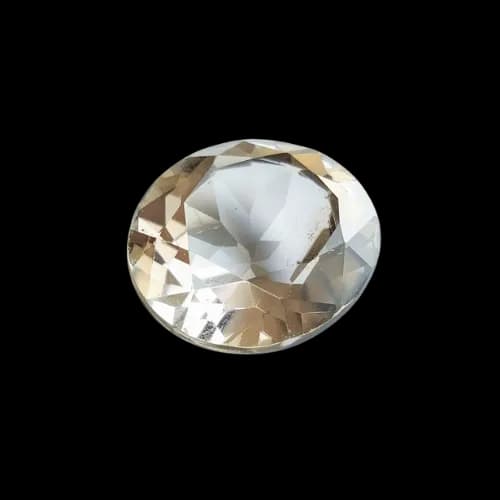
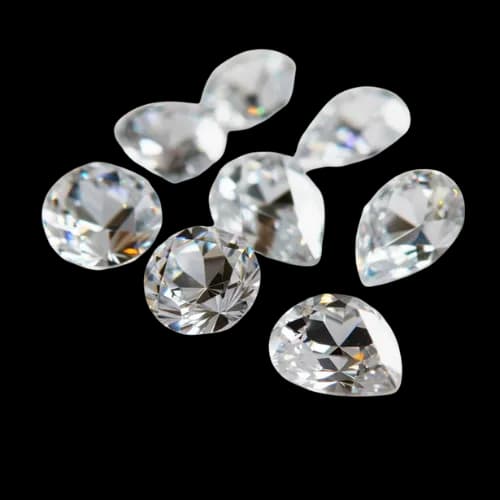
The Renaissance also brought the first real advances in cutting. Diamond polishing guilds took root in cities like Bruges and Antwerp, and lapidaries began experimenting with symmetrical facet patterns instead of simply polishing the natural crystal faces. Early styles like the point cut and table cut gave way over the following centuries to increasingly sophisticated arrangements of facets, each refinement coaxing a little more fire and brilliance out of the stone. It was slow, careful work, and it laid the groundwork for the faceting styles that would define diamond jewelry for the next several centuries.
Diamond Across Cultures and Continents
Long before diamond became a global commodity, it carried different meanings in different corners of the world.
Indian Traditions
Ancient Indian gem manuals went so far as to sort diamonds by caste. Kunz notes that Hindu lapidaries classed stones according to the four castes: the Brahmin diamond was said to bring power, friends, riches, and good luck, while other grades were assigned their own supposed virtues. Diamonds were also worked into religious and talismanic settings, worn as protection rather than pure ornament.
Persian and Arab Lore
Medieval Arab geographers passed down a marvelous tale about where diamonds came from. Kunz records a version, drawn from the writer Al-Kazwini, of a diamond-filled valley in India guarded by serpents so lethal a glance could kill. Legend held that gem seekers threw pieces of meat into the gorge, diamonds stuck to the flesh, and eagles carried it out, dropping the stones for collectors to gather below. It is the same tale that appears in the voyages of Sindbad the Sailor, and while no such valley existed, historians trace the story back to a real Hindu custom of leaving meat offerings at newly opened mines.
European Nobility
By the late Middle Ages, diamond had become a fixture of European royal regalia and coronation jewelry. Nobles wore diamond as a talisman against poison and misfortune as much as a display of wealth, and possession of a fine stone was itself a marker of rank, since only the wealthiest could obtain one through the slow overland trade from India.
Chinese Traditions
For much of Chinese history, diamond took a back seat to jade, which carried far greater cultural and spiritual weight. Diamond's hardness was recognized and put to practical use, most notably as a tool for engraving and cutting other stones, well before it was widely adopted as a gemstone for jewelry in its own right.
Famous Diamonds in History
The Cullinan Diamond
Found at the Premier Mine in South Africa on January 26, 1905, the Cullinan is the largest gem-quality rough diamond ever discovered, weighing an extraordinary 3,106 carats, roughly the size of a fist. It was presented to Britain's King Edward VII in 1907 and cut by Joseph Asscher and Company of Amsterdam into nine major stones and 96 smaller gems. The two largest, Cullinan I and Cullinan II, remain set in the British Crown Jewels today, and several smaller stones passed into the personal jewelry of the royal family.
The Koh-i-Noor
Weighing 105.6 carats, the Koh-i-Noor traces its origins to mines in the Golconda region of India and has passed through the hands of Mughal emperors, Persian shahs, and Sikh maharajas over several centuries of conquest and inheritance. It has been part of the British Crown Jewels since 1849, most recently set in a crown worn by Queen Elizabeth The Queen Mother, and its ownership remains one of the most disputed questions in gemstone history, claimed at various times by India, Pakistan, Iran, and Afghanistan.
The Hope Diamond
This deep blue 45.52-carat diamond is believed to have been mined at the Kollur Mine near Golconda before 1668, its rare color the result of trace boron in the crystal structure. Renowned for its color and the string of legends that grew up around it, including a supposed curse that has never been substantiated, the Hope Diamond now resides at the Smithsonian National Museum of Natural History in Washington, D.C., where it remains one of the most visited objects in the collection.
Kimberley and the Birth of De Beers
Diamonds discovered near Kimberley, South Africa, touched off a rush through the late 1860s and into the 1870s that pulled prospectors from around the world, transforming a quiet stretch of veld into one of the busiest mining towns on earth almost overnight. Cecil Rhodes founded De Beers Consolidated Mines in 1888 to consolidate the region's claims, and by 1900 the company controlled roughly 90 percent of the world's rough diamond production, a dominance that would shape the diamond trade for the next century.
Diamond in Modern Times
Scientific Understanding
- The Gemological Institute of America developed the 4Cs framework (cut, color, clarity, and carat weight) in the mid-20th century, giving buyers and sellers a shared language for grading diamonds that is still the industry standard today.
- Laboratory-grown diamonds, produced using high pressure high temperature (HPHT) and chemical vapor deposition (CVD) methods, are now chemically identical to mined stones and have become a significant and fast-growing segment of the market.
- Modern spectroscopy and imaging let gemologists distinguish natural diamonds from synthetics and treated stones with a precision that would have been unimaginable to earlier generations of gem traders.
Mining and Production
- Brazil emerged as an important source in the early 1700s, as India's centuries-old deposits declined, and went on to dominate world diamond production for more than 150 years.
- South Africa's Kimberley fields took over as the leading source through the late 19th century, followed in the 20th century by major discoveries at Jwaneng in Botswana in 1982, new sources in Australia in 1985, and deposits in northern Canada by 2000.
- Global output has scaled up dramatically over time: from under a million carats a year in the 1870s to roughly 3 million carats in the 1920s, around 50 million carats by the 1970s, and past 100 million carats a year by the 1990s.
Cultural Significance Today
- Diamond was formally named April's birthstone in 1912, when the American National Retail Jewelers Association, known today as Jewelers of America, adopted a standardized birthstone list at its Kansas City meeting.
- Copywriter Frances Gerety coined the line "A Diamond Is Forever" for the De Beers account at the N.W. Ayer agency in 1947, and the campaign that followed in 1948 did more than any single event to cement diamond's place at the center of the modern engagement ring tradition.
- Lab-grown diamonds and questions of ethical sourcing have reshaped the conversation around the stone in recent years, with buyers increasingly asking where their diamond came from and how it was mined.
- Diamond remains firmly established as April's birthstone, carrying forward a history that stretches from Indian riverbeds to laboratory growth chambers.
Sources and Further Reading
This history draws on the Gemological Institute of America's gem encyclopedia, the American Gem Society, and George Frederick Kunz's 1913 book "The Curious Lore of Precious Stones," the original source for the folklore and talismanic beliefs referenced throughout this page. Folklore is presented as folklore, not as established fact.