June Birthstone
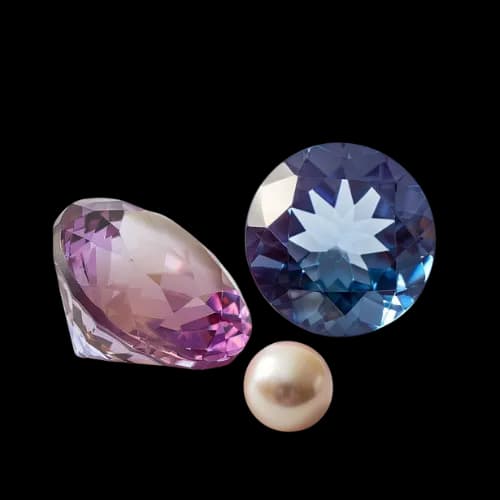
Pearl & Alexandrite
The timeless pearl and the rare color-changing alexandrite — symbols of purity, wisdom, and good fortune
Quick answer: The birthstone for June is Pearl & Alexandrite.
June is one of the few months with two birthstones: the classic pearl, the only gem formed by a living organism, and the rare alexandrite, prized for its dramatic color change from green to red.
What Is the Birthstone for June?
The June birthstones are pearl and alexandrite. June is one of only three months blessed with two recognized birthstones, giving those born in this month a choice between timeless elegance and rare, color-shifting beauty.
Pearls are unique in the gemstone world — they are the only gems formed by a living organism. When an irritant enters an oyster, mussel, or clam, the mollusk coats it in layers of lustrous nacre over months or years, producing the pearl we know. The word "pearl" likely derives from the Latin perna, meaning "leg," a reference to the leg-shaped bivalve shell.
Alexandrite, discovered in Russia's Ural Mountains in 1830, is one of the rarest gemstones on Earth. It appears green in daylight and shifts to red or purplish-red under incandescent light, earning it the poetic description of "emerald by day, ruby by night."
Pearl & Alexandrite Meaning & Symbolism
June's two birthstones carry complementary yet distinctive symbolism, offering rich meaning for those born in this month.
Purity & Innocence
Pearl has been the universal symbol of purity for centuries — the classic bridal gem representing an unblemished heart and sincere intentions.
Wisdom & Experience
Unlike gems formed in the earth, pearl grows through a living process — symbolizing wisdom gained through life experience rather than study alone.
Transformation
Alexandrite's color change embodies duality and adaptability, resonating with those who thrive in change and see the world from multiple perspectives.
Prosperity & Luck
Alexandrite is considered a powerful good-luck stone, believed to attract wealth, success, and favorable outcomes in business and personal life.
Loyalty & Integrity
Pearl strengthens bonds of trust and commitment, making it a traditional gift between partners and a symbol of enduring sincerity.
Emotional Balance
Born from the sea, pearl is linked to lunar energy and emotional calm — soothing stress, promoting serenity, and nurturing inner harmony.
Pearl & Alexandrite Colors & Varieties
June's birthstones span an extraordinary range — from the soft luster of pearls to the shifting hues of alexandrite:
Akoya Pearl
Classic White & Cream
The quintessential pearl — perfectly round with mirror-like luster, cultivated primarily in Japan and China.
South Sea Pearl
White, Cream & Gold
Among the largest cultured pearls, prized for their satiny luster and warm golden or silvery-white hues.
Tahitian Pearl
Black, Gray & Peacock
The legendary "black pearls" of French Polynesia, displaying dark overtones of green, blue, and purple.
Freshwater Pearl
Pink, Lavender & White
Affordable and diverse, available in a wide palette of pastel colors and a variety of shapes.
Russian Alexandrite
Green to Raspberry Red
The original and finest — vivid green in daylight shifting to rich raspberry red under incandescent light.
Brazilian Alexandrite
Blue-Green to Purple-Red
Cooler tones than Russian material, with excellent color change and increasing market presence.
Why Are Pearl & Alexandrite the June Birthstones?
Pearl has been associated with June for centuries, tied to the month through its connection to the moon, the sea, and the idea of purity. In many ancient cultures, pearls were linked to lunar cycles and the summer solstice — both of which fall within June's span. Brides have worn pearls on their wedding day since Roman times, and June has long been the most popular month for weddings.
When the modern birthstone list was standardized in 1912, pearl was confirmed as the primary June birthstone. Alexandrite was later added as a secondary option, partly because pearls were considered too soft for some jewelry applications and partly to give June-born individuals a mineral alternative with greater durability.
Together, pearl and alexandrite connect beautifully to the two zodiac signs of June: Gemini appreciates alexandrite's dual nature and changeable color, while Cancer resonates with pearl's lunar energy, emotional depth, and nurturing symbolism.
The History of Pearl & Alexandrite
Pearl fishing stretches back at least 6,000 years. Ancient civilizations in China, India, Egypt, Rome, and Persia all treasured pearls as the ultimate symbol of wealth and status. In ancient Rome, pearls were so valuable that Julius Caesar passed a law restricting pearl ownership to the ruling class.
The discovery of pearl beds in the Americas during the 1500s launched the "Pearl Age" in Europe, where these gems adorned every royal court. The invention of cultured pearl farming by Kokichi Mikimoto in the early 20th century transformed the industry, making pearls accessible to a far wider audience while protecting wild oyster populations.
Alexandrite's history is far shorter but equally captivating. Discovered in Russia's Ural Mountains in 1830, it was named after Czar Alexander II because it was reportedly found on his birthday. Its green and red colors matched the imperial Russian military colors, making it an instant favorite of the aristocracy. The original Russian deposits are now nearly depleted, adding to the stone's legendary rarity.
Today, significant alexandrite sources include Brazil, Sri Lanka, and East Africa, though none quite replicate the vivid color change of the finest Russian material. Pearl farming meanwhile thrives worldwide, with China, Japan, Australia, Indonesia, and French Polynesia producing billions of dollars' worth of cultured pearls annually.
Pearl & Alexandrite Properties
⚗️Physical Properties
- Pearl Composition
- Calcium carbonate (CaCO₃)
- Pearl Hardness
- 2.5–4.5 on Mohs scale
- Pearl Luster
- Pearly (orient / overtone)
- Alexandrite Mineral
- Chrysoberyl (BeAl₂O₄)
- Alexandrite Hardness
- 8.5 on Mohs scale
- Alexandrite Crystal System
- Orthorhombic
- Alexandrite Refractive Index
- 1.746–1.755
🌍Where They Are Found
Pearl and alexandrite come from diverse sources around the globe:
Pearl vs. Alexandrite: How They Compare
June's two birthstones could not be more different. Here is a side-by-side comparison to help you choose:
| Feature | Pearl | Alexandrite |
|---|---|---|
| Origin | Organic (formed by mollusks) | Mineral (chrysoberyl variety) |
| Hardness | 2.5 – 4.5 Mohs (soft) | 8.5 Mohs (very hard) |
| Color | White, cream, pink, black, gold | Green in daylight, red in incandescent |
| Price Range | $50 – $5,000+ per strand | $500 – $70,000+ per carat |
| Durability | Delicate, needs gentle care | Very durable, suitable for daily wear |
| Best For | Classic elegance, bridal jewelry | Statement rings, collectors, unique pieces |
| Symbolism | Purity, wisdom, loyalty | Transformation, luck, prosperity |
How to Care for Pearl & Alexandrite Jewelry
Pearl and alexandrite have very different care requirements. Pearls are organic and delicate; alexandrite is a hard mineral gem. Here are essential tips for each:
Pearl: Wipe with soft, damp cloth after wearing
Pearl: Store separately in soft cloth or pouch
Pearl: Avoid chemicals, perfumes, hairspray, heat, direct sunlight
Pearl: Always put pearls on last and take them off first when dressing
Pearl: Have pearl strands restrung every few years as the silk thread deteriorates over time
Alexandrite: Clean with warm, soapy water and soft brush
Alexandrite: Ultrasonic cleaners generally safe but not recommended for treated stones
Alexandrite: Avoid harsh chemicals and prolonged exposure to extreme heat
Alexandrite: Store separately to prevent scratching other gemstones
How to Choose June Birthstone Jewelry
Choosing between pearl and alexandrite depends on your style, budget, and intended use. For timeless versatility that pairs with everything, pearls are unmatched. For a rare, conversation-starting gem with dramatic flair, alexandrite is extraordinary.
- 1. Pearl luster: The most important quality factor. Look for a sharp, mirror-like reflection on the surface — the sharper the better.
- 2. Pearl shape: Perfectly round pearls command a premium. Baroque and drop shapes offer unique beauty at lower prices.
- 3. Alexandrite color change: The most valuable alexandrite shows a strong, complete color shift from green to red. Weak or partial changes are less desirable.
- 4. Setting considerations: Pearls suit simple settings that showcase their luster. Alexandrite benefits from open settings that allow light to pass through the stone.
Fascinating Facts About Pearl & Alexandrite
Pearls are the only gemstones formed by a living organism, making them unique in the gemstone world. They are also the only gems that don't require cutting or polishing to reveal their beauty.
Alexandrite is often called "emerald by day, ruby by night" due to its remarkable color-changing properties. This phenomenon, known as the "alexandrite effect," is caused by the way the stone absorbs light.
One of the most famous pearls in history, La Peregrina ("The Wanderer"), was discovered in the 16th century and owned by Spanish royalty before being purchased by Richard Burton for Elizabeth Taylor in 1969.
Fine-quality alexandrite is actually rarer than diamond and can command higher per-carat prices than most other gemstones. A top-quality alexandrite over one carat is among the most expensive gemstones in the world.
June Birthstone by Date
No matter which day in June you were born, pearl and alexandrite are your birthstones. Here's how each part of the month connects to their energy:
June 1–10
Gemini
Early June births channel pearl's nurturing wisdom and alexandrite's quick adaptability as summer begins.
June 11–20
Gemini
Mid-June connects to pearl's calming influence and alexandrite's dual vision — seeing all sides of a situation.
June 21–30
Cancer
Late June harnesses pearl's lunar intuition and the summer solstice's peak energy for emotional depth and creativity.
View All June Dates
June Birth Flower: Rose & Honeysuckle
June's birth flowers — the rose and honeysuckle — share pearl's themes of love, devotion, and timeless beauty. Both the luminous pearl and the fragrant rose have long been symbols of romance, making June a truly enchanting birth month.
Explore June's Birth Flowers