October BirthstoneOpal & Tourmaline
Updated July 2026
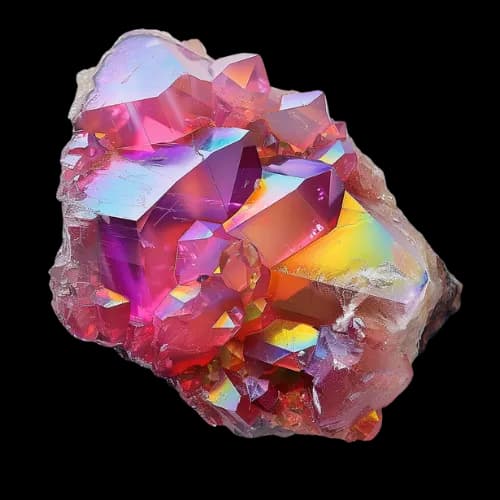
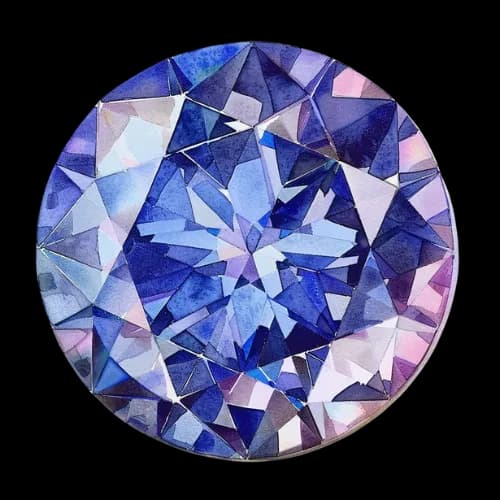
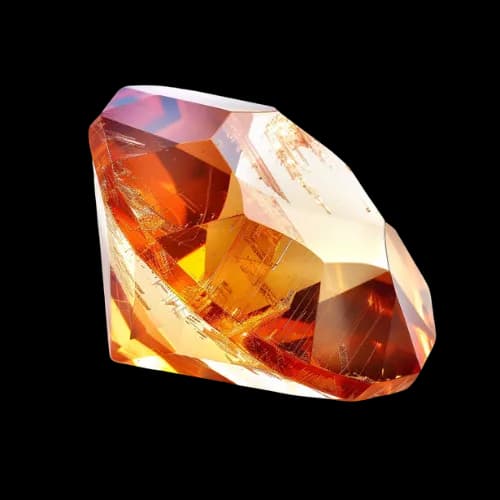
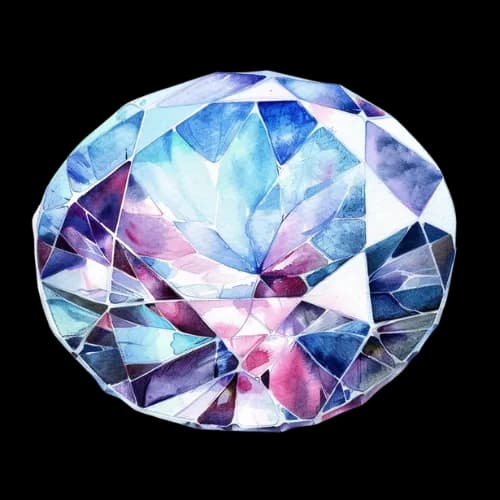
Two colorful gems: one with shifting rainbow fire, the other in nearly every color you can name
Quick answer: The birthstone for October is Opal & Tourmaline.
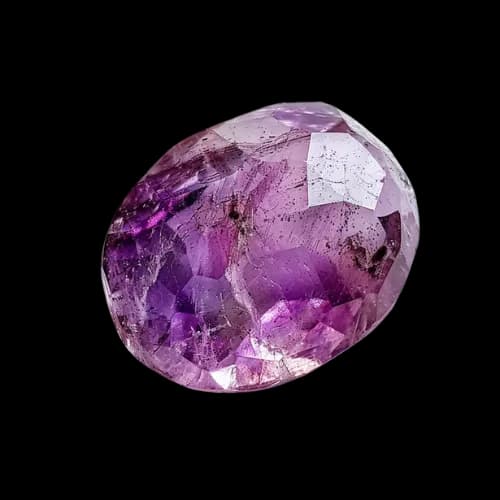
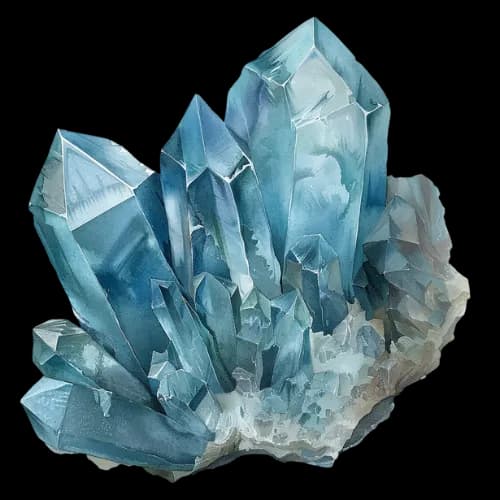
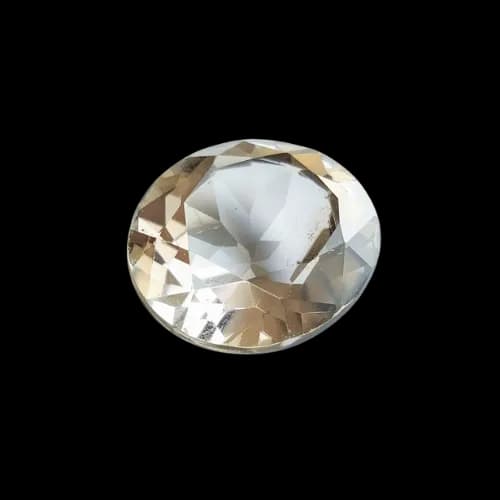
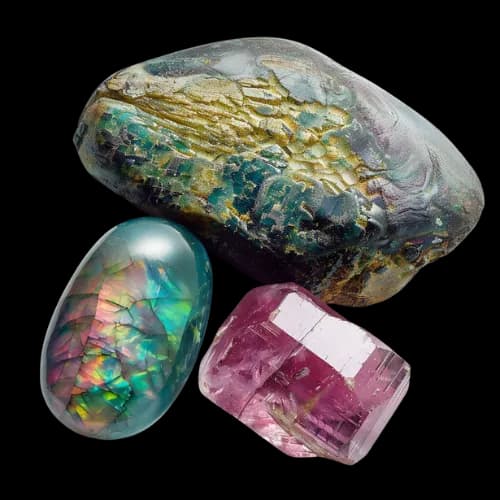
October has two official birthstones: opal, known for its play-of-color, and tourmaline, which occurs in more colors than any other gemstone.
What Is the Birthstone for October?
October has two birthstones: opal and tourmaline. That makes October one of the most colorful months on the birthstone calendar. Opal has a unique "play-of-color" (a shifting display of spectral hues caused by light diffracting through microscopic silica spheres). Tourmaline has the broadest color range of any gemstone family.
The name "opal" likely derives from the Sanskrit upala, meaning "precious stone," while "tourmaline" comes from the Sinhalese turmali, meaning "mixed colored stones." The pairing fits October, the month when autumn color is at its most vivid.
Tourmaline was added as a modern October birthstone to complement opal, giving those born in October a more durable alternative for everyday jewelry. Both stones are equally valid and officially recognized, so October-born individuals can choose whichever gem speaks to them, or enjoy both.
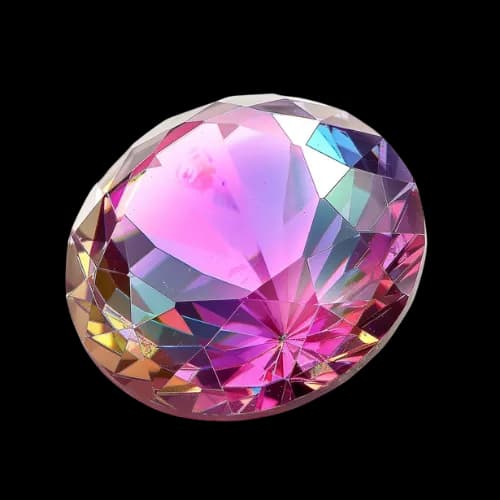
Opal & Tourmaline Meaning & Symbolism
October's two birthstones have complementary meanings. One is tied to creativity, the other to protection and grounding.
Hope & Optimism
Opal's shifting rainbow colors stand for hope and possibility. Light and color emerge even from the darkest stone.
Creativity & Inspiration
Artists and writers have long treasured opal as a muse stone, believed to spark imagination and originality.
Protection & Grounding
Black tourmaline is one of the best-known protective stones, long used as a talisman to ward off negativity.
Healing & Balance
Both stones are associated with emotional healing. Opal supports emotional release, while tourmaline promotes balance between mind, body, and spirit.
Love & Passion
Pink tourmaline (rubellite) and fire opal are linked to matters of the heart, encouraging compassion and emotional connection.
Transformation
As autumn's birthstones, opal and tourmaline stand for transformation. The courage to start new chapters and let go of what no longer fits.
Opal & Tourmaline Colors & Varieties
Together, October's birthstones offer the widest color palette of any month. From opal's shifting spectral fire to tourmaline's solid rainbow, there's a stone for every taste:
Opal Varieties
Black Opal
Dark Body, Vivid Play-of-Color
The most valuable opal variety. Its dark backdrop makes the rainbow fire stand out. Best examples come from Lightning Ridge, Australia.
White Opal
Light Body, Spectral Flashes
The most common variety. White or cream body with gentle flashes of spectral color. Australian white opals lead the market.
Fire Opal
Vivid Orange to Red
Transparent to translucent with a warm body color. Mexican fire opals are the most famous, prized for their sunset glow.
Boulder Opal
Opal Veins in Ironstone
Thin seams of precious opal in ironstone. The dark host rock creates strong contrast with the play-of-color.
Crystal Opal
Transparent with Brilliant Fire
Semi-transparent body that lets light pass through, adding depth and brightness to the color play.
Tourmaline Varieties
Paraiba Tourmaline
Neon Blue to Green
The most valuable tourmaline variety. Its electric color comes from trace copper. Discovered in Brazil in the 1980s.
Rubellite
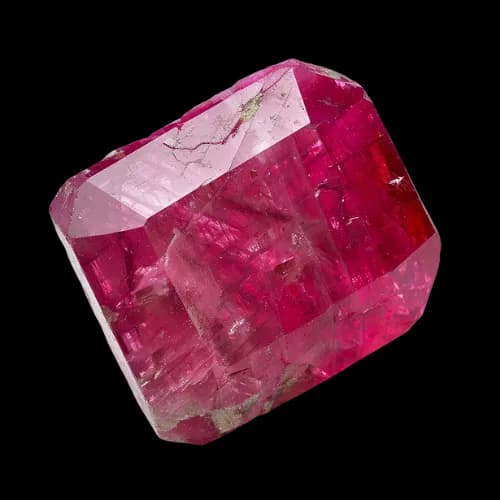
Red to Deep Pink
The finest pink-to-red tourmaline. Holds its vivid color in all lighting and is often compared to ruby.
Watermelon Tourmaline
Green & Pink Zones
Green on the outside, pink on the inside. Cut in cross-section, it looks like a slice of watermelon.
Indicolite
Blue to Blue-Green
The blue variety of tourmaline, ranging from teal to deep navy. Fine pure-blue specimens are rare and highly valued.
Chrome Tourmaline
Vivid Emerald Green
Colored by chromium like emerald itself. These deep green tourmalines from East Africa rival emeralds in color.
Why Are Opal & Tourmaline the October Birthstones?
Opal has been associated with October for centuries, long before birthstone lists were standardized. Ancient Romans considered opal the most precious of all gemstones because it contained the colors of every other stone. Its multi-colored nature made it a natural fit for October, when autumn color is at its most varied.
When the American National Association of Jewelers standardized birthstones in 1912, opal was named the October birthstone. Tourmaline was later added as a modern alternative in 1952 by the Jewelry Industry Council, mostly because opal's relative softness and a lingering (unfounded) superstition about bad luck made some buyers hesitant. Tourmaline's harder structure and wide color range made it a practical complement.
Together, opal and tourmaline connect to October's two zodiac signs: Libra's love of beauty and harmony resonates with opal's balanced play-of-color, while Scorpio's intensity and depth align with tourmaline's protective, transformative energy.
The History of Opal & Tourmaline
Opal's recorded history goes back over 6,000 years. The earliest known opal artifacts, dating to around 4000 BCE, were found in a cave in Kenya. Ancient Romans prized opal above all other gemstones, calling it opalus, or "precious stone." They believed it held the powers of every gem whose color appeared in its play-of-color, which made it the most fortunate of all stones.
In medieval Europe, opals were considered lucky charms that granted the power of foresight. However, the publication of Sir Walter Scott's novel "Anne of Geierstein" in 1829, in which an opal talisman brings destruction to its owner, sparked a superstition that damaged the opal market for nearly fifty years. Queen Victoria helped revive opal's reputation by wearing and gifting opals throughout her reign.
Tourmaline's documented history is shorter but just as colorful. Portuguese explorers found green tourmalines in Brazil during the 16th century and mistook them for emeralds, a mix-up that persisted for centuries. The name "tourmaline" wasn't widely used until the early 1700s, when Dutch merchants imported the stone from Sri Lanka and noticed its electrical properties.
In the late 1800s, Tiffany & Co. gemologist George Frederick Kunz championed tourmaline and introduced it to the American jewelry market. Around the same time, the Dowager Empress Cixi of China became a major collector of pink tourmaline, importing large quantities from California mines and raising the stone's international profile.
Opal vs. Tourmaline: Comparison
⚗️Opal Properties
- Mineral
- Hydrated silica (SiO₂·nH₂O)
- Hardness
- 5.5–6.5 on Mohs scale
- Crystal System
- Amorphous
- Refractive Index
- 1.44–1.46
- Chemistry
- SiO₂·nH₂O
- Special Feature
- Play-of-color (light diffraction)
⚗️Tourmaline Properties
- Mineral
- Complex borosilicate
- Hardness
- 7–7.5 on Mohs scale
- Crystal System
- Trigonal
- Refractive Index
- 1.624–1.644
- Chemistry
- Na(Li,Al)₃Al₆(BO₃)₃Si₆O₁₈(OH)₄
- Special Feature
- Pyroelectric & piezoelectric
🌍Where Opal & Tourmaline Are Found
How to Care for Opal & Tourmaline Jewelry
Opal and tourmaline have different care requirements. Opal needs gentle handling, while tourmaline is more forgiving:
Opal: Clean with mild soap and lukewarm water using a soft cloth.
Opal: Avoid ultrasonic cleaners, steam cleaners, and harsh chemicals.
Opal: Protect from sudden temperature changes and prolonged heat.
Opal: Store wrapped in soft cloth, separate from other jewelry.
Opal: Occasionally wipe with a damp cloth if stored long-term to prevent dehydration.
Tourmaline: Clean with mild soap and warm water using a soft brush.
Tourmaline: Ultrasonic cleaners are generally safe for untreated stones.
Tourmaline: Avoid prolonged exposure to strong heat which can alter color.
Tourmaline: Store separately to prevent scratching softer gemstones.
How to Choose October Birthstone Jewelry
When choosing between opal and tourmaline, think about your lifestyle. Opal is ideal for statement pieces, pendants, and earrings where its play-of-color shows best. Tourmaline's greater durability makes it better suited for rings and everyday jewelry.
- 1. Opal, color play: Look for vibrant, full-spectrum play-of-color. The more colors visible (especially red), the more valuable the stone.
- 2. Tourmaline, color saturation: Seek vivid, evenly distributed color. Pink, green, and blue varieties are most popular; Paraiba commands premium prices.
- 3. Setting matters: Opal benefits from protective bezel settings. Tourmaline is durable enough for prong settings in rings.
- 4. Consider lifestyle: Active wearers should lean toward tourmaline for daily pieces. Reserve opal for earrings, pendants, and special occasions.
Fascinating Facts About Opal & Tourmaline
Opals contain up to 20% water trapped within their silica structure, making them sensitive to extreme dryness. Ancient opals stored in very dry conditions can develop a network of tiny cracks called "crazing" if exposed to moisture too quickly.
Australia produces approximately 95% of the world's precious opals, with fields in Lightning Ridge, Coober Pedy, and Andamooka being the most famous sources. Ethiopia has emerged as an important new source of high-quality opals in recent years.
The play of color in opals is not caused by pigments but by the diffraction of light through a regular pattern of microscopic silica spheres within the stone. The size of these spheres determines which colors are reflected.
Tourmaline is pyroelectric: it generates an electrical charge when heated or cooled. Dutch jewelers in the 1700s used heated tourmaline to pull ash from their meerschaum pipes, calling it "aschentrekker" (ash puller).
Tourmaline is also piezoelectric, generating an electrical charge when pressure is applied. This property makes it useful in industrial applications including pressure gauges and depth sounding equipment.
The Paraiba tourmaline, discovered in the late 1980s in Brazil, has an electric blue-green color caused by copper. These tourmalines can sell for over $30,000 per carat, putting them among the most expensive colored gemstones.
October Birthstone by Date
No matter which day in October you were born, opal and tourmaline are your birthstones. Here's how each part of the month connects to them:
October 1–10
Libra
Early October births channel opal's creative spark and tourmaline's balancing energy, in line with Libra's love of harmony and beauty.
October 11–22
Libra / Scorpio
Mid-October connects to themes of transformation and depth as the zodiac shifts. Opal's changing colors mirror that transitional feel.
October 23–31
Scorpio
Late October leans on tourmaline's protective power and opal's depth, suited to Scorpio's intense, perceptive nature.
October birthstone for every date
| Date | Zodiac Sign | Birthstone |
|---|---|---|
| October 1st | Libra | Opal & Tourmaline |
| October 2nd | Libra | Opal & Tourmaline |
| October 3rd | Libra | Opal & Tourmaline |
| October 4th | Libra | Opal & Tourmaline |
| October 5th | Libra | Opal & Tourmaline |
| October 6th | Libra | Opal & Tourmaline |
| October 7th | Libra | Opal & Tourmaline |
| October 8th | Libra | Opal & Tourmaline |
| October 9th | Libra | Opal & Tourmaline |
| October 10th | Libra | Opal & Tourmaline |
| October 11th | Libra | Opal & Tourmaline |
| October 12th | Libra | Opal & Tourmaline |
| October 13th | Libra | Opal & Tourmaline |
| October 14th | Libra | Opal & Tourmaline |
| October 15th | Libra | Opal & Tourmaline |
| October 16th | Libra | Opal & Tourmaline |
| October 17th | Libra | Opal & Tourmaline |
| October 18th | Libra | Opal & Tourmaline |
| October 19th | Libra | Opal & Tourmaline |
| October 20th | Libra | Opal & Tourmaline |
| October 21st | Libra | Opal & Tourmaline |
| October 22nd | Libra | Opal & Tourmaline |
| October 23rd | Scorpio | Opal & Tourmaline |
| October 24th | Scorpio | Opal & Tourmaline |
| October 25th | Scorpio | Opal & Tourmaline |
| October 26th | Scorpio | Opal & Tourmaline |
| October 27th | Scorpio | Opal & Tourmaline |
| October 28th | Scorpio | Opal & Tourmaline |
| October 29th | Scorpio | Opal & Tourmaline |
| October 30th | Scorpio | Opal & Tourmaline |
| October 31st | Scorpio | Opal & Tourmaline |
October Birth Flower: Marigold & Cosmos
October's birth flowers, the marigold and cosmos, echo the warmth and color range of opal and tourmaline. The marigold's golden glow matches fire opal's warm tones, while the cosmos stands for order and harmony, complementing tourmaline's balancing energy.
Explore October's Birth Flowers