The History of Opal & Tourmaline
One gem the Romans called their most precious, the other unknown in Europe until the 1700s. Together they cover October.
The Ancient Origins of Opal
Opal has been dug out of the ground and worn as jewelry for a very long time. Archaeologists have found opal artifacts in a cave in Kenya dating back roughly 6,000 years, and by the height of the Roman Empire the stone was already considered a prize. The word "opal" most likely comes from the Sanskrit upala, meaning simply "precious stone," which tells you something about how highly it was regarded before it even had a name of its own.
Pliny the Elder wrote about opal in his Natural History, and for once he got specific. He describes a Roman senator named Nonius who owned an opal ring so prized that when the triumvir Mark Antony demanded it, Nonius chose exile instead, fleeing Rome rather than hand it over. Pliny valued the stone at 2,000,000 sesterces, an enormous sum, and described it as "as large as a hazel-nut." Kunz records the Nonius story in his 1913 study of gem lore and notes that Pliny's glowing description of the stone, "a softer fire than the carbuncle... the brilliant purple of the amethyst... the sea-green of the emerald, all shining together," fits opal so well that scholars still debate whether he was describing the exact gem we know today.
The Romans called it opalus and believed it combined the virtues of every gemstone whose color appeared in its play of light. That belief, that opal was a kind of gem of gems, gave it a reputation as the luckiest stone a person could own, a reputation that would later be turned completely upside down.
Opal's use as an amulet was not confined to Rome. Kunz notes that in the East, opal was widely worn specifically because it was believed to preserve its wearer from disease, a use that had nothing to do with its later, purely Western reputation for bad luck. Roman writers separately record that opal was considered too precious even to imitate convincingly. Pliny observed that Indian craftsmen who tried to reproduce the opalus in glass never quite managed it, calling opal, alongside pearl, one of the very few gems that resisted convincing forgery in the ancient world.

Opal Through the Middle Ages
Medieval Europe kept opal's reputation intact. The stone was often called ophthalmios, or "eye-stone," and writers of the period credited it with protecting and even improving eyesight. Albertus Magnus, the 13th-century bishop and scholar, described a gem called the orphanus set into the crown of the Holy Roman Emperor, a translucent stone that "flashed and sparkled with the color of bright, ruddy wine" and was said to have once shone in the dark. Most gem historians believe he was describing a fine opal.
Opal was also nicknamed patronus furum, "patron of thieves," on the theory that wrapping the stone in a bay leaf could render its wearer invisible. By the early 1400s, the opal mines near Cernowitz in Hungary (then the only significant European source) employed more than 300 people, and Hungarian opal supplied the European market for the next several centuries with no hint of the bad-luck reputation that would eventually follow the stone.
Kunz is direct about where that reputation actually came from. He traces it to a "careless reading" of Sir Walter Scott's 1829 novel Anne of Geierstein, in which an enchanted noblewoman wears a magical opal that shatters into ashes when touched by holy water. Scott never presented the stone itself as unlucky, only the fictional character's stone, but readers conflated the two. The superstition stuck for the rest of the 19th century, and some retellings claim diamond merchants amplified the rumor to dampen competition from opal, though that particular claim has never been documented and is best treated as folklore about folklore. Kunz's own explanation is more mundane: opal's genuine sensitivity to moisture and its tendency toward fine cracking, called crazing, gave the superstition just enough real-world backing to feel plausible, even though neither property has anything to do with luck.
Tourmaline: A Gem Europe Discovered Late
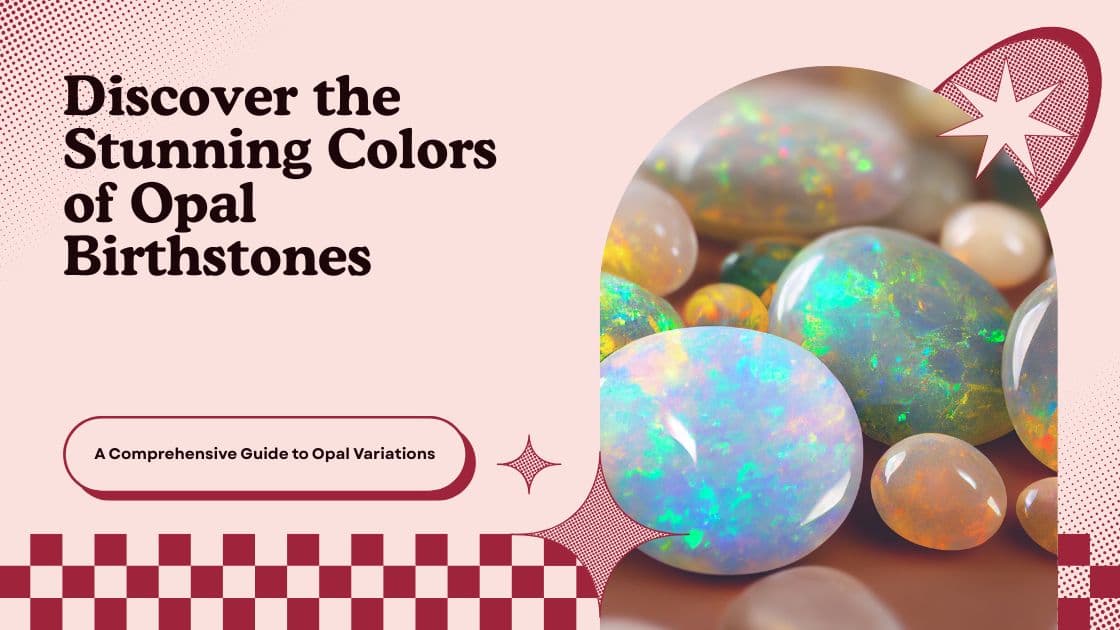
Tourmaline's story starts centuries after opal's. Dutch traders brought gem-quality tourmaline out of Sri Lanka to Europe around 1700, and the name comes from the Sinhalese turamali, roughly "mixed colored stones," a fitting name for a mineral family that comes in nearly every hue on the color wheel. Dutch jewelers also discovered that heated tourmaline develops an electric charge strong enough to attract ash and lint, a property called pyroelectricity, and they nicknamed the stone aschentrekker, "ash puller," using it to clean the ash out of their pipes.
Because tourmaline only entered European awareness in the 1700s, gemologist George Frederick Kunz argued in his 1913 survey of birthstone lore that it did not belong on a birthstone list at all. He wrote that tourmaline "seems out of place in the list of birth-stones, which ought only to comprise precious or semi-precious stones which have been known and worn from ancient times," and pushed instead for beryl to represent October. His objection lost. Tourmaline's color range and durability were exactly what the modern jewelry trade wanted, and the stone kept climbing in popularity anyway.
The irony is that Kunz himself did more than almost anyone to make tourmaline popular in America. He first walked into Tiffany & Co. in 1875 as a 20-year-old carrying fine green tourmaline from the Mount Mica mine in Maine, a meeting that launched his long career as the firm's chief gemologist. Kunz spent decades afterward championing Maine and California tourmaline to American buyers, arguing that homegrown gems deserved the same respect as European stones, even while privately questioning tourmaline's credentials as a genuine birthstone in his own writing decades later. That contradiction, a skeptic who was also the gem's biggest promoter, says a lot about how quickly tourmaline moved from obscurity to a Tiffany staple in the space of a single career.
Opal & Tourmaline Across Cultures
Ancient Rome
Romans ranked opal above nearly every other gem. Pliny's account of Senator Nonius, who chose exile over surrendering his opal ring, remains the most vivid piece of opal lore to survive from antiquity.
Australian Opal Fields
Opal mining took off in Australia from the 1870s onward. Lightning Ridge began producing its famous black opal around the turn of the 20th century, and Coober Pedy's fields opened in 1915. Australia has supplied the vast majority of the world's precious opal ever since.
Sri Lanka & the Dutch Trade
Tourmaline's documented history begins in Sri Lanka's gem gravels, from where Dutch merchants exported it into Europe around 1700 under the Sinhalese name that gave the stone its modern name.
Qing Dynasty China
Empress Dowager Cixi had a well-documented fondness for pink tourmaline, sourcing large quantities from mines in San Diego County, California, at the turn of the 20th century, a demand that helped establish America's own tourmaline mining industry.
Famous Opal & Tourmaline Specimens
The Opal of Nonius
Recorded by Pliny the Elder, this hazel-nut-sized opal was valuable enough that its Roman owner fled the city rather than give it up to Mark Antony. The stone itself was never recovered, but the story is the earliest detailed account of a named opal in Western history.
Olympic Australis
Unearthed in 1956 at Coober Pedy, South Australia, the Olympic Australis weighs roughly 17,000 carats and remains one of the largest and most valuable opals ever found. It is now part of a private collection after decades on public display.
The Paraiba Discovery
In 1989, after nearly a decade of searching, prospector Heitor Dimas Barbosa found a small deposit of copper-bearing tourmaline near São José da Batalha in Paraiba, Brazil. Its electric neon blue-green color, unlike anything seen in tourmaline before, made Paraiba tourmaline one of the most sought-after colored gems in the world almost overnight.
The Wollo Opal Fields
Ethiopia's Wollo Province opal deposit, discovered in 2008, introduced a new type of precious opal to the market with unusually strong play-of-color and, unlike most Australian material, a tendency to form in volcanic host rock. Ethiopian opal has since become a major supplement to Australian supply.
None of these specimens quite matches the mythic status of the Braganza, the diamond-sized stone in the Portuguese crown jewels that turned out to be colorless topaz. But between Pliny's account of Nonius and the ongoing hunt for the next Paraiba-caliber tourmaline deposit, opal and tourmaline have generated their own steady stream of headline discoveries for over two thousand years.
Opal & Tourmaline in Modern Times
Scientific Understanding
- Opal is now understood as hydrated silica: microscopic spheres of silica arranged in a regular pattern that diffracts light into spectral color, a structure only confirmed under electron microscopy in the 1960s.
- Tourmaline turned out to be a family of related borosilicate minerals rather than a single species, which explains why the "same" gem can appear in so many colors depending on trace elements like iron, manganese, chromium, or copper.
- Gemologists eventually settled the centuries-old confusion between opal and other iridescent minerals, and separately confirmed that Pliny's opalus almost certainly could not have come from any deposit known to the Romans, since Hungary's mines were not yet in use.
- Tourmaline's pyroelectric and piezoelectric properties, first noticed by Dutch pipe-cleaners in the 1700s, are now used deliberately in pressure gauges and depth-sounding instruments, a rare case of gem-trade folklore turning into a working industrial application.
Mining and Production
- Australia still supplies most of the world's precious opal, led by Lightning Ridge, Coober Pedy, and Andamooka, with Ethiopia's Wollo fields now a significant secondary source.
- Brazil, Nigeria, Mozambique, Afghanistan, Madagascar, and Pakistan all produce commercial quantities of tourmaline today, though fine Paraiba-type material remains almost entirely limited to its original Brazilian source and a handful of African deposits discovered decades later.
- Heat treatment and stabilization techniques developed in the 20th century made both stones more consistently available, though untreated fine opal and Paraiba tourmaline still command the steepest premiums.
Cultural Significance Today
- Opal remains October's traditional birthstone, and the old bad-luck superstition has largely faded, helped along by Queen Victoria's well-documented fondness for the gem in the 19th century.
- Tourmaline is now firmly established as October's modern alternative, valued for the same reason Kunz once objected to it: it is durable, plentiful in every color, and easy to wear every day.
- Both stones remain popular in engagement and anniversary jewelry, with opal marking the 14th wedding anniversary and tourmaline the 8th.
- Kunz would likely be surprised that tourmaline, the gem he considered too young for the list, has now been an official October birthstone for longer than opal was the sole one, a reminder that "tradition" in the jewelry trade is often younger than it looks.
Sources & Further Reading
This history draws on gemological references and George Frederick Kunz's 1913 study of gem folklore. For deeper reading: