The History of Ruby
Exploring the fiery past of July's birthstone, from Sanskrit temple texts to the world's first laser
The Ancient Origins of Ruby
Ruby's oldest name says everything about how it was regarded. In Sanskrit, it's ratnaraj, king of precious stones, and ratnandyaka, leader of precious stones. A particular shade earned its own name, padmaraga, red as the lotus. No other gem in the ancient Indian lapidary tradition commanded quite that level of respect.
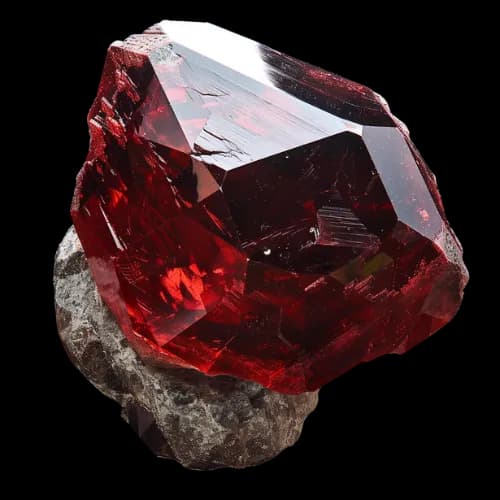
The stone itself is corundum, the same mineral family as sapphire, colored red by trace amounts of chromium. India mined ruby earlier than anywhere else, and the gem traveled from there along trade routes into Rome, where the naturalist Pliny the Elder documented it in his first-century Natural History, noting its hardness and density. Centuries later, the Bible would place a ruby among the twelve stones set into the Breastplate of Aaron, cementing its place among the ancient world's most significant gems.
Ancient Hindu treatises on gemstones described a nine-gem talisman called the naoratna, meant to concentrate the favorable influence of the sun, moon, and five visible planets into a single ring. Ruby sat at the center, representing the sun itself, with every other stone arranged around it. That placement alone tells you where ruby ranked in the ancient hierarchy of gems.
The English name traces back to the Latin ruber, simply meaning “red.” That plain, functional origin is almost funny next to the mythic weight the stone carried. Rubies appear four times across the Bible, tied to attributes like beauty and wisdom, and Sri Lanka, known locally for its rathu kata stones, was supplying rubies to traders more than 2,500 years ago. By the time ruby reached the Etruscans and later the Romans, it was already an old and well-traveled gem.
Ruby Through Medieval Times and Asia's Warrior Cultures
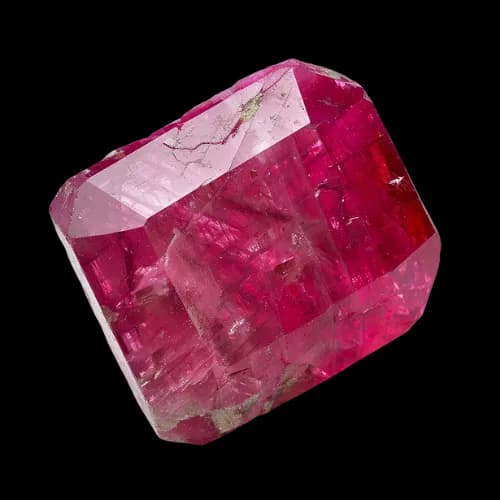
In Burma, home to the finest rubies ever mined, belief in the stone's power went further than jewelry. Warriors are recorded, from at least 600 AD onward, inserting rubies directly into their flesh before battle, convinced that a stone worn under the skin, not just around the neck, would make them invulnerable to spear, sword, or gunfire. The Mogok Valley, which produced these stones, remained the world's dominant ruby source for centuries, and its finest “pigeon's blood” rubies, a deep red with a hint of blue, were reserved for Burmese royalty.
Medieval Europe built its own body of belief around ruby. Kunz records a fourteenth-century treatise attributed to Sir John Mandeville, which promised that the owner of a fine ruby would live in peace with all men, keep his land and rank secure, and be protected from every peril, so long as the stone was set in a ring, bracelet, or brooch and worn on the left side. Other medieval writers believed rubies darkened when danger approached and brightened again once it passed, giving the wearer an early warning worn right on the hand.
Hindu tradition split rubies into four castes, mirroring the caste system itself: the true Oriental ruby ranked as a Brahmin, with rubicelle, spinel, and balas-ruby occupying lower tiers. A person who owned a genuine Brahmin-caste ruby was believed to be safe from any enemy, though the stone's power depended on keeping it away from lesser specimens, which were thought to contaminate its virtue.
The stone's deep red also invited a simpler explanation than caste or talisman. Kunz notes that the glowing hue of ruby suggested an inner flame that could not be hidden, one so persistent it would supposedly shine straight through cloth wrapped around the stone, or heat water enough to make it boil if the ruby were dropped in. It is the kind of belief that only makes sense once you have actually watched a fine ruby catch the light.
Ruby Across Cultures
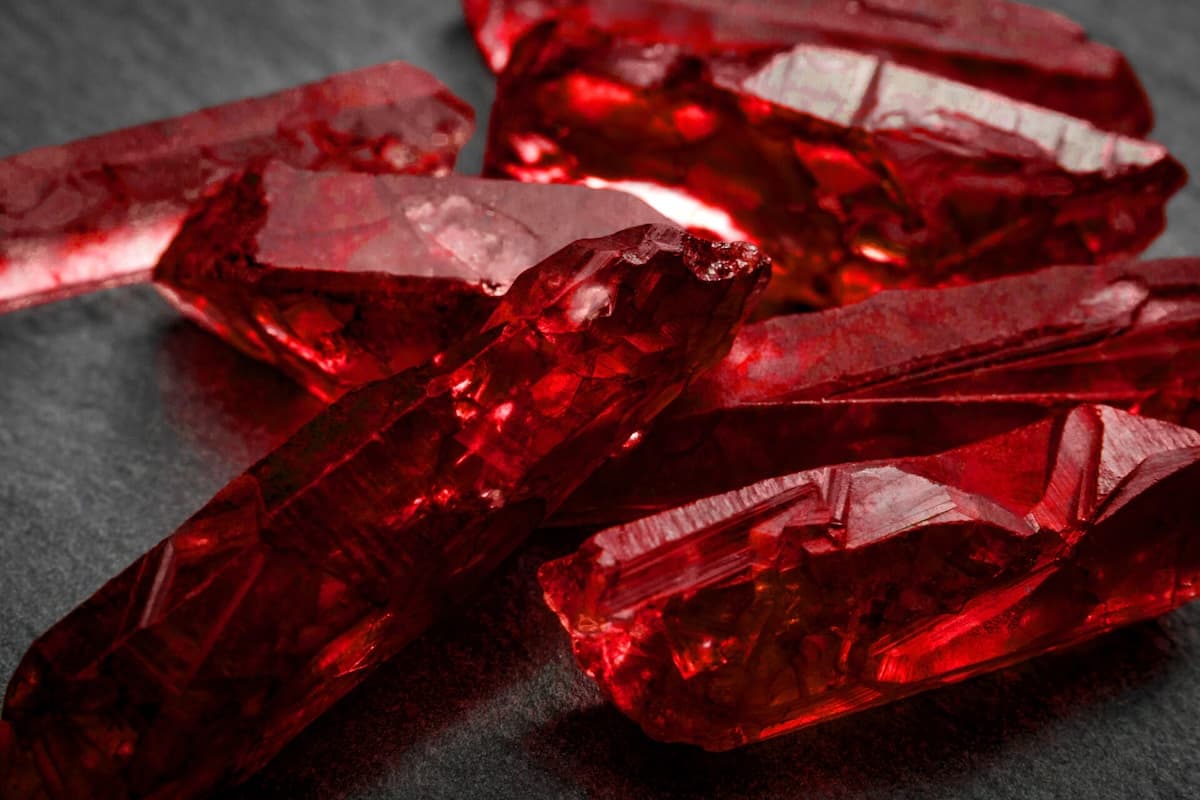
Few gemstones traveled as far, or were revered as consistently across such different societies, as ruby:
India
Ancient Hindu texts describe ruby as the most precious of all gems. One belief held that offering a fine ruby to Krishna guaranteed rebirth as an emperor, while offering even a small ruby guaranteed rebirth as a king. Rubies were mined in India, and later in Sri Lanka, more than 2,500 years ago, making the region ruby's original source long before Burma entered the picture.
Burma (Myanmar)
The Mogok Valley has produced the world's finest rubies for centuries and remains the benchmark by which other sources are judged. Beyond the flesh-embedding ritual practiced by Burmese warriors, the finest stones were reserved for the monarchy. Pigeon's blood ruby, prized for its saturated red with a whisper of blue, still commands the highest prices at auction today.
Ancient Rome
Roman writers folded ruby into their broader fascination with gemstones. Pliny the Elder catalogued it in Natural History, describing its hardness and weight, while Roman traders helped move rubies west along routes connecting India and the Mediterranean, introducing the stone to European markets centuries before the medieval period.
Medieval Europe
European royalty set rubies into crowns and regalia, believing the stone offered protection against poison, illness, and misfortune. Physicians of the period even prescribed powdered ruby for various ailments. Whether or not it worked, rubies became a fixture of European crown jewels that persists to this day.
Famous Ruby Specimens
The Sunrise Ruby
This 25.59-carat Burmese pigeon's blood ruby, set in a Cartier ring, sold for $30.3 million at a Sotheby's Geneva auction in May 2015, more than double its pre-sale estimate of $12 to $18 million. It remains the most expensive ruby, and the most expensive ruby per carat, ever sold at auction, and it helped push that Geneva sale to the highest total ever recorded for a jewelry auction.
The Rosser Reeves Star Ruby
At 138.7 carats, this Sri Lankan star ruby is one of the finest examples of asterism, the six-rayed star effect caused by needle-like rutile inclusions, ever found. Bought at a London auction in 1953 at just over 140 carats before light repolishing, the stone eventually belonged to advertising executive Rosser Reeves, who carried it unmounted in a velvet pouch, called it his good-luck charm, and donated it to the Smithsonian Institution in 1965, where it remains on display today.
The Black Prince's Ruby
Set into the front of the British Imperial State Crown, above the Cullinan II diamond, this 170-carat cabochon has been called a ruby since at least the mid-fourteenth century, when it was reportedly given to Edward, the Black Prince, by a Castilian king. It's actually a red spinel, a distinct mineral that gemologists did not formally distinguish from ruby until French mineralogist Jean-Baptiste Louis Romé de l'Isle separated the two species in 1783. The crown still bears its historic, if inaccurate, name.
The Timur Ruby
This 352.5-carat red spinel, engraved with the names of several Mughal and Persian rulers who once owned it, was set into a necklace made for Queen Victoria in 1849 and, like the Black Prince's Ruby, carried the ruby name for generations before gemologists correctly identified it as spinel in 1851. Both stones are reminders that, before modern gem testing, red and rare were often enough to earn a stone the ruby name.
Ruby in Modern Times
Scientific Understanding
- Gemologists now understand ruby precisely: corundum, or aluminum oxide, colored red by trace chromium, the same element behind emerald's green and alexandrite's color shift.
- French chemist Auguste Verneuil developed a commercially viable process for growing synthetic ruby around 1902, using flame fusion to melt and recrystallize aluminum oxide powder into gem-quality crystals, turning ruby from a rare luxury into an affordable, widely available stone.
- In 1960, physicist Theodore Maiman built the world's first working laser at Hughes Research Laboratories in California, using a synthetic ruby crystal as the lasing medium. Chromium, the same element that colors the gem red, turned out to be exactly what was needed to produce a coherent beam of light.
Mining and Production
- Myanmar's Mogok Valley dominated ruby production for centuries, but international sanctions and falling output shifted the market in the 2000s.
- The 2009 discovery of ruby deposits near Montepuez, Mozambique, transformed the industry within a decade. What began when a local resident found a ruby crystal while chopping wood, in an area geologists hadn't previously flagged for ruby, became the world's most productive ruby source, rivaling centuries of Burmese dominance.
- Other significant deposits are mined in Thailand, Sri Lanka, Vietnam, Madagascar, and Tanzania, giving today's ruby buyers more geographic origin options, and more transparency about where their stone came from, than at any point in history.
Cultural Significance Today
- The modern birthstone list ruby belongs to was standardized in 1912 by the American National Retail Jewelers Association, now known as Jewelers of America, cementing a connection between ruby and July that already had centuries of tradition behind it.
- At 9 on the Mohs hardness scale, second only to diamond, ruby remains one of the most durable colored gemstones available, a major reason it continues to show up in engagement rings and other daily-wear jewelry.
- Ruby also marks the 15th and 40th wedding anniversaries, carrying its old reputation for passion and protection into modern milestone gifts.
Sources & Further Reading
This history draws on gemological research from GIA and the American Gem Society, alongside George Frederick Kunz's 1913 study of gemstone folklore. For more detail on any of the facts above, these are good places to start: