The History of Peridot
Tracing August's yellow-green gemstone from a guarded island in the Red Sea to modern jewelry boxes
The Ancient Origins of Peridot
Peridot's story starts on a small, fog-wrapped island in the Red Sea. Ancient Egyptians and Greeks called the stone chrysolite, and later writers linked its name to Topazios, the island where it was mined. The name we use today, peridot, likely comes from the Arabic word "faridat," meaning gem. Centuries of trade and translation blurred the details, but the stone itself never lost its glow.
That island is Zabargad, also known as St. John's Island, off Egypt's coast. Egyptians mined peridot there from antiquity onward, and they did not make it easy for outsiders. Kunz records that unauthorized visitors who approached the island risked death, and even licensed gem-seekers could not spot the stone in daylight. They had to wait for nightfall, when the crystals were said to glow enough to mark the spot, then dig it out the next morning.
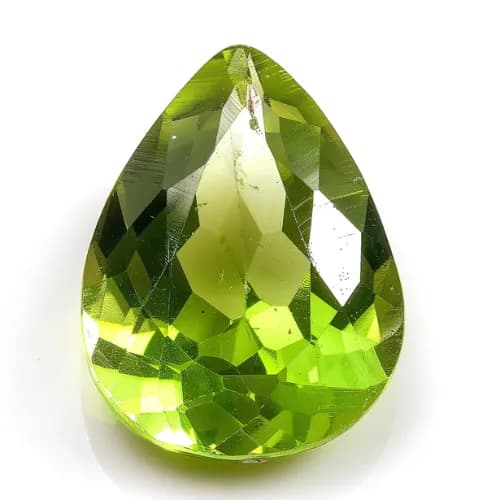
Peridot is gem-quality olivine, and its green color comes straight from iron in its crystal structure rather than a trace impurity, unlike many colored gems. Egyptians called it the gem of the sun and wore it to keep the terrors of the night at bay. Some historians even argue that Cleopatra's celebrated collection of "emeralds" was really Zabargad peridot. Given how easily the two stones were confused before modern gem testing, it is a fair guess.
There is also a biblical footnote worth knowing. Scholars studying the ceremonial breastplate described in the Book of Exodus, worn by the ancient Israelite high priest and set with twelve gems, now generally identify its second stone, called pitdah in Hebrew, as peridot rather than the topaz that early translators assumed. It's one more entry on a long list of ancient sources naming the stone wrong while still recognizing its value.
Peridot Through the Medieval and Renaissance Periods
Crusaders returning from the Holy Land carried Zabargad peridot back into Europe, where it landed in church treasuries and inventories, usually labeled emerald. Nobody could test a stone's chemistry in the twelfth century, so a rich green gem was an emerald until proven otherwise, and proof was a long way off. Some pieces traveled as diplomatic gifts, others as war spoils, but nearly all of them ended up serving the same purpose: adorning the reliquaries and vestments of the Church, where their supposed emerald pedigree only added to their prestige.
The best-known example still exists: the Shrine of the Three Kings in Germany's Cologne Cathedral. The shrine's famous green gems, long celebrated as emeralds, were confirmed centuries later to be peridot. Some of the individual stones weigh close to 200 carats, which makes the original mistake almost understandable. Kunz noted specimens on European treasures nearly two inches long, evidence of just how large and fine the Zabargad rough could be.
Medieval lapidaries piled on the folklore. Kunz records that people once believed chrysolite had to be set in gold to work at full strength, driving off the vague fears that come with darkness. If it was meant to guard against evil spirits instead, tradition held that the stone needed to be pierced and strung on the hair of a donkey, then tied to the left arm. None of this was ever demonstrated, but it shows how much power medieval Europe assigned to a gem it could not properly identify.
.webp&w=3840&q=75)
Peridot Across Cultures and Continents
Long before it settled into its modern role as a birthstone, peridot traveled through empires and courts, picking up a different meaning wherever it landed:
Egyptian Traditions
Egyptians prized peridot as the gem of the sun, worn as protection against nighttime dangers. Pharaohs kept the source at Zabargad under tight control, and the finest stones went to royal jewelry and amulets rather than trade.
Roman Beliefs
Roman naturalist Pliny the Elder documented chrysolite in his "Natural History," describing a green gem prized for its brilliance. Romans associated the stone with protection and, like the Egyptians before them, rarely separated it clearly from emerald.
Hawaiian Islands
Peridot is not a Hawaiian gemstone tradition in the historical sense, but the islands' volcanic beaches contain naturally occurring olivine sand, the same mineral family as peridot. Local lore ties the green sand to Pele, the volcano goddess, a fitting connection for a gem born from Earth's own fire.
The Ottoman Empire
Ottoman sultans assembled what is believed to be history's largest collection of peridot, much of it long mistaken for emerald. A gold-plated walnut throne studded with the stone, presented to Sultan Murad III in 1585, still survives in the Topkapi Palace treasury.
Famous Peridot Specimens
The Shrine of the Three Kings
Housed in Germany's Cologne Cathedral, this reliquary is studded with gems long believed to be emeralds. They are, in fact, peridot, mined from Zabargad and brought to Europe centuries ago. Some of the individual stones weigh close to 200 carats.
The Topkapi Palace Collection
Istanbul's Topkapi Palace holds one of the largest known assemblages of peridot, gathered by Ottoman sultans across several centuries. The most famous piece, a peridot-studded throne, was a gift to Sultan Murad III in 1585 and remains on display today.
The Morgan Collection
Financier J.P. Morgan commissioned gemologist George Frederick Kunz to assemble a gem collection for the 1900 Paris Exposition. Fine peridot specimens from that collection can still be seen at the American Museum of Natural History and in the Higinbotham Hall at Chicago's Field Museum of Natural History, a record of just how highly collectors once ranked the stone.
San Carlos, Arizona
The San Carlos Apache Reservation in Arizona is the modern era's answer to Zabargad. It now supplies the large majority of the world's peridot, proof that this ancient gem's story is far from over.
August's Other Birthstones: Sardonyx and Spinel
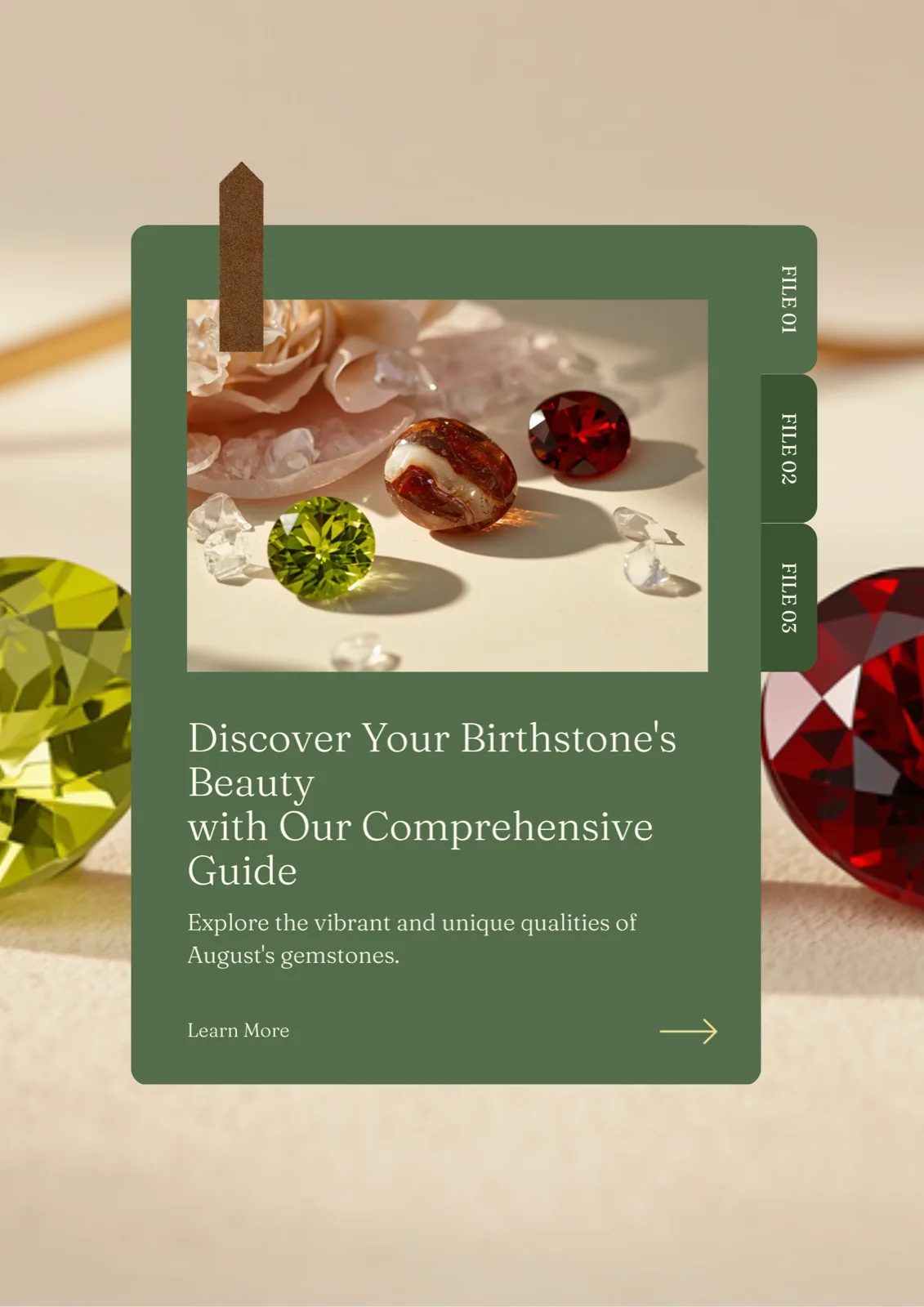
Peridot has never had August entirely to itself. Sardonyx, a banded stone that layers reddish-brown sard with white onyx, has a long-standing claim on the month, stretching back through older birthstone traditions that predate the modern list. Romans carved sardonyx into signet rings and seals, partly because hot wax never sticks to it, and partly because the stone was linked with courage and clear communication. It remains a recognized August birthstone today, standing alongside peridot as a quieter, more traditional option.
Spinel is the newest addition. In 2016, the American Gem Trade Association and Jewelers of America jointly named it a third official birthstone for August, only the third time the modern birthstone list had been amended since 1912. It was a fitting choice. For centuries, spinel had been mistaken for ruby, most famously in two stones set in the British Crown Jewels: the Black Prince's Ruby, first recorded in fourteenth-century Spain, and the Timur Ruby, carved with Persian inscriptions documenting its own history. Both are magnificent red spinels wearing another gem's name, a mix-up that echoes peridot's own centuries of being called emerald.
Sardonyx and peridot even share scriptural ground. Both appear among the twelve foundation stones of the New Jerusalem described in the Book of Revelation, sardonyx and chrysolite listed side by side. So August's three-stone lineup, ancient sardonyx, historic peridot, and newly minted spinel, has roots that go back far further than any modern trade association's decision.
Peridot in Modern Times
Scientific Understanding
- Modern gemology finally separated peridot from emerald and topaz, closing centuries of confusion caused by shared color and a lack of testing tools.
- Peridot is the gem-quality variety of the mineral olivine, and iron built into its crystal structure produces the color directly, rather than through a trace impurity the way many colored gems get their hue.
- A small amount of peridot arrives on Earth in pallasite meteorites. This extraterrestrial material is real, but it is extremely rare and not something you would find in an ordinary jewelry store.
Mining and Production
- The San Carlos Apache Reservation in Arizona has become the world's most productive peridot source, supplying an estimated 80 to 95 percent of global peridot.
- Pakistan entered the market in the 1990s, when deposits in the Kashmir region began producing large, richly colored crystals that rival historical Zabargad material.
- Zabargad itself, the island that supplied Egypt, Rome, and Europe's cathedral treasuries for thousands of years, is largely inactive today, its ancient workings a footnote to a much larger modern industry.
- China, Myanmar, and Vietnam also produce peridot in smaller quantities, giving today's buyers far more sourcing options than any single generation before them ever had.
Cultural Significance Today
- Peridot has been the recognized birthstone for August since the modern list was standardized in 1912 by the American National Retail Jewelers Association, now known as Jewelers of America.
- It shares the month with sardonyx, its traditional companion, and spinel, added in 2016.
- Jewelers of America also designates peridot as the gemstone for the 16th wedding anniversary, extending its role well beyond birth months.
- Modern jewelry designers favor peridot for its lively yellow-green color and its unusually clean origin story: a gem that came from iron, not impurity, and never needed treatment to look its best.
- Unlike many colored gems, peridot is rarely heated or otherwise enhanced before it reaches a jewelry counter. What you see in the stone is essentially what came out of the ground, whether that ground is in Arizona, Pakistan, or occasionally outer space.