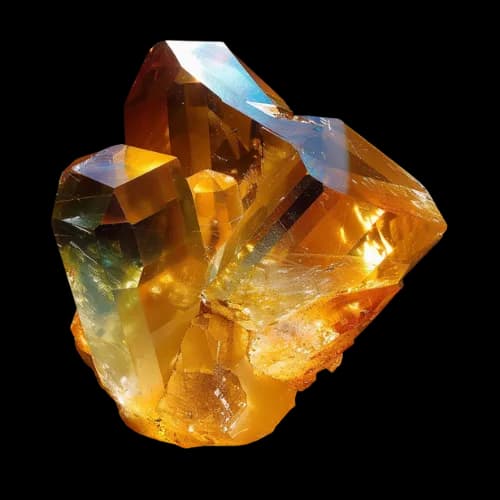
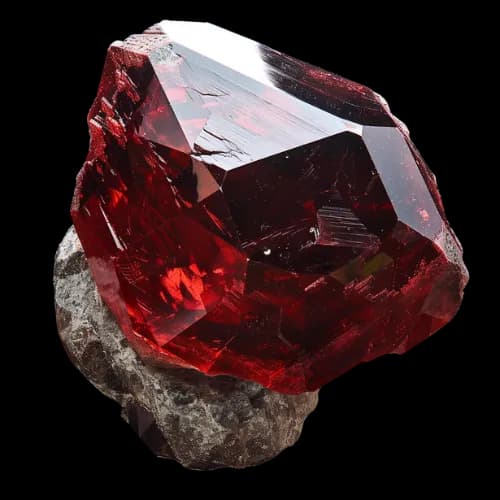
The History of December's Birthstones
Turquoise has been worn for 7,000 years. Zircon predates human history entirely. Tanzanite is younger than the moon landing.
The Ancient Origins of Turquoise
Turquoise is the oldest of December's three birthstones by a wide margin, and one of the oldest gemstones used by any civilization. Egyptian artifacts inlaid with turquoise date back to roughly 5000 BCE, and the material was mined from the Sinai Peninsula for thousands of years. The burial mask of Tutankhamun, made around 1323 BCE, is set with bands of turquoise alongside lapis lazuli and carnelian, a combination the Egyptians clearly treated as sacred rather than merely decorative.
Persia (modern-day Iran) became the ancient world's other great turquoise source. The mines near Nishapur produced the intense, uniform sky-blue stone that later collectors would simply call "Persian turquoise," a benchmark of quality still used today. The gem's English name has nothing to do with its origin in Persia or Egypt, though. It comes from the French pierre turquoise, "Turkish stone," because European traders first encountered the gem passing through Turkish markets on its way from Persia to Europe.
On the other side of the world, and almost certainly independently, turquoise held the same kind of significance for Mesoamerican civilizations. Aztec artisans built elaborate mosaic masks and shields from thousands of individually cut turquoise tiles, some of which survive in museum collections today, and the stone was reserved largely for royalty and ritual use.
Turquoise's use in what is now the American Southwest goes back even further than the Aztec mosaics, with archaeological finds showing the stone worked and traded across the region for more than a thousand years before European contact. Long before "Southwestern jewelry" became a marketing category, turquoise moved along extensive trade networks that connected communities across thousands of miles, prized wherever it went for the same blue-green color that made it sacred in Egypt and Persia.
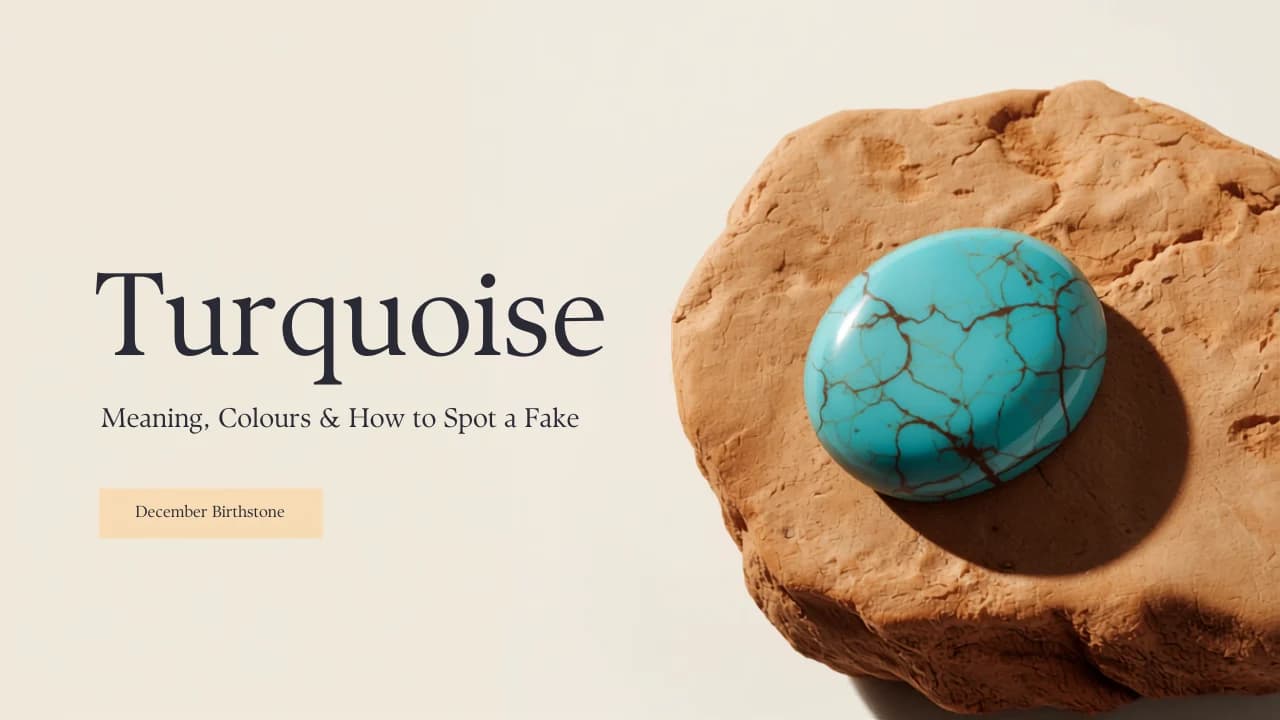
Turquoise and Zircon Through the Middle Ages
Medieval European writers believed turquoise absorbed harm on its wearer's behalf. A 13th-century gem manual, Volmar's Steinbuch, claimed that anyone who owned "the true turquoise set in gold will not injure any of his limbs when he falls, whether he be riding or walking, so long as he has the stone with him." The court physician Anselmus de Boot told an even more elaborate story: a turquoise that had faded to dullness after thirty years in one family's possession was given away as a gift, at which point (so the story goes) it slowly regained its color, then cracked in two on the very day its new owner narrowly avoided a serious fall, and cracked again the day he strained but did not break his ribs lifting a heavy pole. De Boot took this as proof the stone had absorbed injuries that would otherwise have befallen its wearer. Kunz records the tale in full in his 1913 survey of gem lore, treating it as a vivid example of what people once believed rather than as established fact.
Zircon's medieval identity traveled under a different name entirely: jacinth (also spelled hyacinth). Medieval lapidaries recommended the jacinth as a travel amulet, believed to protect against plague and injury on long journeys and to guarantee its wearer a warm welcome at any inn along the way. Kunz notes that the stone was also credited with protecting against lightning strikes, and that St. Hildegard of Bingen, the 12th-century abbess, prescribed passing a jacinth over a loaf of bread cut in the shape of a cross as a cure for bewitchment. None of this reflects any real property of the mineral, but it shows how seriously medieval Europe took the stone we now call zircon, long before anyone understood what it actually was.
Tanzanite: December's Newest Birthstone
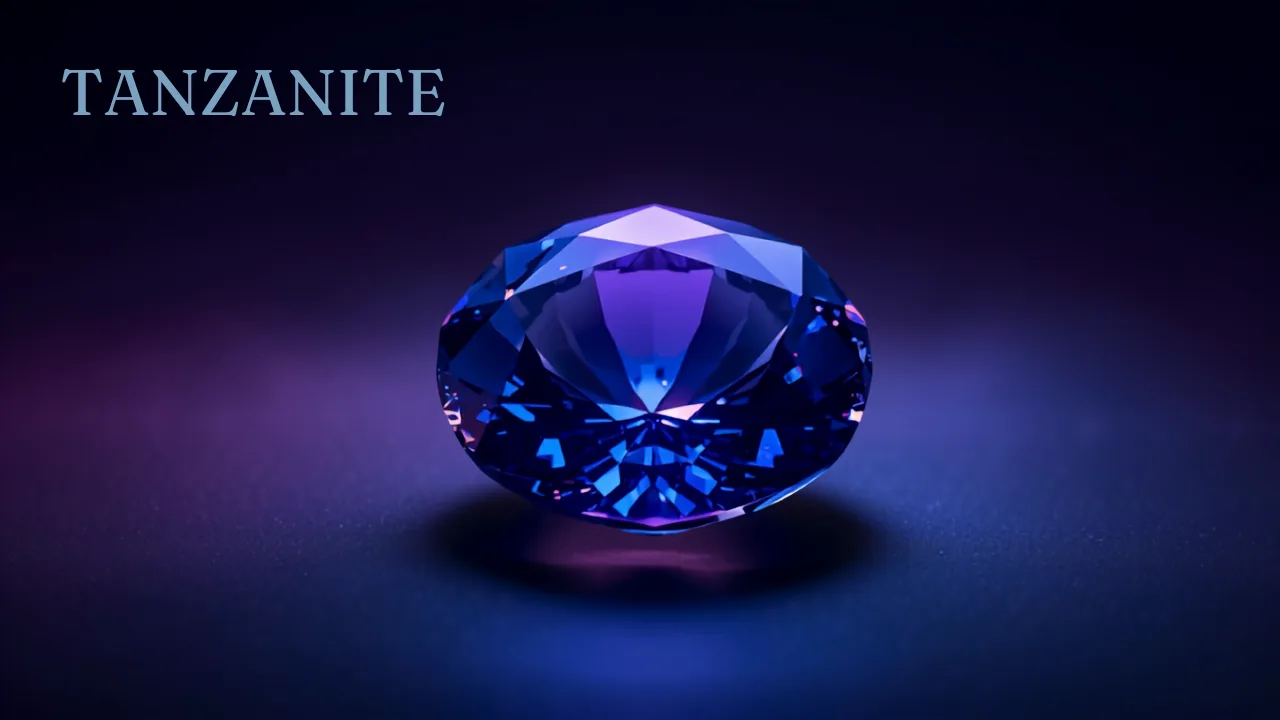
Tanzanite has no ancient history at all, because it was not identified as a gemstone until 1967. Blue-violet crystals of the mineral zoisite turned up in the Merelani Hills near Mount Kilimanjaro in northern Tanzania, the only place on Earth where gem-quality material has ever been found in commercial quantity. Tiffany & Co. recognized its potential almost immediately, named the new gem "tanzanite" after its country of origin (zoisite was judged too easy to mishear as "suicide" for a jewelry counter), and launched it to the American market in 1968 with a campaign calling it the most important blue gemstone discovery in over 2,000 years.
Even with that head start, tanzanite had to wait 34 years to join the official birthstone list. In October 2002, the American Gem Trade Association added tanzanite as a December birthstone alongside turquoise and zircon, the first change made to the standardized list since it was first drawn up in 1912. It remains, decades later, the only major gemstone whose entire world supply comes from a single mining district.
That single-source status makes tanzanite an odd fit next to turquoise and zircon, both of which have been quarried from multiple corners of the globe for thousands of years. But it also gives tanzanite a clean, easily told origin story, one geologist, one deposit, one decade, that turquoise and zircon, with their tangled histories across a dozen civilizations, simply cannot offer.
December's Birthstones Across Cultures
The American Southwest
Native American tribes of the Southwest, including the Navajo, Zuni, Pueblo, and Apache, have worked turquoise for over a thousand years, developing the silver-and-turquoise jewelry style still associated with the region. The Apache name for turquoise, duklij, and the belief that a turquoise fixed to a bow improved a hunter's aim, are both documented in early 20th-century ethnographic accounts.
India and Southeast Asia
Zircon appears in Hindu texts dating back to at least the 6th century and in traditional Vedic astrology, where it is associated with prosperity and clear judgment. Cambodia's Ratanakiri province later became one of the world's major sources of brown zircon, which is heat-treated to produce the vivid blue color prized in modern jewelry.
Victorian England
Blue zircon became genuinely fashionable in Victorian-era England, where its diamond-like brilliance made it a popular, more affordable alternative for estate jewelry, well before modern heat-treatment techniques made that blue color easy to produce consistently.
The Maasai of Tanzania
Local accounts credit Maasai herders in the Merelani Hills with first noticing tanzanite's distinctive blue-violet crystals on the surface of the ground, well before the deposit attracted international mining interest in the late 1960s.
Famous Specimens
Tutankhamun's Burial Mask
Discovered in 1922, the gold death mask of the young pharaoh is inlaid with bands of turquoise, lapis lazuli, and carnelian. It remains one of the most recognizable turquoise objects ever made and a benchmark for how far back the gem's use in royal regalia extends.
The Pueblo Bonito Turquoise Cylinder
Excavated from Pueblo Bonito, New Mexico, this hematite cylinder inlaid with turquoise in the shape of a bird demonstrates the technical skill of ancestral Puebloan artisans centuries before European contact. Kunz cites it as evidence of just how central turquoise was to life in the pre-contact Southwest.
The First Merelani Crystals
The original 1967 tanzanite find in the Merelani Hills triggered a short-lived rush of prospectors staking claims across the district. That single deposit, still the world's only commercial source, has produced every piece of tanzanite jewelry made since.
Ratanakiri Blue Zircon
Cambodia's Ratanakiri province has supplied much of the world's zircon for over a century. Brown rough from the region is heat-treated to bring out the vivid, diamond-bright blue that has become the classic color associated with December's zircon birthstone.
Turquoise and zircon both have millennia of named objects and documented mines behind them. Tanzanite has only one deposit and roughly six decades of history, yet it has already produced museum-grade stones that rival gems many times its age in both size and price.
December's Birthstones in Modern Times
Scientific Understanding
- Turquoise is now classified precisely as a hydrated copper aluminum phosphate, which explains both its color (copper) and its porous, moisture-sensitive nature, a property medieval writers noticed but could not explain.
- Zircon (zirconium silicate, ZrSiO4) is routinely used by geologists to date the Earth itself. Crystals recovered from the Jack Hills region of Western Australia have been dated to roughly 4.4 billion years old, making zircon one of the oldest minerals ever identified on the planet, far older than any human use of the gem.
- Tanzanite's trichroism, appearing blue, violet, or burgundy depending on the angle it is viewed from, is now understood as a direct result of trace vanadium within its zoisite crystal structure, and nearly all tanzanite on the market is heat-treated to bring out its best blue-violet color.
Mining and Production
- Iran, the United States (particularly the Southwest), China, and Mexico remain the major turquoise sources today, with Sleeping Beauty and Kingman in Arizona among the most recognized American mine names, though the Sleeping Beauty mine itself closed to new extraction in 2012, tightening supply of that particular pure sky-blue material.
- Australia, Cambodia, Myanmar, Sri Lanka, and Tanzania all produce commercial zircon, most of which is heat-treated to achieve the blue or colorless material most in demand.
- Tanzanite is mined exclusively from a roughly eight-square-mile district near Merelani, Tanzania, split into four mining blocks. As that single source is worked out, tanzanite is widely expected to become significantly rarer and more valuable over time.
Cultural Significance Today
- Turquoise remains December's traditional birthstone and continues to anchor Native American Southwestern jewelry traditions that are still very much alive today.
- Zircon has spent decades fighting a case of mistaken identity with synthetic cubic zirconia, despite being a completely different, entirely natural mineral with a multi-billion-year head start.
- Tanzanite's 2002 addition made it the first new birthstone in 90 years, and it has since become one of the most recognizable colored gemstones in modern jewelry, prized as much for its story as for its color.
- Turquoise marks the 5th wedding anniversary and tanzanite the 24th, giving December's birthstones a presence in gift-giving traditions well beyond December itself.
- Because tanzanite's supply is capped by geology rather than demand, jewelers and collectors widely expect it to become progressively scarcer over the coming decades, a dynamic that has no real parallel among turquoise or zircon, both of which are found in multiple countries and are in no danger of running out.
Sources & Further Reading
This history draws on gemological references and George Frederick Kunz's 1913 study of gem folklore. For deeper reading: