Searches for amethyst rings have more than doubled in the last year, and we are not surprised. People have worked out something the trade has known for two centuries: you can own a deep, royal purple gemstone that once sat in crown jewels, for the price of a nice dinner. An amethyst ring is, gram for gram, one of the smartest jewellery buys on the market.
Here is the twist that catches first-time buyers out, and it shapes this whole guide. Buying an amethyst ring is the mirror image of buying a diamond ring. With a diamond, the stone is almost the entire cost and the setting is an afterthought. With amethyst, the stone is often the cheapest part of the ring, and the metal, the craftsmanship and the setting are where your money actually goes. Get that one idea straight and you will buy far better than most people who walk into a jeweller.
This is the ring-buying companion to our full February birthstone amethyst guide, which covers the stone's history, meaning and the remarkable story of how it fell from precious gem to high-street favourite. Here we are focused entirely on the ring: the colour to chase, the synthetics to watch for, the setting and metal decisions, what to actually pay, and how to keep it looking glorious.
First, the Good News: Amethyst Is an Easy Stone to Live With
We will start where most ring guides for coloured stones cannot, because it is genuinely the best thing about amethyst.
Amethyst is the purple variety of quartz, and it sits at 7 on the Mohs hardness scale. That is the practical line where a gem resists everyday scratches and scuffs well enough to wear daily without babysitting it. It is not as hard as a sapphire at 9, and it is softer than diamond, but it is in a completely different and easier league than the truly delicate stones. Compared with an emerald, which is brittle, heavily fractured and needs re-oiling every few years, amethyst is a dream. There is no jardin to interpret, no oil treatment to disclose, no ultrasonic-cleaner panic.
Our honest opinion: for someone who wants a coloured ring they can actually wear and mostly forget about, amethyst is one of the most sensible choices in the entire gem world. It is tough enough for a daily ring, it comes in large clean stones, and it costs a fraction of the famous "big three" coloured gems. February babies, in particular, got a very generous deal from the birthstone calendar.
That said, amethyst is not flawless armour, and we will be straight about its two genuine weak spots later: the way quartz facet edges can soften over many years of hard wear, and the small risk of colour fading in relentless sunlight. Neither is a deal-breaker. Both are worth knowing before you spend.
Colour Is Almost the Entire Game
With a diamond you juggle four Cs more or less equally. With amethyst, colour does roughly ninety percent of the work, because fine amethyst is usually clean to the naked eye and big stones are cheap and plentiful. So train your eye on colour and almost everything else falls into place.
Amethyst runs across a real spectrum of purple, and where your stone sits on it decides nearly all of its value:
- Pale lilac to soft violet. The lightest, cheapest shades. The trade markets the delicate pinkish-lilac tone as "Rose de France". It is pretty and gentle, but it sits at the bottom of the value scale and can look a little washed out in a ring.
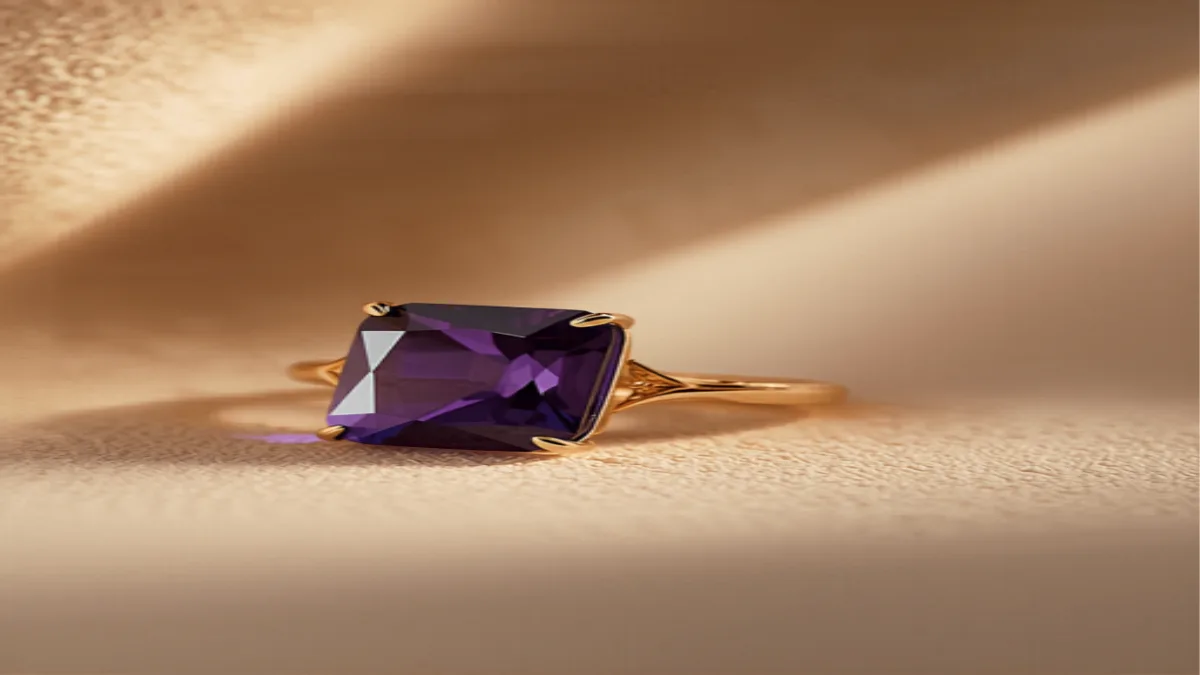
- Medium to deep purple. The sweet spot, and where we would point most ring buyers. A rich, even purple that reads clearly as "amethyst" from across a room, holds up under both daylight and lamplight, and looks far more expensive than it is.
- Deep purple with red and blue flashes. The top tier. The most prized amethyst is a strong, saturated purple that throws subtle red or rose flashes under light. This was historically called "Siberian" after the old Russian material, and you will also hear "Deep Russian". Treat those names as a quality grade, not a passport for the stone's origin, because they are used loosely today.
What you want in a ring is a deep, even purple that does not go black and lifeless in dim light, and does not look grey or brownish in daylight. The two faults to actually watch for are colour zoning, where pale and dark patches sit side by side in the same stone, and a flat, greyish cast in weaker material. A skilled cutter orients the rough so the colour spreads evenly across the face, and on a ring stone that is sitting under your eye all day, that even colour is worth paying a little extra for.
A practical buying habit we swear by: ask to see the stone by a window in normal daylight, then under ordinary indoor light. The best amethyst stays convincingly purple in both. Jewellery counters are lit with warm, flattering spotlights that make every purple look rich, so never judge the colour under those alone. If a seller will not let you take it to the window, that tells you something.
The Synthetic Question: Amethyst's One Real Catch
This is the single most important thing to understand before you pay a real-stone price, and most buyers have never heard it.
Amethyst is one of the easiest gems in the world to grow in a lab. Synthetic amethyst is the same mineral with the same chemistry, the same hardness and the same purple, grown cheaply in factories, and it is almost impossible to tell from natural with the naked eye. It is everywhere in the market, especially in mass-produced and very cheap rings.
Now, here is our genuinely balanced take, because the trade tends to treat this like a scandal and it really is not. Lab-grown amethyst is real amethyst. It is not "fake" in the way a glass imitation is fake. If you want a gorgeous purple stone for an everyday ring and you do not care where the crystal grew, a synthetic amethyst is a perfectly honest, durable, beautiful choice, and we would never sneer at it. We dig into the wider trade-offs in our lab-grown versus natural birthstones guide.
The problem is never the synthetic itself. The problem is paying a natural-stone premium and quietly being handed a lab-grown one. Because the price gap between cheap synthetic and fine natural amethyst can be large, this is exactly the kind of swap that happens in murky corners of the market. So the rule is simple: if you are paying for natural, get "natural amethyst" stated in writing on the receipt. If the price is so low it seems too good to be true for a large, deep, clean purple stone, it is very probably synthetic, and that is fine as long as you know and the price reflects it.
For an inexpensive everyday ring, we honestly would not lose sleep over natural versus lab-grown. For anything you are paying a meaningful premium on, insist on the answer in writing.
A Quick Word on Treatments and "Green Amethyst"
Compared with most coloured stones, amethyst treatment is refreshingly low-drama, and this matters for a ring you will own for years.
A great deal of amethyst is completely natural in colour, straight out of the ground, which is unusual and welcome. Some paler or uneven material is gently heat-treated to improve or even out the purple, and that change is stable and permanent, so it is nothing to worry about in a ring. The only quirk worth knowing is that heating amethyst harder turns it golden, and a large share of "citrine" jewellery is actually heated amethyst, while partial heating produces the purple-and-gold "ametrine". Same mineral, different faces.
One label to see through: "green amethyst" is not really amethyst. The pale green stone sold under that name is properly called prasiolite, and it is almost always heat-treated quartz. It is a nice stone, but if a ring is described as green amethyst, just know what you are actually buying. For amethyst's broader purple family, our purple crystal names guide is a fun side trip.
Can You Use Amethyst for an Engagement Ring? Our Honest Take
Amethyst engagement rings are a real and growing search, so this deserves a straight answer rather than a sales pitch.
Yes, you can absolutely use amethyst as an engagement ring centre stone, and a deep purple amethyst makes a striking, romantic and genuinely affordable alternative to a diamond. The colour is regal, the symbolism is two thousand years deep, and you can buy real presence on a modest budget. For a couple who love the look and the meaning, it is a lovely choice.
Here is the honest caveat we would give a friend, the kind a salesperson usually skips. An engagement ring is the one ring most people wear every single day for decades, and at hardness 7, amethyst is a step below the sapphire-and-diamond durability that makes those stones the traditional everyday choice. Amethyst resists scratches well, but over many years of constant wear the crisp facet edges of a quartz can slowly soften and abrade, especially on an exposed stone that catches knocks and grit. It will not shatter or fall apart. It just may not look as razor-sharp in twenty years as a sapphire would.
Our practical advice: if you want an amethyst engagement ring, lean into a protective setting rather than a high, exposed solitaire, accept that you may want the stone gently re-polished or even replaced once or twice over a lifetime, and enjoy the fact that replacing an amethyst costs a tiny fraction of replacing a sapphire or diamond. For a promise ring, a right-hand statement ring, or a colour-led engagement ring with eyes open, amethyst is a smart, beautiful pick. If the wearer is genuinely hard on their hands and wants something they will never think about, we would gently steer them to sapphire instead. For the full month-by-month view of coloured engagement stones, our birthstone engagement rings guide lays them all out.
Choosing the Setting: Where Your Money Should Actually Go
Remember the core idea: with amethyst, the setting often costs more than the stone, so this is the decision to take seriously. It is also where you protect the gem and control the whole look of the ring.
- Halo. A ring of small white diamonds or white sapphires around the centre amethyst. This is our top recommendation for most amethyst rings, and for a good reason: the white sparkle makes the purple pop dramatically, it makes the centre stone look noticeably larger, and the surrounding stones form a little buffer zone that shields the amethyst from knocks. For a relatively soft, affordable centre stone, a halo gives you maximum impact and real protection at once.
- Bezel. A rim of metal that wraps fully around the stone and guards its entire edge. For a daily-wear or engagement amethyst, a bezel is the most protective setting there is, and it gives a clean, modern, very secure look. If you want to wear the ring hard, this is the one.
- Solitaire with protected prongs. A single amethyst on its own is elegant and lets the colour speak, but on a soft stone we would insist the prongs are sturdy and, on any cut with corners, that those corners are properly covered. Exposed corners on an everyday ring are where chips and abrasion start.
- Three-stone and cluster. A centre amethyst flanked by diamonds, or a cluster of purple and white stones, both look wonderful because purple and white flatter each other so well. Just make sure the main stone is well seated.
Our blunt opinion: because amethyst is so affordable, this is the rare case where we would happily spend more on the setting than on the gem. A modest but vivid amethyst in a beautifully made halo or bezel looks like a far more expensive ring than a big pale stone dropped into a flimsy mount. Spend on the craftsmanship that surrounds the colour.
Which Metal Suits an Amethyst Ring?
Metal changes the entire mood of a purple ring, and amethyst happens to look good against all of them, which is part of its charm.
- Yellow gold. Our favourite classic pairing. Warm yellow gold against deep purple is a rich, regal, slightly antique look that suits amethyst's crown-jewel heritage perfectly. It also tends to make the purple read warmer and deeper.
- White gold and platinum. Cool white metal makes the purple look crisp, modern and saturated, and white metal is the natural partner for a diamond halo. Platinum is the most durable and stays naturally white forever, while white gold needs its rhodium plating refreshed every few years to keep that bright white.
- Rose gold. A soft, romantic, contemporary choice. The pink warmth against purple is unexpected and very pretty, and it has become genuinely popular for amethyst rings in the last few years.
There is no wrong answer here, only a mood. If you want timeless and warm, go yellow. If you want the purple as vivid and modern as possible, especially with a diamond halo, go white. If you want soft and romantic, rose gold rarely disappoints.
What You Will Actually Pay
Here is the part that makes amethyst such a joy to shop for, and it is worth being specific.
Because supply is so generous, the stone itself is inexpensive across the board. Loose amethyst, even in good colour, typically runs from a few dollars to a few tens of dollars per carat, with only the very finest deep "Siberian"-grade material climbing higher, and even that stays far below a comparable sapphire or ruby. Price is driven almost entirely by colour and size, not by chasing flawless clarity, because clean amethyst is the norm.
This is why, in a finished ring, the metal and the setting usually dominate the price tag. A simple silver amethyst ring can cost very little. A solid gold amethyst ring with a diamond halo will run into the hundreds or low thousands, and almost all of that is the gold and the diamonds, not the purple stone in the middle. When you understand that, you shop smarter: you stop trying to save money by shrinking the amethyst, and you start deciding how much ring you want around it.
Our flat advice: spend on colour and on the setting, never on raw size alone. A smaller stone of deep, vivid, even purple in a well-made gold halo will always look more expensive and more beautiful than a large pale stone in a thin mount. And because amethyst is so cheap per carat, once you have nailed the colour you will usually find you can have good size too. A money-saving aside: amethyst is less dense than diamond, so a one-carat amethyst sits a little larger across the top than a one-carat diamond, which works in your favour. Shop by how the stone looks face up and by its millimetre spread, not purely by carat weight.
The Four Questions That Save You Money on an Amethyst Ring
Before you pay, ask these four. They are the amethyst-specific version of the checklist we use for any coloured-stone ring.
- Is the stone natural or lab-grown? For a cheap everyday ring, either is genuinely fine. For anything at a real premium, insist on "natural amethyst" in writing. This is the one place amethyst buyers get quietly caught.
- How does the colour hold up in daylight? Ask to see it by a window and under ordinary indoor light, away from warm counter spotlights. The best amethyst stays a convincing, even purple in both. Weaker stones go grey, brown or flat.
- Is the colour even, or is there visible zoning? Some patchiness is normal in quartz rough, but a well-cut ring stone spreads the colour evenly across the face with no pale windows or dark dead spots.
- Is the setting built to protect a hardness-7 stone? For daily wear, favour a halo or bezel, demand sturdy prongs and covered corners on any pointed cut, and ask how the stone is secured. The setting is doing protective work on a relatively soft gem, so it has to be right.
For a stone at this price point you rarely need an independent lab report, which is another quiet saving compared with buying a fine sapphire or emerald. When you are ready to browse actual pieces, our birthstone jewellery collection is the place to start.
Caring for an Amethyst Ring
Amethyst care is mercifully simple, but two specific habits will keep a ring looking its best for a lifetime.
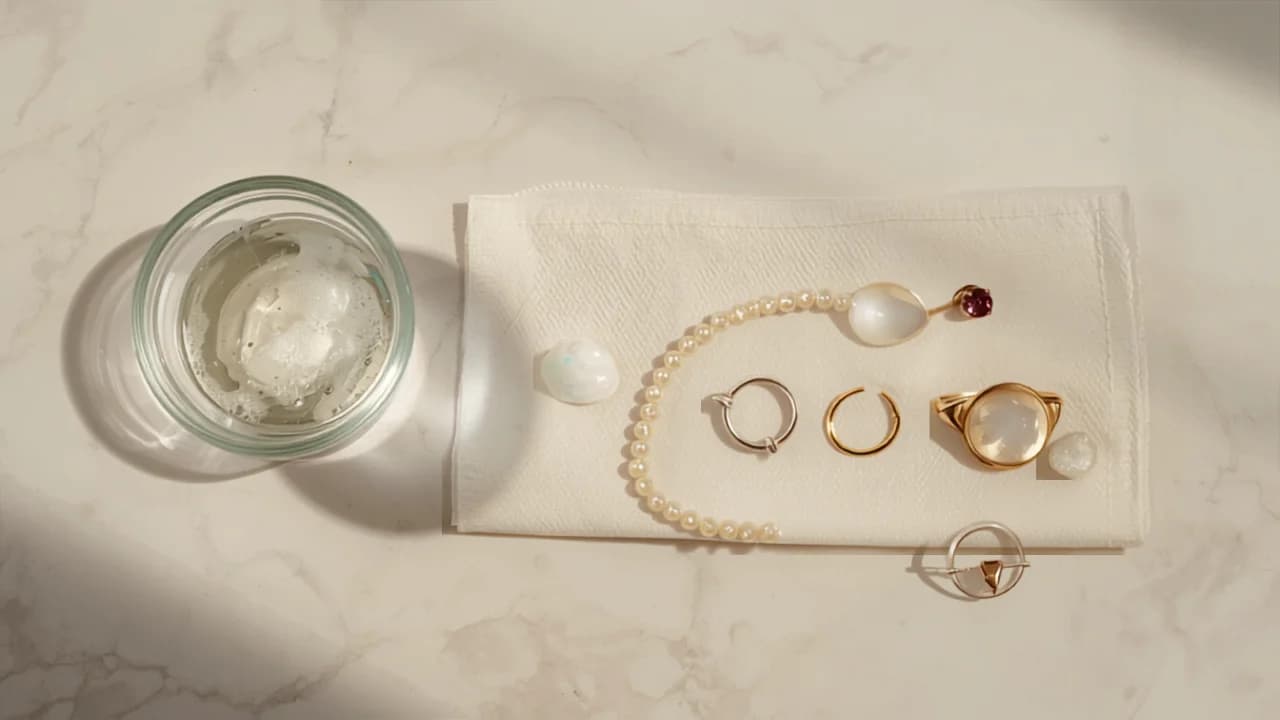
The everyday cleaning routine is boring and easy: warm water, a drop of mild dish soap, a soft brush, then pat dry. That is the whole job, and it is all most amethyst rings will ever need.
The two real cautions are worth taking to heart. First, keep amethyst out of strong, prolonged sunlight, because the purple in some stones can fade over years of harsh exposure. This almost never happens in normal wear, but we would not leave an amethyst ring sunbathing on a bright windowsill for months. Second, be gentle with ultrasonic and steam cleaners, especially if the stone has been heat-treated or has any visible inclusions, because the vibration or thermal shock can occasionally cause trouble. Warm soapy water sidesteps the whole question. Beyond that, take the ring off before the gym, gardening, or heavy cleaning with chemicals, store it where harder stones cannot scratch it, and have the setting checked by a jeweller every year or two like any ring you wear daily.
The Bottom Line: Our Honest Advice for Buyers
A few closing opinions, the kind we would give a friend shopping for an amethyst ring:
- Buy the colour, then build the ring around it. Deep, even, vivid purple is the whole game. A small superb stone beats a large pale one every time, and because amethyst is cheap, you can usually have both.
- Spend on the setting, not the stone. This is the inverse of a diamond ring. Put your money into a well-made halo or bezel in good metal, and let an affordable but beautiful amethyst sit at the heart of it.
- Settle the natural-versus-lab question honestly. Both are real amethyst, both are fine, but never pay a natural premium without "natural" in writing. This is amethyst's one real buying trap.
- Go in clear-eyed on durability. At hardness 7 it is a genuine everyday stone, but for an engagement ring choose a protective setting and accept the odd re-polish over the decades. Replacing an amethyst costs almost nothing, which is its quiet superpower.
- Mind the sun and skip the steam. Keep it out of relentless sunlight and clean it with warm soapy water, and your amethyst ring will look as good in twenty years as it does today.
For the full story of the stone itself, head to our February birthstone amethyst guide or the February birthstone hub, and for the geology behind that purple, our how amethyst forms deep dive is the perfect companion read. If you are weighing amethyst against the classic coloured-stone rings, our sapphire and emerald engagement ring guides are the next reads.
Sources and Further Reading
- George Frederick Kunz, The Curious Lore of Precious Stones, 1913. Kunz records amethyst's long career as a stone of bishops and royalty and its ancient "not intoxicated" reputation, the heritage that still makes a purple ring feel regal. We also wrote a plain-English summary of the whole book.
- For the stone's full history, meaning and value, see our February birthstone amethyst guide.
- For the geology behind the colour, see how amethyst forms.
- For the natural versus lab-grown question across all gems, see lab-grown versus natural birthstones.
- For the other great coloured-stone rings, see our sapphire engagement rings guide and emerald engagement rings guide, and for styles by month, the birthstone engagement rings guide.
Working out a budget? Our engagement ring budget calculator turns a monthly figure into a realistic ring spend, and the ring size calculator gets the fit right before you order.