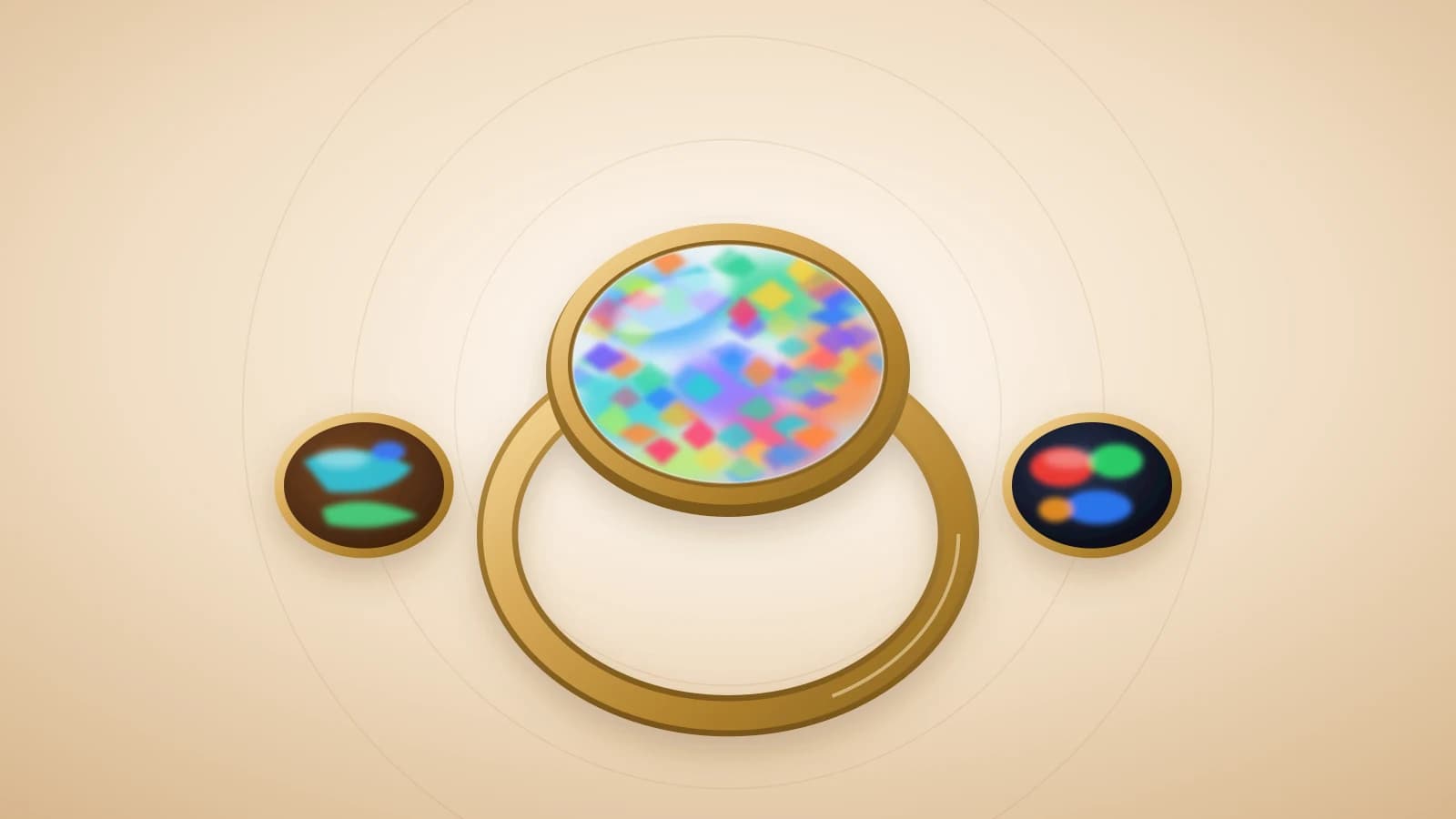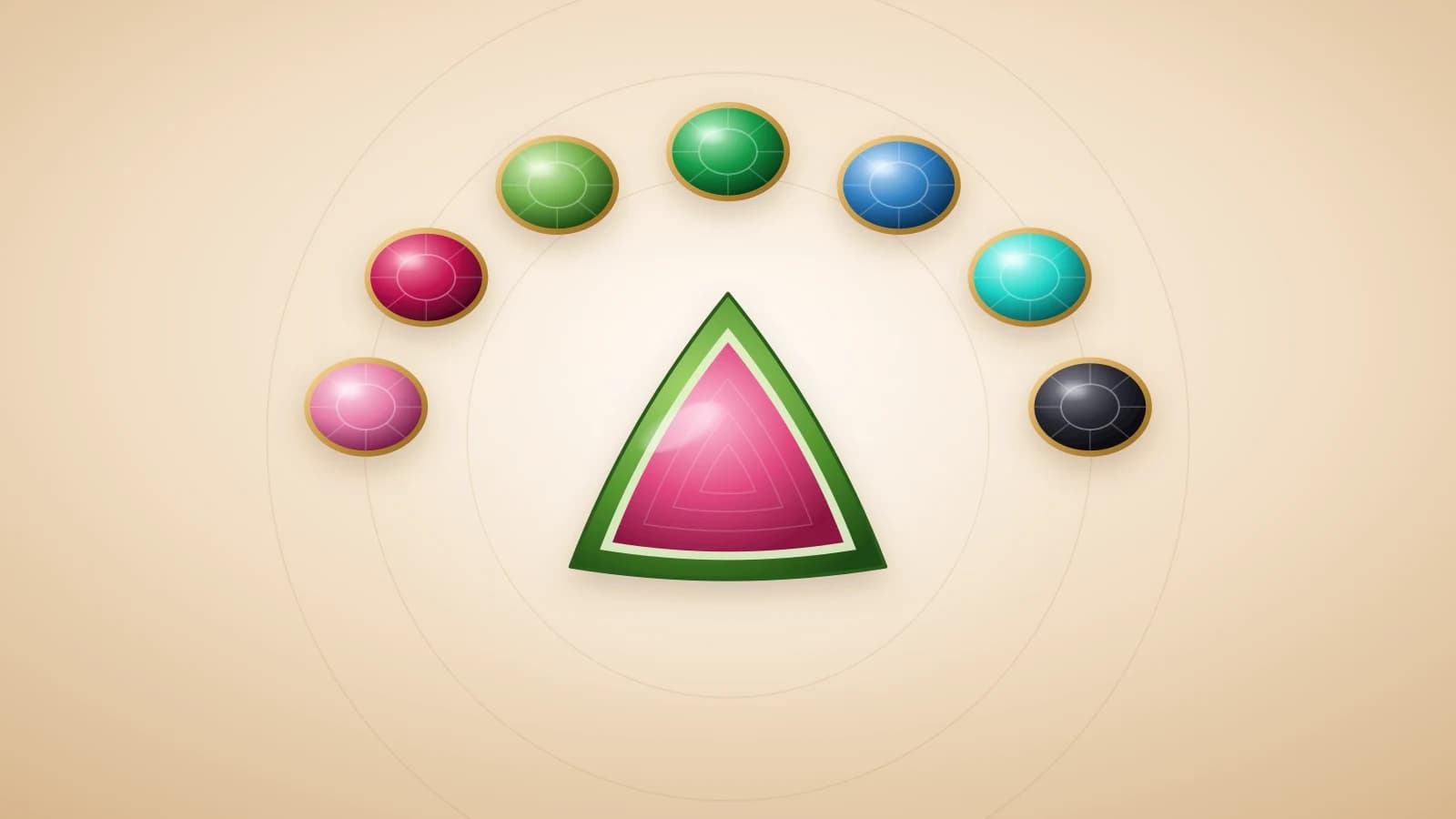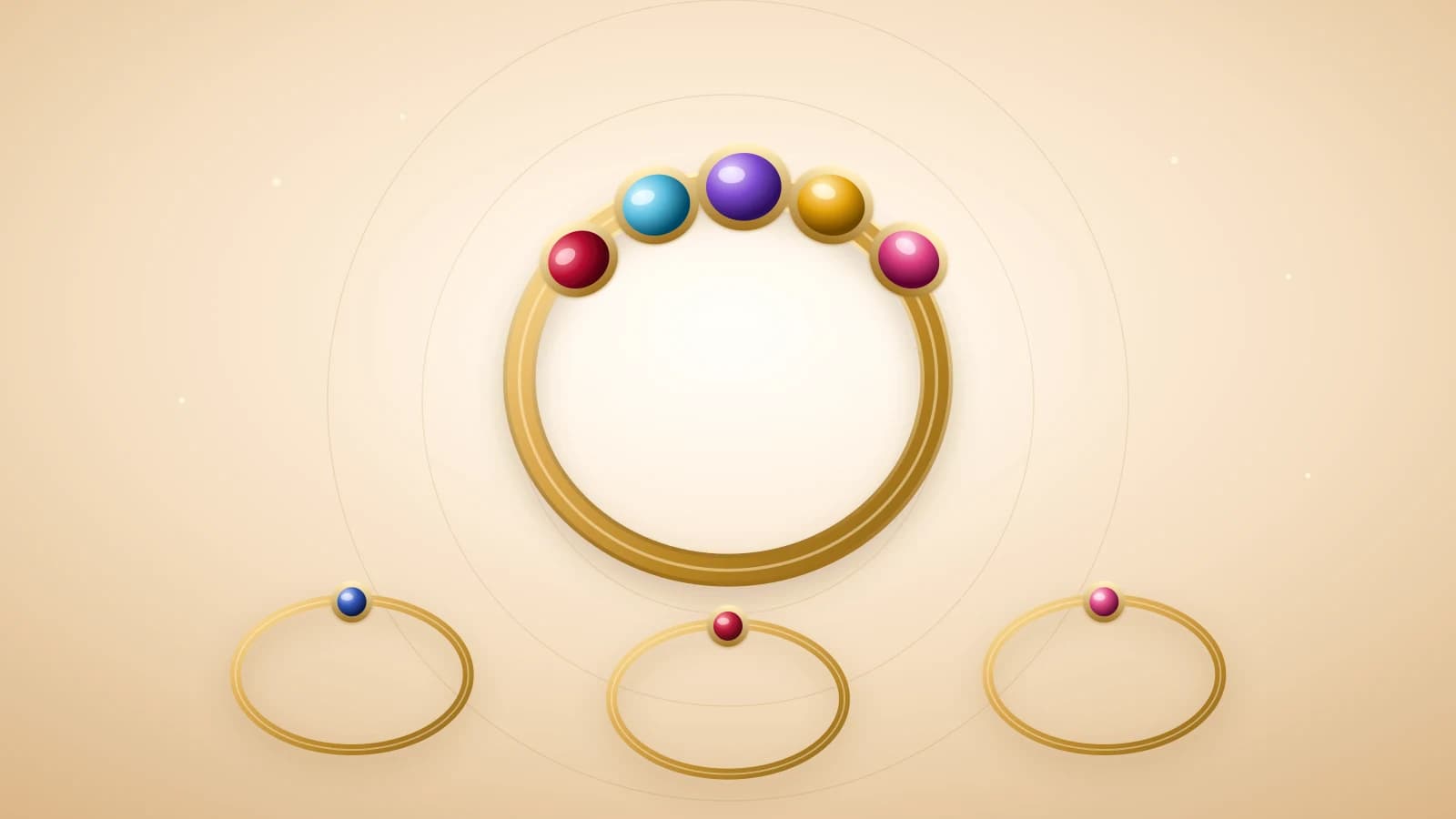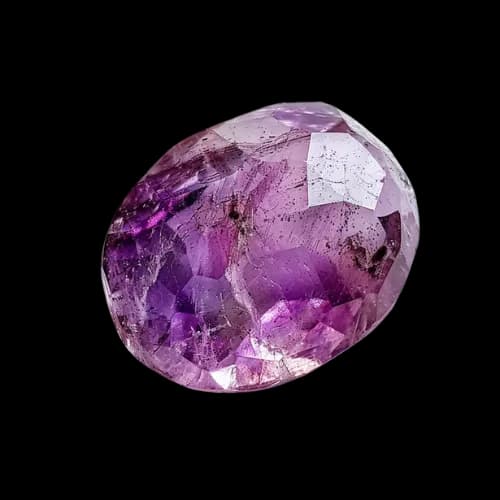
Amethyst is quartz with a secret. Chemically it is one of the most ordinary minerals on the planet, silicon and oxygen, the same recipe as beach sand. Yet add a trace of iron, a dose of natural radiation, and a few million years, and that ordinary chemistry produces the purple crystals that became the February birthstone. This is the full story of how that happens: the volcanic cavities, the hot mineral-rich water, and the accident of chemistry that turns clear quartz violet.
The Building Blocks: Silicon and Oxygen
At its core, amethyst is a variety of quartz, silicon dioxide (SiO₂). Silicon and oxygen are two of the most abundant elements in Earth's crust, which is why quartz turns up almost anywhere you dig. Amethyst is what happens when that common chemistry meets three uncommon conditions: a trace of iron, a source of natural radiation, and an open space to grow in. Meet all three and you get purple. Miss any one of them and you get plain colorless quartz.
Either way, the crystal that results is tough. Quartz sits at 7 on the Mohs hardness scale, which is why amethyst survives rings, riverbeds, and geological time in good shape.
Step 1: Volcanic Activity Creates the Foundation
Amethyst usually begins with a volcano. Erupting volcanoes release gases and fluids along with molten rock, and as that material cools, the trapped gases leave hollow cavities behind, bubbles frozen into stone. These pockets are the future geodes, and they can run from fist-sized to large enough to stand inside.
That hollow space matters more than it sounds. A large crystal cannot form without room to grow, and an empty, protected cavity inside solid rock is exactly that: a sealed chamber waiting for the next ingredient.
Step 2: Hydrothermal Solutions Fill the Cavities
Next comes hot water. Hydrothermal solutions, water heated at depth and loaded with dissolved minerals, circulate through cracks in the Earth's crust, and some of that water finds its way into the empty cavities. It carries dissolved silicon dioxide and, crucially for amethyst, iron compounds.
As the solution moves through a cavity, it deposits silicon dioxide on the walls, molecule by molecule. Those molecules stack in the ordered pattern characteristic of quartz, and crystals begin to grow inward from every surface, their points aimed at the center of the space.
Step 3: The Purple Color Emerges
Pure quartz is colorless, so the purple has to come from somewhere. It takes two ingredients working together.
The first is iron. As the crystal grows, iron atoms from the solution get locked into the quartz structure. On its own, that embedded iron does not make the stone purple.
The second is radiation. The surrounding rocks contain naturally radioactive elements, and over long stretches of time their radiation knocks electrons off some of the trapped iron atoms, converting Fe²⁺ to Fe³⁺. That altered iron creates what chemists call color centers: defects in the crystal that absorb certain wavelengths of light and pass the rest. What passes through reads to our eyes as purple.
The recipe also explains the variety. More iron and more radiation produce deeper purple; less of either leaves pale lilac. The dose can even vary across a single crystal, which is why one amethyst point can shade from rich violet at the tip to nearly clear at the base.
The Time Factor: Thousands to Millions of Years
None of this happens quickly. Amethyst crystals need thousands to millions of years to develop, built by the slow, steady deposition of silicon dioxide out of solution. That patience is what produces the shapes collectors prize: the characteristic hexagonal crystals and the pointed terminations that make a split-open amethyst geode look the way it does. Slow growth is not a flaw in the process. It is the process.
Where Amethyst Forms: Global Deposits
Amethyst forms in a range of geological settings around the world. The significant sources:
- Brazil: the state of Rio Grande do Sul is famous for enormous amethyst geodes, some several meters tall
- Uruguay: the Artigas region produces some of the world's finest deep purple geodes
- Zambia: known for amethyst with intense, deep purple color
- Russia: the Ural Mountains were historically an important source of high-quality stones
- United States: deposits in Arizona, Maine, Pennsylvania, and other states
Each source leaves its own signature in color, clarity, and crystal habit, a record of the local geology, which is why specimens from different countries rarely look quite alike.
From Geode to Gemstone
Getting amethyst out of the ground is its own craft. Large geodes are extracted carefully, since the whole point is to keep the crystal lining intact. Individual crystals destined for jewelry are cut and polished to bring out their color and brilliance.
Four factors set the value of a finished stone:
- Color intensity and uniformity (deep, rich purple is most prized)
- Clarity (fewer inclusions increase value)
- Cut quality
- Size (larger stones of good quality are rarer)
Synthetic Amethyst: Months Instead of Millennia
Laboratories grow amethyst too. Synthetic amethyst has the same chemical composition and the same physical properties as the natural stone; the difference is the clock. In hydrothermal growth chambers that simulate natural heat and pressure, crystals form in months rather than millennia.
Chemically, there is nothing fake about lab-grown quartz. But natural amethyst is genuinely affordable, so our advice is simple: ask the seller which one you are buying, and expect a straight answer.
The Heat Trick: Amethyst to Citrine
Heat changes amethyst. Warm it enough, in the ground or in a workshop, and the purple gives way to yellow: the stone becomes citrine, quartz's golden variety. The change happens because heat shifts the oxidation state of the same iron impurities that created the purple in the first place.
Nature does this on its own when amethyst deposits sit near a geological heat source. Jewelers and mineral processors do it deliberately with controlled heating, and much of the citrine sold today began life as amethyst. Heat a crystal only partially and you get something stranger still: ametrine, a single stone with zones of purple amethyst and yellow citrine sharing one crystal.
Amethyst in Human History
Fine amethyst has been valued for as long as people have recorded such things. The ancient Greeks believed it prevented intoxication; the name comes from the Greek amethystos, "not intoxicated," and wine vessels were carved from it on exactly that theory. Through the medieval period, amethyst ranked alongside diamond in value and was a favorite of royalty and senior clergy. Only the discovery of vast Brazilian deposits turned it from a royal rarity into a stone anyone can own.
Today it is the February birthstone, still carrying its old associations of peace, protection, and clarity, and still, we would argue, priced well below the effort the planet put into it.
The Full Recipe for Amethyst
So the recipe reads: one gas bubble in cooling volcanic rock, a long soak in hot silica-rich water, a pinch of iron, steady background radiation, and thousands to millions of years of quiet. Every amethyst, whether in a museum geode or on your finger, ran that entire course.
Next time you see one, in a geode display, a piece of jewelry, or on a February birthday, you are looking at the finished product of processes that started before humans existed. The stone is common. The story is not.