August's Birthstone: The Complete Guide to Peridot, Sardonyx and Spinel
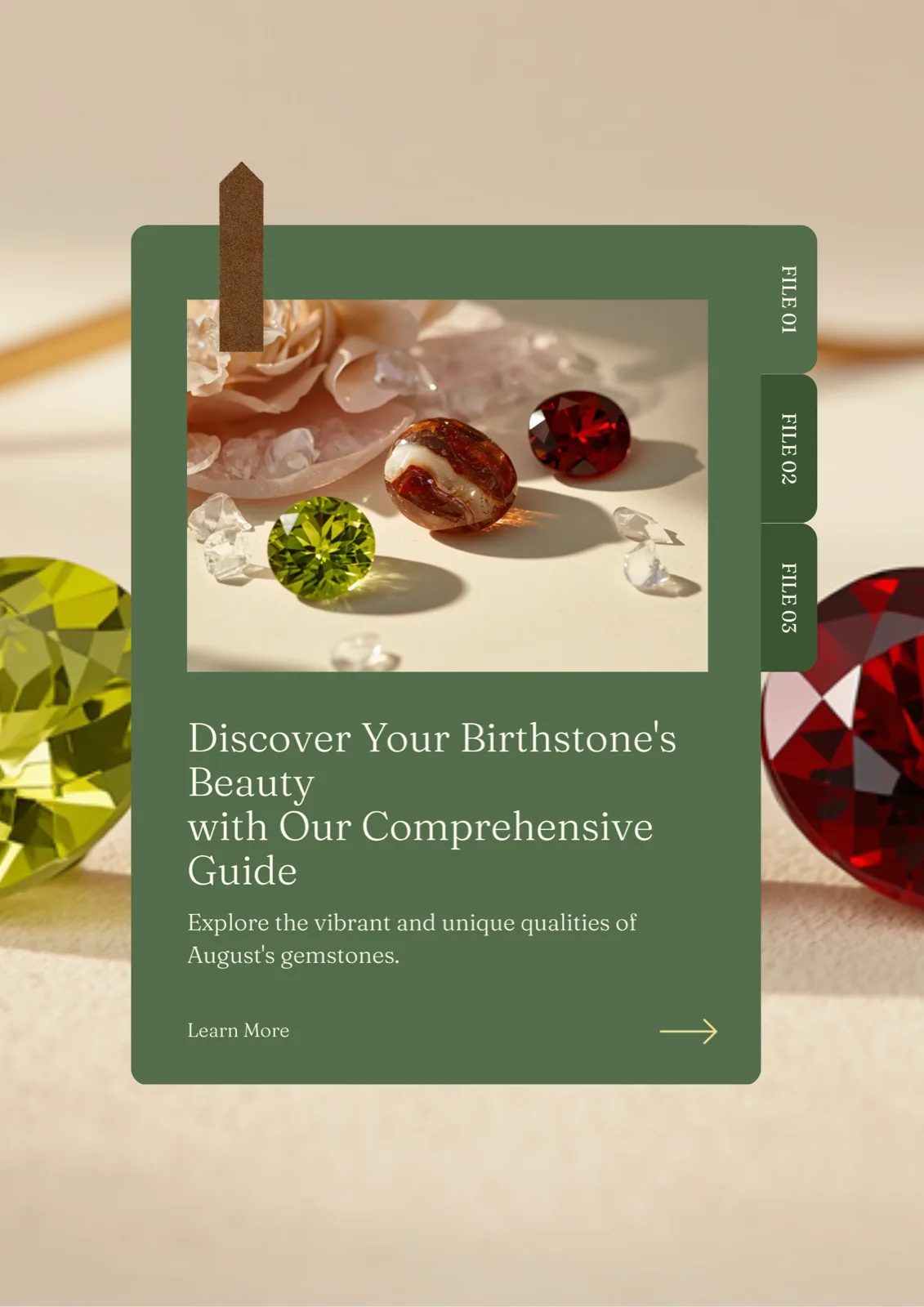
If you were born in August, you probably think your birthstone is the lime-green one. You are half right. August actually carries three stones: peridot, sardonyx and spinel. One was born inside volcanoes, one was carved by the Romans, and one spent centuries pretending to be a ruby in royal crowns.
Here is our honest position up front, because it shapes the whole guide. Peridot gets all the attention, and it deserves a good chunk of it, but August is one of the few months where the "forgotten" stones are genuinely more interesting and, in spinel's case, actually better for everyday wear. Most people never hear about that. By the end of this, you will know all three well enough to choose like someone who did their homework.
So What Is August's Birthstone, Exactly?
August's birthstones are peridot, sardonyx and spinel.
Here is the short version of how a single month ended up with three. Sardonyx is the ancient one, August's traditional stone, worn and carved for thousands of years. Peridot is the modern primary, the green gem nearly every chart shows today. Spinel is the newcomer to the list, only added in 2016 by Jewelers of America and the American Gem Trade Association to honour a gem that had been criminally overlooked.
Our take: do not feel you have to pick the one the chart shows. Peridot is the default, but it is not automatically the right answer for you. August, like December, is a month where shopping the options actually pays off, because these three could not be more different in colour, durability and price. We will sort out which is which below. For the quick overview, our August birthstone hub sums up the month at a glance.
August Birthstone Colour: What You Are Actually Looking At
When people search "august birthstone colour" they expect a single answer, usually "green," and that is only one third of the truth.
- Peridot is the famous one: a bright, slightly yellowish lime to olive green. It is unusual because it is always green. The colour comes from the iron inside the crystal itself, not from added impurities, so peridot cannot be any other colour. The finest stones lean toward a pure grass green with no brown in them.
- Sardonyx is reddish-brown and white in bold, straight bands. It is a layered stone rather than a clear gem, which is exactly why ancient carvers loved it.
- Spinel is the wild card. It comes in red, pink, violet, blue, even black. The red spinels are the show-stealers and the reason the gem spent centuries being mistaken for ruby.
So if someone tells you "August is green," they mean peridot, and they are forgetting two thirds of the month. We rather like that August refuses to be summed up in one colour.
Peridot: The Gem Born in Fire (and Sometimes from Space)
Peridot is one of the only gemstones that does not form in the Earth's crust like everything else. It crystallises deep in the mantle and rides to the surface inside volcanic eruptions. A few peridots are even more exotic than that: tiny amounts arrive on Earth inside pallasite meteorites, which means a handful of the peridot on the market is older than the planet it landed on. We never get tired of telling people that.
The stone has been mined for around three and a half thousand years. The original source was Zabargad (St John's Island) in the Egyptian Red Sea, a fog-shrouded, snake-infested rock where the ancient Egyptians dug peridot they called the "gem of the sun." There is a strong case that some of Cleopatra's celebrated "emeralds" were in fact peridot, because Egypt had no real emerald worth speaking of and plenty of fine peridot. Today the best material comes from Pakistan (the Kashmir and Suppat deposits produce stunning large stones), Myanmar, China and the San Carlos reservation in Arizona, where Peridot Mesa supplies a huge share of the world's smaller commercial stones.
Buying peridot, our opinion: this is the most affordable big-impact gem on the August list, and the advice is simple. Chase colour. You want a clean grass-to-olive green with as little brown as possible, and you want enough size to let that colour sing, because peridot looks better the larger it gets. Small peridots can read slightly muddy; a generous one glows. At 6.5 to 7 on the Mohs hardness scale it is reasonably tough but it is sensitive to acids and sudden heat, and it scratches more easily than a sapphire, so we would set a daily peridot ring in a protective design rather than exposed prongs. Pakistani and Burmese stones command the highest prices; Arizona material is your friend for honest everyday value.
Sardonyx: The Forgotten Original
Sardonyx is August's traditional birthstone, and it is the one almost everyone skips. We think that is a small injustice, because no stone on this list has a longer working history with human hands.
Sardonyx is a banded variety of chalcedony, which is a microcrystalline form of quartz. "Sard" is the reddish-brown layer, "onyx" the white, and the two alternate in clean, parallel stripes. The Romans prized it above almost any other stone for one brilliantly practical reason: hot sealing wax will not stick to it. That made sardonyx the material of choice for signet rings and seals across the ancient world, and its layers were perfect for carving cameos, where an artist cuts through the white band to reveal the dark beneath. Some of the finest surviving Roman cameos are sardonyx.
Its old meaning followed its use. Sardonyx was a stone of courage, protection and steady relationships. Roman soldiers carried sardonyx engraved with Mars, the god of war, for bravery in battle, and it was long given as a token for a strong, happy marriage. George Frederick Kunz, writing in 1913, places it among the protective talismanic stones of the classical world.
Buying sardonyx, our opinion: this is the budget-friendly character pick. You are not buying fire or sparkle, you are buying pattern and history, so judge it on the boldness and contrast of the banding. Strong, clean stripes are what you want. At 6.5 to 7 on Mohs it is about as durable as peridot, and because it is opaque and tough enough for carving, it stands up well in cabochon pendants, signet rings and cameo brooches. If you want a stone with a genuine ancient soul for very little money, sardonyx is the quiet winner, and almost nobody else will be wearing one.
Spinel: The Royal Impostor
Spinel is the gem that got robbed for centuries, and it is the August stone we would actually point most people toward for a ring.
Here is the great gem-world scandal. Some of the most famous "rubies" in history are not rubies at all. The Black Prince's Ruby, the great red stone set in the front of the British Imperial State Crown, is a spinel. So is the Timur Ruby. For hundreds of years nobody could reliably tell fine red spinel from ruby, because they look almost identical and often came from the same mines in central Asia. Only modern gemology sorted them out, and by then the misnaming was written into crown jewels and museum labels everywhere. That is why spinel finally earned its place on the August list in 2016: long overdue recognition for a gem that had been hiding in plain sight inside the world's most important jewels.
Spinel comes in a wonderful range, from vivid "ruby" reds and hot pinks to cobalt blues, lavenders and steely greys. It is singly refractive with excellent clarity and a lively brilliance, and crucially it is almost never treated. While most ruby and sapphire on the market is heated, fine spinel is usually exactly what nature made, which is a rare and honest thing in the coloured-stone world.
Buying spinel, our opinion: this is the connoisseur's choice and, frankly, the smart buy. At 8 on the Mohs scale it is the hardest and most wearable of the three August stones by a clear margin, which makes it the one we would actually trust in an everyday ring. Red and cobalt-blue spinels are the prized colours and can climb in price, but pinks, lavenders and greys offer real beauty for sensible money. Because it is rarely treated, you are buying a natural, untreated gem with a four-figure pedigree for prices that still sit well below ruby. Of the three, this is the one gem people will compliment without being able to name.
August Birthstone Meaning and Symbolism
Across all three stones, August's symbolism circles strength, light and protection, which suits the warm, confident heart of summer.
- Peridot is the stone of light and the sun. The Egyptians believed it warded off the terrors of the night, and it was thought to lose its protective power unless set in gold. Today it is read as a stone of warmth, positivity and letting go of stress and envy.
- Sardonyx is the stone of courage, protection and lasting partnership, carried for bravery and given as a charm for a happy, steadfast marriage.
- Spinel is the modern stone of revitalisation and encouragement, fitting for a gem that spent so long under another stone's name and finally stepped into its own.
If you want the deeper historical thread of how these meanings were assigned and how the modern month-by-month list came together, our birthstone origins and history guide tells that story, and the birthstone chart lays out every month at a glance.
August Birthstone Jewellery: How to Choose Between Three
This is the question that actually matters, so here is the plain advice we would give a friend buying an August birthday gift.
- Want the classic green that says "August" instantly? Buy peridot. Go as large and as clean-green as your budget allows, set it protectively if it is for daily wear, and enjoy the most affordable wow on the list.
- Want ancient character and a story for very little money? Buy sardonyx. A bold banded cabochon or a real carved cameo gives you thousands of years of history in a single quiet stone.
- Want the best everyday gem and a genuine connoisseur's piece? Buy spinel. It is the hardest, the rarest in fine quality, almost always untreated, and the one that outshines its price.
- Buying for everyday wear? Spinel wins on durability at Mohs 8. Peridot and sardonyx both sit around 6.5 to 7, so lean toward protected settings, pendants and earrings for those two.
For finished pieces by month, the birthstone jewelry hub is the place to browse, and if you are weighing a coloured stone for a proposal, our birthstone engagement rings guide walks through which gems actually survive daily wear and which need protecting.
What Will It Cost? Honest Numbers
Prices move, but here is the rough lay of the land so you walk in informed rather than guessing.
- Sardonyx is the most affordable, often just a few dollars to low tens of dollars per carat, because it is an opaque quartz rather than a rare transparent gem. You pay for the cutting and the cameo work, not the raw material.
- Peridot is the affordable transparent gem. Commercial Arizona stones are very reasonable, while fine, large, clean Pakistani or Burmese peridot of a pure grass green can reach a few hundred dollars per carat. Still gentle next to most coloured gems.
- Spinel is the value-to-quality star and the priciest here at the top end. Pinks, greys and lavenders stay friendly, but fine red and cobalt-blue spinel climb into the hundreds and beyond per carat. It is still a fraction of comparable ruby, which is exactly why it is such a smart buy.
The lesson across all three: in August, colour and origin drive price far more than size does. Ask the questions, get treatment and origin in writing, and you will not overpay.
Caring for August's Stones
The three stones do not all want the same handling, so a few simple habits go a long way.
- Peridot dislikes acids, harsh chemicals and sudden temperature changes, and ultrasonic cleaners can crack it. Warm soapy water and a soft cloth only, and put it on after your perfume and hairspray.
- Sardonyx is tougher and more forgiving, but as a chalcedony it can be dyed or colour-enhanced, so avoid prolonged harsh chemical exposure that could fade it. Warm soapy water is plenty.
- Spinel is the easy one. At Mohs 8 it shrugs off daily wear, and being rarely treated it is not fussy, though a gentle warm-water clean is still the kindest routine.
The broad rule that applies to softer gems like opal and pearl applies to peridot and sardonyx too: enjoy them, but do not knock them about. Our guide to how valuable an opal really is covers the same delicate-stone mindset if you want to go deeper.
August's Other Symbols
If you are building a full August birthday gift, the birthstones pair beautifully with the month's birth flowers, the gladiolus and the poppy, which carry meanings of strength of character and remembrance. We cover the whole set in our birth flowers and birthstones by month guide, which is a lovely way to layer extra meaning into a present.
The Bottom Line for August Birthdays
A few closing opinions, the kind we would give a friend shopping for an August birthday:
- You have three stones, so use that. August is one of the months where shopping the options genuinely pays off.
- Peridot for the classic green, sardonyx for ancient character, spinel for the smart buy. That is the whole guide in one line.
- Spinel is the everyday winner. If it is going on a finger for daily wear, its Mohs 8 hardness makes it the sensible choice over the softer two.
- Ask about treatment and origin every time. It is what protects your money, especially with peridot's source and spinel's natural, untreated appeal.
For the wider story of how each month got its stone, read our birthstone origins and the 1912 list piece, and the whole lore series lives on the blog as we work through the old book one gem at a time.
Sources and Further Reading
- George Frederick Kunz, The Curious Lore of Precious Stones, 1913. Peridot (often called "chrysolite" in older texts), sardonyx and the protective lore around them run through the chapters on talismanic and zodiacal stones. We also wrote a plain-English summary of the whole book.
- For how the modern month-by-month list was assembled, including spinel's 2016 addition, see our birthstone origins history.
- For the natural versus synthetic question across all gems, see lab-grown versus natural birthstones.
- For settings and styles, the birthstone engagement rings guide and the birthstone jewelry collection.
The simplest way to think about August's birthstone is this. You were not handed one gem, you were handed a choice: the sun-born green stone, the ancient carved original, and the red impostor that fooled kings. Most months would envy that. Choose the one whose story sounds like yours.
Wondering how it stacks up against every other gem? Compare values in our gemstone price guide and toughness on the sortable Mohs hardness table.