February's Birthstone: The Complete Amethyst Guide to Colour, Meaning and Value
If you were born in February, you get the most regal birthstone on the entire calendar, and one of the best-value gems money can buy. That is amethyst, the deep purple variety of quartz, and it has a backstory most people never hear. For thousands of years amethyst sat in the top tier of precious stones, ranked shoulder to shoulder with diamond, ruby, emerald and sapphire. Then, almost overnight in the 1800s, it tumbled from the crown jewels to the high street. Understanding why is the key to buying it well.
We will give you our honest opinion up front, because it runs through this whole guide. Amethyst is, gram for gram, one of the smartest gemstone purchases you can make. It is genuinely beautiful, hard enough for daily wear, available in large clean stones, and priced so reasonably that you can own a gem your great-grandmother would have considered a luxury. February babies did very well out of the calendar. Here is everything you need to choose and buy the right amethyst.
So What Is February's Birthstone, Exactly?
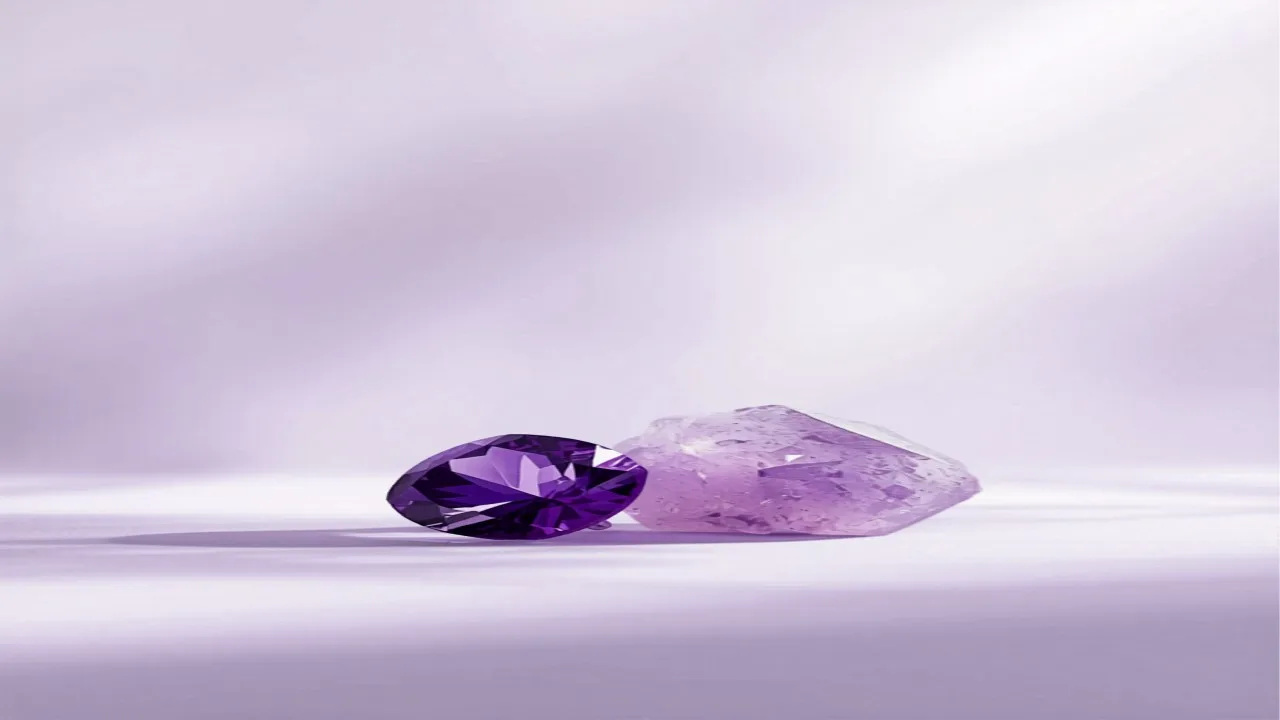
February has one official birthstone: amethyst.
Unlike March, August, October or December, February does not hand you a choice between two or three stones. It is amethyst and amethyst alone, on both the traditional lists and the modern 1912 list set by the American jewellery trade. That simplicity is part of the appeal. There is no "which one do I pick" puzzle here. If you are shopping for a February birthday, you are shopping for purple.
Amethyst is the purple variety of quartz, the same mineral family as rock crystal, citrine and rose quartz. What sets it apart is colour. The purple comes from trace amounts of iron in the crystal combined with natural irradiation deep in the earth, a process we cover in full in our piece on how amethyst forms. For this guide, the colour is what matters, because with amethyst, colour is almost the entire story.
The Secret Most Jewellers Will Not Tell You
Here is the fact that reframes everything about this stone, and our favourite thing to tell February shoppers.
For most of recorded history, amethyst was a cardinal gem, meaning it sat in the small, elite group of stones considered truly precious. The Egyptians carved it. The Greeks and Romans treasured it. Medieval bishops wore it on their fingers as the "stone of bishops", and it still studs the British crown jewels and the regalia of royalty across Europe. Catherine the Great of Russia adored it and sent miners deep into the Urals to find it. For centuries, an amethyst of good colour was worth a small fortune and was priced alongside emerald and ruby.
Then, in the early-to-mid 1800s, vast deposits were discovered in Brazil and Uruguay, with enormous geodes the size of small cars. Suddenly the supply that had trickled out of Russia and a handful of old-world sources became a flood. The price collapsed. Within a generation, a stone that had been the preserve of kings and cardinals became something almost anyone could afford.
Our take: this is the best news a gem buyer ever got, and almost nobody knows it. The amethyst you can buy today is exactly the same mineral, with exactly the same royal purple, that emperors fought to own. The only thing that changed is that the earth turned out to have far more of it than anyone realised. You are buying a former crown jewel at high-street prices. We struggle to think of a better deal in the gem world.
Amethyst Colour: The One Thing That Decides Everything
With most gems, value is a balance of colour, clarity, cut and carat. With amethyst, colour does most of the heavy lifting, because fine amethyst is usually clean to the eye and large stones are easy to find. So train your eye on colour above all else.
Amethyst runs across a real spectrum of purple:
- Pale lilac to soft violet. The lightest, most affordable shades. There is a marketing name, "Rose de France", for the delicate pinkish-lilac tone. It is pretty and feminine but sits at the bottom of the value scale.
- Medium to deep purple. The sweet spot for most buyers, and where we would point most people. A rich, even purple that reads clearly as "amethyst" from across a room.
- Deep purple with red and blue flashes. The top tier. The most prized amethyst is a strong, saturated purple that throws subtle red or rose flashes under light, historically called "Siberian" after the old Russian material. The name is now used loosely to describe the colour, not the origin, so treat it as a quality grade rather than a passport.
What you are looking for is a deep, even purple that is not so dark it looks black in dim light, and not so pale it looks washed out. The best stones hold their colour beautifully under both daylight and indoor lighting. Some weaker amethyst can look grey or brownish, or show obvious colour zoning where pale and dark patches sit side by side in the same stone. A skilled cutter orients the rough to spread the colour evenly, and that craftsmanship is worth paying for.
Zambia produces some of the deepest, most saturated amethyst on the market today, while Brazil and Uruguay supply huge quantities across the full range. If you want to see how amethyst sits against the rest of the year's palette, our birthstone colours by month guide lays them all out side by side.
Treatments, Citrine and the "Green Amethyst" Question
Here is the practical knowledge that protects you at the counter.
The good news first: a great deal of amethyst is completely natural in colour, with no treatment at all. That is unusual and welcome in the coloured-gem world, where treatment is the norm. Plenty of amethyst comes out of the ground already wearing its full purple.
That said, three things are worth knowing:
- Heat treatment. Some paler or less even amethyst is gently heated to improve or even out the colour. This is stable and permanent, and not something to lose sleep over.
- Amethyst becomes citrine. This is the fun one. Heat amethyst to a few hundred degrees and the iron chemistry shifts, turning the purple into the golden-yellow of citrine. A large share of the "citrine" on the market is actually heated amethyst. Heat it partially and you can get ametrine, a single stone split between purple and gold, mostly mined in Bolivia. Same mineral, three different faces.
- "Green amethyst" is not really amethyst. The pale green stone sold as "green amethyst" is properly called prasiolite, and it is almost always heat-treated quartz. It is a perfectly nice stone, but if a seller is calling it green amethyst, just know what you are actually buying.
Our honest opinion: amethyst treatment is one of the least worrying in the whole gem trade, because the colour is stable and so much material is natural to begin with. The thing to actually watch for is synthetic amethyst, which is grown in labs cheaply and can be very hard to tell from natural with the naked eye. For an inexpensive everyday stone this genuinely may not bother you, and lab-grown gems have real advantages we cover in our lab-grown versus natural birthstones guide. But if you are paying a natural-stone premium, you deserve to actually get a natural stone, so buy from someone who will put that in writing.
What Amethyst Means: From Sober Greeks to Inner Calm
Amethyst carries one of the best origin stories of any gem, and it is baked right into the name.
The word comes from the ancient Greek amethystos, meaning "not intoxicated" or "not drunk". The Greeks and Romans genuinely believed the stone could protect the wearer from drunkenness, and the wealthy carved drinking cups and goblets from amethyst in the hope of staying sober through a long night of wine. There is a later Greek myth, probably invented during the Renaissance rather than in antiquity, about a maiden named Amethyste turned to clear quartz to save her from the wine god Dionysus, who then stained the stone purple with wine in his remorse. It is almost certainly a poetic fiction, but it is a lovely one, and it is why amethyst has been tied to clarity and sobriety for over two thousand years.
That ancient meaning has aged into the symbolism amethyst carries today: calm, clarity, balance and protection. It is seen as a soothing, grounding stone, associated with a clear head, restful sleep and steady emotions. In the crystal-healing world it is one of the most popular stones of all, valued for its supposedly calming and protective energy. We are gentle sceptics on the healing claims, as regular readers know, but you do not need to believe a stone changes your biochemistry to appreciate two thousand years of it meaning the same thing. When you gift amethyst, you are gifting a long, unbroken tradition of clarity and calm, and that is a genuinely thoughtful message to send.
The religious thread matters too. Amethyst was the bishop's stone for centuries, set into the rings of Catholic bishops as a symbol of piety and spiritual clarity, which is partly why the colour purple still reads as solemn and dignified to us. If you want to go deeper on the old folklore, our summary of Kunz's Curious Lore of Precious Stones collects the best of it, and our piece on purple crystal names covers amethyst's purple cousins for anyone who loves the colour.
Amethyst as Jewellery: Hard-Wearing and Easy to Love
Here is where amethyst earns its keep in real life, not just in a display case.
Amethyst sits at 7 on the Mohs hardness scale. That is the same hardness as all quartz, and it is the practical threshold where a stone resists everyday scratches well. It is not as hard as sapphire or diamond, but it is harder than opal, tanzanite, pearl and most of the softer coloured gems. In plain terms, amethyst is a genuine everyday stone. You can wear an amethyst ring daily, with sensible care, and expect it to stay beautiful for a lifetime.
That durability, combined with the low price, is why amethyst shows up in every kind of jewellery:
- Rings. Searches for amethyst rings have surged recently, and we are not surprised. A deep purple amethyst makes a striking, affordable coloured engagement ring or right-hand statement piece, and because large clean stones are cheap, you can get real presence for your money. Just protect the stone from hard knocks as you would any faceted gem.
- Pendants and necklaces. Purple flatters almost every skin tone, and a single amethyst on a chain is one of the easiest elegant gifts there is.
- Earrings. Light enough and cheap enough that you can go big without going broke.
- Statement and cocktail pieces. Because the rough comes in large sizes, amethyst is a favourite for bold, oversized stones that would cost a fortune in any other gem.
One honest word of care: avoid leaving amethyst in strong, prolonged sunlight, because the colour in some stones can fade over years of harsh exposure. This is rare in normal wear, but we would not store an amethyst on a sunny windowsill. To clean it, warm soapy water and a soft brush are all you need. Skip steam and ultrasonic cleaners if the stone has been heat-treated or has visible inclusions, just to be safe.
The Buying Reality: Price and What to Ask
This is the part that saves you money, and amethyst is one of the most forgiving stones to buy.
Because supply is so generous, amethyst is inexpensive across the board, and price is driven almost entirely by colour and size, not by chasing flawless clarity. A pale, lightly coloured amethyst is very cheap. A deep, even, richly saturated purple in a larger size costs more, but even the finest amethyst remains a fraction of the price of a comparable sapphire or ruby. This is a month where a modest budget buys something genuinely lovely.
Our flat advice: spend your money on colour, not on size alone. A smaller stone of deep, vivid purple will always look more expensive and more beautiful than a large pale one. Resist the temptation to buy the biggest stone you can afford and instead buy the best colour you can afford. Then, because amethyst is so cheap per carat, you will usually find you can have good size too.
The questions we would ask before paying:
- Is the colour natural, or heat-treated? Either is fine and stable. You just want an honest answer, and natural unheated colour can carry a small premium.
- Is this natural or lab-grown amethyst? For a cheap stone you may not mind. For anything you are paying a real premium on, insist on knowing.
- How does the colour hold up in different light? Ask to see the stone by a window and under normal indoor light. The best amethyst stays purple in both. Weaker stones can go grey or flat.
- Is the colour even, or is there obvious zoning? Some patchiness is normal in quartz, but a well-cut stone spreads the colour evenly across the face.
For a stone at this price point you rarely need an independent lab report, which is another quiet saving. When you are ready to shop actual pieces, our birthstone jewellery collection is the place to browse February settings.
February's Other Symbols
If you are building a complete February birthday gift, amethyst pairs beautifully with the month's other emblems. February's birth flowers are the violet and the primrose, and the violet in particular echoes the stone's purple perfectly, which makes for a lovely matched gift of flower and gem. February also spans two zodiac signs, Aquarius and Pisces, both of which are popularly linked to amethyst's themes of intuition and calm. And for couples, amethyst is the traditional gemstone of the sixth wedding anniversary, so its usefulness as a meaningful gift stretches well beyond birthdays. We map out the full set of monthly pairings in our birth flowers and birthstones by month guide.
The Bottom Line for February Birthdays
A few closing opinions, the kind we would give a friend shopping for a February birthday:
- You have one birthstone, and it is a former crown jewel. Amethyst was precious for millennia and only became affordable because the earth turned out to be full of it. You are buying royalty at a bargain.
- Buy colour first. Deep, even purple is the whole game. A small vivid stone beats a large pale one every time, and because amethyst is cheap, you can usually have both.
- It is a true everyday stone. At 7 on Mohs, amethyst handles daily wear with sensible care, which is more than you can say for many softer coloured gems.
- Treatment is the least of your worries. Much amethyst is natural in colour, and what treatment there is stays stable. Just confirm natural versus lab-grown if you are paying a premium.
- The meaning is two thousand years deep. From Greek sobriety to a bishop's ring to modern calm, no gift carries clarity and steadiness quite like amethyst.
For the canonical month overview, see our February birthstone hub, and for the science of how those purple crystals actually grow, our how amethyst forms deep dive is the perfect companion read. The whole Kunz lore series lives on the blog as we work through the old book one gem at a time.
Sources and Further Reading
- George Frederick Kunz, The Curious Lore of Precious Stones, 1913. Kunz covers amethyst's "not intoxicated" lore and its long history as a stone of bishops and royalty. We also wrote a plain-English summary of the whole book.
- For the geology behind the colour, see our how amethyst forms guide.
- For amethyst's purple relatives, see purple crystal names.
- For how the modern month-by-month list came together, see birthstone origins history.
- For the natural versus lab-grown question, see lab-grown versus natural birthstones.
- For settings and styles, the birthstone engagement rings guide and the birthstone jewellery collection.
The simplest way to think about February's birthstone is this. You were given a gem that kings, emperors and bishops once treasured above almost all others, and through a lucky accident of geology, you can now own it for the price of a nice dinner. Buy the deepest purple you can find, wear it often, and enjoy the quiet fact that your everyday birthstone used to be a crown jewel.
Wondering how it stacks up against every other gem? Compare values in our gemstone price guide and toughness on the sortable Mohs hardness table.