Citrine: Meaning, Colours, and the Open Secret That Most Citrine Is Heated Amethyst
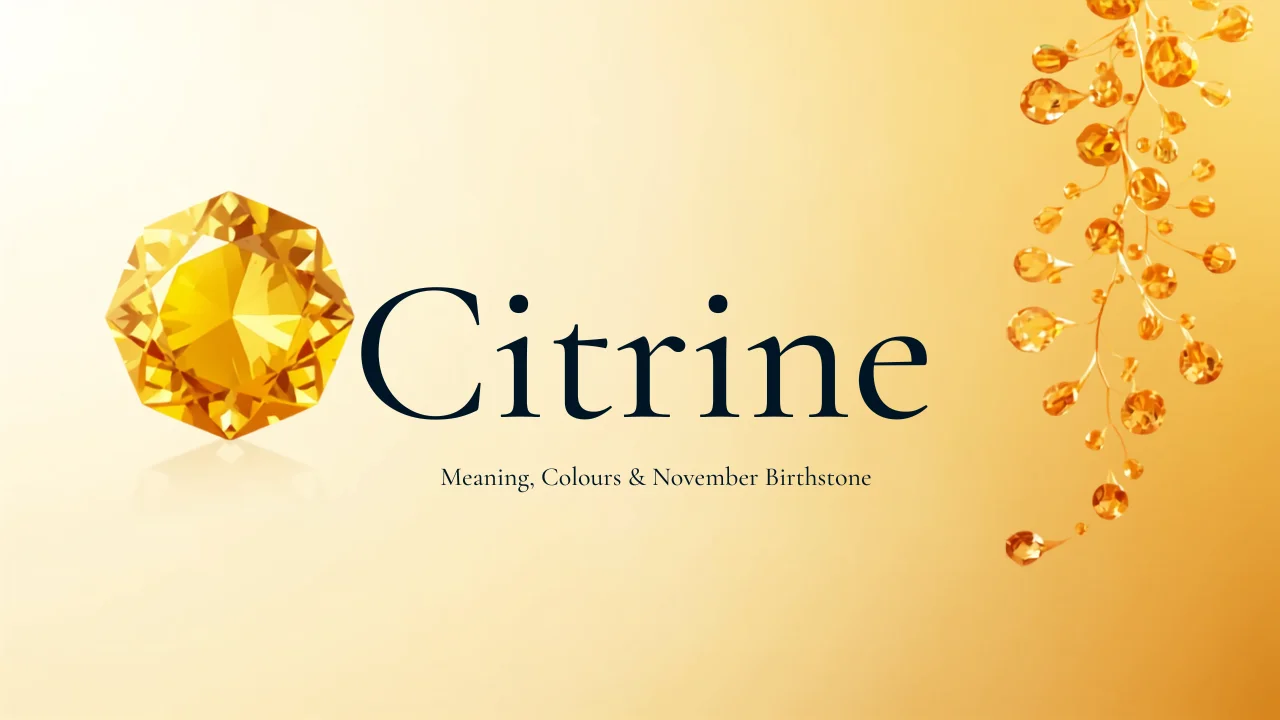
Hold a piece of citrine up to a window and it looks like bottled sunlight. The colour runs from a soft pale lemon through warm golden honey and into a deep brandy orange, and whatever the shade, it carries that same cheerful, glowing warmth that has made citrine the go-to stone for anyone who wants a big, bright, happy gem without a big, frightening price tag. It is the colour of late afternoon light, and it is one of the most likeable stones on the whole birthstone calendar.
It is also, and we are going to be completely straight with you about this from the start, the most quietly misrepresented gem in the jewellery case. The blunt truth that most articles tiptoe around is this: the overwhelming majority of "citrine" sold today, including almost every one of those gorgeous deep-orange geodes and clusters you see in crystal shops, is not natural citrine at all. It is amethyst that has been baked in an oven until it turned gold. That is not necessarily a scandal, because heated amethyst is still genuine quartz and the trade sells it openly as citrine, but it changes everything about how you should shop for the stone and what you should be willing to pay.
This is the honest, complete guide. What citrine actually is, its real colour range, the genuinely interesting "merchant's stone" lore, why it became one of November's birthstones, the heated-amethyst open secret and exactly how to spot it, what citrine is worth, and how to buy it without being parted from more money than the stone deserves. We think citrine is one of the best-value gems you can own, precisely because it is so abundant, and the trick is knowing what you are really buying.
Citrine Meaning in One Sentence
If you only want the quick answer: citrine is the stone of abundance, optimism, and success, the famous "merchant's stone" believed to attract prosperity, energy, and warmth, the gem of confidence and a sunny outlook. Of all the gemstones, citrine's reputation is the most relentlessly positive. Nobody associates it with grief or mourning or warning. It is the cheerful one.
That meaning has stuck so firmly partly because of the colour, which is impossible to read as anything but warm and happy, and partly because of a long folk tradition we will get to below. But to understand citrine properly, and to shop for it sensibly, you have to start with what it physically is, because that one fact explains both its low price and its biggest buying trap.
What Is Citrine?
Citrine is a variety of quartz, the same enormously common mineral that makes up clear rock crystal, purple amethyst, pink rose quartz, grey smoky quartz, and ordinary sand. Specifically, citrine is the yellow-to-orange member of the quartz family, coloured by tiny traces of iron inside the crystal. The name comes from the French "citron," meaning lemon, which tells you exactly what the original natural colour looks like.
Here is the fact that drives this whole article. Citrine and amethyst are the same mineral, quartz, separated only by how their iron content has been affected by heat and natural radiation. Amethyst is quartz where the iron produces purple. Apply enough heat to most amethyst and the iron chemistry shifts, the purple burns away, and the stone turns yellow or orange. In other words, you can literally turn amethyst into citrine in a kiln, and nature occasionally does the same thing underground with geological heat. This is why genuinely natural citrine is comparatively scarce, while "citrine" is everywhere: the supply gap gets filled with baked amethyst.
On the practical side, citrine is a thoroughly easy gem to own and wear. It sits at 7 on the Mohs hardness scale, the same as all quartz, with no troublesome cleavage to split along. That is hard enough for everyday rings, earrings, and pendants without the constant anxiety that the truly soft gems demand. After spending a lot of words on this site warning people about the fragility of opal, moonstone, and tanzanite, it is a genuine pleasure to be able to say that citrine can simply handle normal life. Its only real durability quirk is that strong, prolonged heat or harsh sunlight can fade the colour over time, particularly in heat-treated material, so you would not leave it baking on a sunny windowsill for years. Beyond that, it is one of the lower-maintenance coloured stones you can buy.
The Colours of Citrine
Citrine's colour is its whole appeal, and it covers a wider range than people expect:
- Pale lemon and lemon-gold. The lightest, softest shades, the closest to the original natural colour. Often sold as "lemon quartz" when the tone is a bright greenish-yellow. Pretty, delicate, and the most affordable.
- Golden and amber. The classic citrine look, a warm saturated yellow-gold. For most people this is the sweet spot of beauty and value.
- Honey and whisky. Slightly deeper and warmer, leaning towards orange, with real richness.
- Madeira. The deep, brownish orange-red named after the fortified wine, the most prized and dramatic colour. The vast majority of Madeira citrine is heat-treated, and we will come back to that.
A few colour terms are pure marketing and worth decoding. "Lemon quartz" is just light, bright citrine, sometimes irradiated and heated to get that punchy yellow-green. "Madeira citrine" is the deep orange grade. "Palmeira" and "Rio Grande" are other trade names for orange Brazilian material. None of these are different minerals. They are all citrine, which is all quartz, described with romantic names to justify a higher price.
The single most useful thing to know about citrine colour is that brightness and saturation matter far more than darkness. A clean, vivid golden citrine that glows is more desirable, and often pricier, than a dull, dark brownish stone, even though the dark one might sound fancier. Buy the colour you actually find beautiful in normal daylight, not the one with the grandest name.
The Open Secret: Most "Citrine" Is Heated Amethyst
This is the section that matters most, so here is the situation laid out plainly.
Natural citrine, formed yellow in the ground without human help, is genuinely uncommon. The demand for golden quartz, on the other hand, is enormous. The trade closes that gap by heat-treating amethyst (and sometimes smoky quartz), which turns it yellow, orange, or reddish-brown, and selling the result as citrine. This is standard, accepted, and decades old. Most reputable sources estimate that the great majority of citrine on the market is heat-treated rather than naturally yellow.
We want to be fair about this, because the internet tends to treat it as a scam and it mostly is not. Heat-treated amethyst is still real quartz. It is still, by trade definition, citrine. Heating is a permanent, stable treatment, and a heated stone will not fade back to purple or lose its colour under normal wear. There is nothing dishonest about selling heated citrine as long as the colour is understood to come from treatment and the price reflects it. The problem only arises when baked amethyst is dressed up and priced as if it were rare natural citrine.
So what should you actually do with this knowledge? Mostly, relax and pay accordingly. For an everyday jewellery stone, heat-treated citrine is perfectly good, attractive, durable, and cheap, and we would happily buy it. The honesty rule is simple: do not pay a natural-rarity premium for a treated stone. If a seller is charging extra specifically because a citrine is "natural" or "unheated," that is the moment to ask for proof, because that claim is where the real money, and the real misrepresentation, lives.
How to Tell Natural Citrine From Heated Amethyst
You cannot always tell with certainty by eye, and only a gem lab can be definitive, but there are strong tells, especially with the carved clusters and geodes sold in crystal shops:
- Colour zoning and tone. Natural citrine tends towards an even, soft, slightly smoky pale-to-golden yellow. Heat-treated amethyst usually shows a more orange or reddish tint and often has colour concentrated unevenly, frequently more intense at the points of the crystals with a paler or whitish base.
- The geode and cluster test. Those big, vivid orange-to-brown crystal clusters and geodes, the ones with a striking gradient of colour, are almost always heat-treated amethyst. Natural citrine very rarely forms in those dramatic deep-orange clustered shapes. If it looks like a Halloween-coloured amethyst geode, that is exactly what it is.
- Burnt tips. Aggressive heating can leave the very tips of crystal points looking slightly whitened, cloudy, or "burnt," a giveaway of the kiln.
- Price and honesty. Cheap deep-orange "citrine" sold in volume is treated, full stop. And a seller who answers "is this natural or heated?" with a clear, comfortable answer is worth far more than one who gets vague or defensive.
The other thing sold as citrine, far less commonly, is dyed or glass imitation, which a quick check usually betrays through suspiciously perfect uniform colour, bubbles in the case of glass, or dye concentrated in cracks. But the dominant reality of the citrine market is not glass fakes. It is heated amethyst, sold openly, and now you know how to price it.
Citrine Meaning and Symbolism: The Merchant's Stone
Citrine's lore is unusually focused, and unusually cheerful. Across centuries of folk tradition it has been the stone of wealth, success, and abundance, earning its best-known nickname, the "merchant's stone" or "money stone." The old tradition held that a citrine kept in the cash box, the till, or the merchant's purse would attract and preserve wealth, and that habit survives today in the feng shui practice of placing citrine in the "wealth corner" of a home or business, or in a money bowl.
From that central idea the associations branch out the way gem lore always does:
- Prosperity and success, the headline meaning, citrine as a magnet for abundance and good business.
- Optimism and joy, tied directly to the sunny colour, citrine as a stone that lifts mood and encourages a positive outlook.
- Energy and confidence, often linked to the solar plexus in chakra traditions, citrine as a stone of personal power, motivation, and self-belief.
- Creativity and clarity, a gem to clear mental fog and spark fresh ideas.
Citrine is sometimes called the "stone that never needs cleansing," a piece of crystal-world folklore claiming it does not absorb negative energy and so never has to be recharged. Take that for what it is worth, but it tells you how relentlessly upbeat citrine's whole reputation is.
Here is our honest position, the one we hold for every stone on this site. These are cultural and symbolic meanings, not physical powers. A citrine on your desk will not literally fill your bank account or rewire your mood. What a stone like this genuinely offers is a small daily piece of symbolism you can carry, a warm, optimistic reminder of an intention, prosperity, confidence, a fresh start, and that is a real and ancient reason people have always worn gems. With citrine, the symbolism and the colour pull in exactly the same cheerful direction, which is a big part of why people love it. If the deeper history of how stones came to carry these meanings interests you, our piece on talismans and amulets in gemstone lore traces where it all began.
Is Citrine a Birthstone?
Yes. Citrine is one of the two modern birthstones for November, sharing the month with topaz. Topaz is the older, traditional November stone, and citrine was added in the twentieth century as a modern, more affordable alternative, largely because golden citrine and the prized golden "imperial" topaz look so similar that citrine made a natural, budget-friendly stand-in.
That pairing is genuinely useful for November babies. Topaz, particularly fine imperial topaz, can get expensive, while citrine delivers a very similar warm golden glow for a fraction of the cost and in larger sizes. If you are choosing between them, our full November birthstone guide covers both stones, and our dedicated topaz vs citrine comparison walks through exactly how to tell them apart and which to pick. The short version: they look alike, but topaz is harder and pricier, and citrine is the easygoing, affordable, abundant choice.
Citrine is also commonly given as the gem for the 13th wedding anniversary, a sunny, optimistic stone for a milestone that traditionally needs a little brightening.
What Citrine Is Worth
Citrine is, frankly, one of the best-value coloured gemstones you can buy, and that is the most important thing to understand about its price. Because the supply is effectively unlimited (you can make more by heating amethyst, and amethyst itself is abundant), citrine stays cheap even in large, clean, beautifully coloured sizes. This is the opposite of a rare gem like its colour-change cousin alexandrite, which we ranked number one on our most expensive birthstones list. Citrine sits comfortably at the affordable end of that same ranking.
What this means in practice:
- You can buy big. A large, eye-clean, ten-carat citrine that glows is genuinely affordable, where the same size in sapphire or ruby would be a fortune. Citrine is the gem for people who want presence and impact on a modest budget.
- Clarity should be high. Because clean material is cheap and plentiful, there is no reason to accept a visibly included citrine. Hold out for eye-clean, it costs little extra.
- The premium colour is bright golden to Madeira orange, and natural unheated citrine carries a real premium over treated, which loops straight back to our earlier point: that premium is only worth paying if the "natural" claim is actually verified.
Because the stone itself is so inexpensive, citrine follows the same logic we apply to amethyst and the other affordable gems: in a piece of jewellery, the stone is often the cheapest part, so spend your money on the setting and the metal. A well-made setting in solid gold will outlast and outshine a flashy setting wrapped around the same cheap stone. If you want the full picture of how natural and treated and lab-made stones compare in value across the birthstones, we cover it in lab-grown vs natural stones.
Citrine vs Amethyst, and the Ametrine Bonus
Since citrine and amethyst are the same mineral, it is worth closing the loop on their relationship, because it is genuinely charming.
Amethyst is February's birthstone and citrine is one of November's, yet they are chemically twins, both quartz coloured by iron, separated only by heat. That is a nice piece of trivia for anyone with a February or November birthday in the family. If the science of how that purple colour forms in the first place interests you, our explainer on how amethyst forms digs into the geology, and our February amethyst guide covers its purple sibling in full.
There is also a third stone born from this exact relationship: ametrine. Ametrine is a single natural quartz crystal that is part amethyst and part citrine, showing purple and gold zones side by side in the same stone, because part of the crystal was naturally heated underground and part was not. Almost all genuine ametrine comes from one deposit, the Anahí mine in Bolivia. It is an affordable and underrated gem, and it is the most literal proof you can hold in your hand that citrine and amethyst are two faces of one mineral.
How to Buy and Care for Citrine
After all the warnings, the practical reality of buying citrine is refreshingly low-stress, because the stakes are low. You are not risking thousands on a rare stone, so the goal is simply to buy a pretty one at a fair, treated-stone price.
When buying, in order of priority:
- Colour first. Pick the shade you find genuinely beautiful in daylight, a bright, glowing golden, a rich honey, or a deep Madeira. Favour brightness and saturation over mere darkness.
- Clarity second, and be fussy. Clean citrine is cheap, so insist on eye-clean.
- Assume it is heated, and pay accordingly. Treat heat-treatment as the default and a fair price as the norm. Only pay a premium for "natural unheated" citrine if the seller can actually back the claim up, ideally with a gem-lab report for anything expensive.
- Spend on the setting. Since the stone is the cheap part, put your budget into solid metal and good craftsmanship.
Caring for citrine is easy. At Mohs 7 with no cleavage, it handles daily wear well. Clean it with warm water, mild soap, and a soft brush. It is generally considered safe in an ultrasonic cleaner because it is hard and untreated by anything fragile, though gentle soapy water is always the no-risk default. The one genuine rule is to keep it out of prolonged intense heat and strong sunlight, which can gradually fade the colour, especially in heat-treated stones. Store it away from harder gems like sapphire and diamond that could scratch it, and a citrine will keep glowing for a lifetime.
The Bottom Line
Citrine is the sunshine stone, the warm golden quartz that runs from pale lemon to deep Madeira orange, the cheerful "merchant's stone" of abundance and optimism, and one of November's two birthstones alongside topaz. It is durable enough for daily wear, available in large clean sizes for very little money, and almost impossible to dislike. For anyone who wants a big, bright, happy gem without a frightening price, it is one of the smartest buys on the entire birthstone calendar.
Our summary: enjoy citrine for exactly what it is, an affordable, abundant, beautiful stone, and shop for it with one fact firmly in mind, that most citrine is heat-treated amethyst sold openly as citrine. That is fine, and even good value, as long as you do not pay a natural-rarity premium for a treated stone. Buy the colour you love, insist on eye-clean clarity, assume heat-treatment unless proven otherwise, and put your money into the setting rather than the stone. Do that, and you will own one of the most cheerful and least troublesome gems there is.
If citrine's warmth drew you in, the natural next stops are its November partner in our topaz vs citrine comparison and our full November birthstone guide, its purple twin in our February amethyst guide, or the wider value picture in our most expensive birthstones ranked, where citrine sits, happily, near the affordable end.
Wondering how it stacks up against every other gem? Compare values in our gemstone price guide and toughness on the sortable Mohs hardness table.