December's Birthstone: The Complete Guide to Turquoise, Tanzanite and Zircon
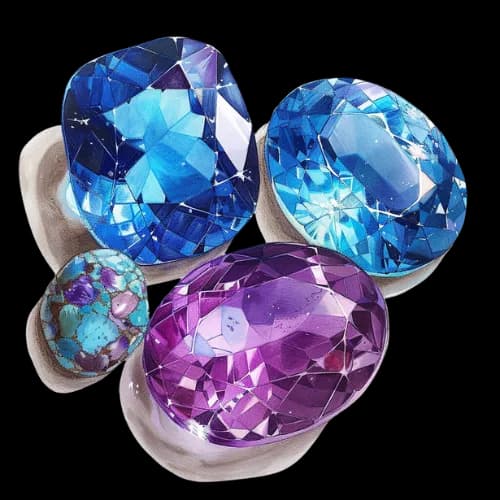
If you were born in December, you do not have one birthstone. You have three. Turquoise, tanzanite and blue zircon all share the month, which makes December the most generous and the most confusing entry on the whole calendar.
We will be honest with you up front, because it is the spine of this whole guide: most people default to whichever stone the first shop shows them, and that is usually the worst way to choose. These three gems could not be more different in price, durability and history. Pick wrong and you either overpay or buy something that cannot survive daily wear. Pick well and December is arguably the most interesting birth month to shop for. Here is the full picture.
So What Is December's Birthstone, Exactly?
December's birthstones are turquoise, tanzanite and zircon. Some lists also throw in lapis lazuli, but the three that the modern jewellery trade actually recognises are those.
Here is the short version of why there are three. Turquoise and zircon are the ancient, traditional December stones, worn for thousands of years. Tanzanite is the newcomer, only discovered in 1967 and added to the official birthstone list in 2002 by the American Gem Trade Association. So December's list is really two old friends and one brilliant gatecrasher.
Our take: do not feel obliged to "choose one" the way September people choose sapphire. December is the one month where shopping the options actually pays off, because each stone suits a different budget and a different person. We will tell you which is which below.
December Birthstone Colour: What You Are Actually Looking At
When people search "december birthstone colour" they expect a single answer and instead get a rainbow. That is the nature of a three-stone month. Here is the honest field guide.
- Turquoise is the famous one. A robin's-egg to sky blue, sometimes leaning green, often webbed with brown or black "matrix" veining from the host rock. That blue is so iconic it gave its name to a colour.
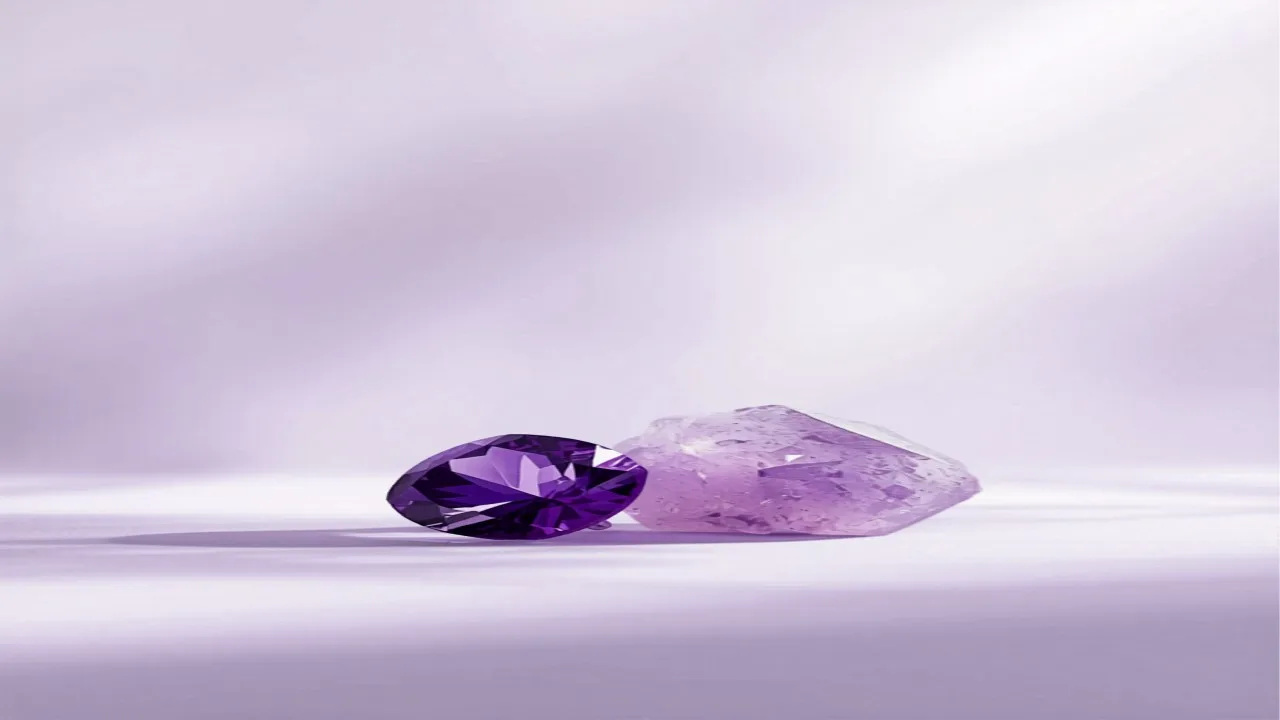
- Tanzanite is a velvety blue-violet. The best stones shift between sapphire blue and a rich purple depending on the light, which is part of the magic.
- Zircon, despite its reputation, comes in many colours, but the December star is blue zircon: an electric, almost neon sky blue with serious sparkle.
So the unifying thread across all three December stones is blue. If someone tells you "December's colour is blue," they are right, they are just being lazy about which blue.
Turquoise: The Ancient Protection Stone
Turquoise is one of the oldest gemstones used by humans, full stop. It was set into the burial mask of Tutankhamun, mined by the Persians for over a thousand years, and held sacred by Native American peoples of the Southwest, who still produce some of the world's most prized material.
The name itself is a clue to its journey. "Turquoise" comes from the French for "Turkish stone," because Persian turquoise reached Europe through Turkish trade routes. George Frederick Kunz, writing in 1913, records turquoise as a stone of protection above all, believed to guard the wearer from falls and, in a charming bit of old folklore, to change colour to warn of danger or illness.
There is a grain of truth buried in that superstition, which is why we love it. Turquoise really does change colour over time. It is porous, so it absorbs oils, cosmetics and sweat, and it can shift from blue toward green as it ages. The ancients read that as a warning. We read it as chemistry. Either way, your turquoise genuinely records its life with you, and we think that is rather beautiful.
Buying turquoise, our opinion: this is where you have to be careful. A huge amount of "turquoise" on the market is stabilised (resin-treated to harden it), reconstituted (ground-up scraps glued together), dyed, or simply dyed howlite pretending to be the real thing. None of that is a scandal as long as you know what you are paying for. Stabilised turquoise is normal and fine for everyday jewellery. What you must not do is pay natural, untreated prices for treated material. Ask the seller directly: is this natural, stabilised, or reconstituted? A straight answer is the test of a good seller.
At 5 to 6 on the Mohs hardness scale, turquoise is soft. Treat it like the delicate stone it is. We would happily set it in a pendant or earrings, and we would think twice before putting untreated turquoise in an everyday ring.
Tanzanite: The Stone That Will Be Gone in a Generation
Tanzanite is the gem that gives December a genuinely modern story, and it might be the most compelling buying argument on the entire birthstone calendar.
It exists in exactly one place on Earth: a few square kilometres of foothills near Mount Kilimanjaro in Tanzania. That is it. The whole global supply comes from a deposit that geologists estimate could be commercially exhausted within the next couple of decades. Tiffany & Co. named and popularised it in 1968, and the rarity pitch has been true ever since: tanzanite is, by a wide margin, rarer than diamond.
The colour is the draw. Fine tanzanite is a deep, saturated blue-violet that rivals sapphire, and it is pleochroic, meaning it flashes different colours, blue, violet, even burgundy, from different angles. Most rough is heat-treated (often naturally heated underground, or gently in the lab) to bring out that blue, which is completely standard and accepted.
Buying tanzanite, our opinion: this is the December stone we would buy as an investment of feeling, if not strictly of money. For colour and rarity, it is remarkable value next to sapphire. A fine tanzanite costs a fraction of a comparable fine blue sapphire, yet it is arguably more vivid. The catch is durability. Tanzanite is a 6 to 7 on Mohs and it is sensitive to knocks and sudden temperature changes, so we would steer you away from it as an everyday engagement ring unless you are genuinely careful with your hands. As a pendant, a pair of earrings or an occasional-wear cocktail ring, it is glorious. If you do want it on your finger daily, choose a protective bezel setting, not exposed prongs.
If you are weighing tanzanite for a proposal, our birthstone engagement rings guide walks through which stones actually survive daily wear and which need protecting.
Blue Zircon: The Most Underrated Gem on the List
Zircon has an image problem, and it is entirely unfair. Most people confuse it with cubic zirconia, the cheap lab-made diamond simulant. They are not related. Cubic zirconia is a synthetic. Zircon is a genuine, natural mineral, and it is in fact one of the oldest minerals on Earth, with crystals dated to over four billion years old.
Natural zircon has a secret weapon: fire. Its refractive index and dispersion are close enough to diamond that a well-cut blue zircon throws off a startling amount of brilliance and rainbow flash. Hold one up and it sparkles in a way turquoise and tanzanite simply do not.
That blue, by the way, is almost always the result of heat treatment of brownish zircon, mostly from Cambodia. This is a centuries-old, accepted practice, so do not let it put you off.
Buying zircon, our opinion: this is the value champion of December. Blue zircon gives you real sparkle, a real natural gemstone with a four-billion-year pedigree, and a price that undercuts both tanzanite and fine turquoise. At 6 to 7.5 on Mohs it is reasonably durable, though it can be a little brittle at the edges, so a protected setting helps. If you want the most gem for the least money in December, this is our pick, and almost nobody else will be wearing one.
December Birthstone Meaning and Symbolism
Across all three stones, December's symbolism circles the same themes: protection, calm, wisdom and clarity. It is a fitting cluster for the reflective end of the year.
- Turquoise has always been the protection and friendship stone, believed to guard travellers and strengthen bonds. It is also the traditional 11th wedding anniversary gem.
- Tanzanite is the modern stone of transformation and higher awareness, which suits a gem that only entered our world a lifetime ago.
- Zircon was prized in the Middle Ages for promoting sleep, wisdom and honour, and for warding off evil. Kunz notes it among the stones credited with banishing nightmares.
If you want the deeper historical thread of how these meanings were assigned and how the modern month-by-month list came together, our birthstone origins and history guide tells that story, and the birthstone chart lays out every month at a glance.
December Birthstone Jewellery: How to Choose Between Three
This is the question that actually matters, so here is the plain advice we would give a friend buying a December birthday or Christmas gift.
- Want heritage, colour and a story? Buy turquoise. Set it in silver, keep it to pendants and earrings, and accept (or even enjoy) that it will age. Southwestern and bohemian styles suit it best.
- Want a showstopper that rivals sapphire? Buy tanzanite. Spend on colour depth and saturation, get it certified above a carat, and protect it in the setting. This is the "wow" choice.
- Want the best value and the most sparkle? Buy blue zircon. You get a genuine, ancient, brilliant gem for a friendly price, and you get to correct everyone who thinks it is "fake diamond."
- Buying for everyday wear? Be realistic about hardness. All three December stones are softer than the quartz dust floating around your home, so none of them loves a rough daily ring. Bezel settings and earrings or pendants are your friends.
For finished pieces by month, the birthstone jewelry hub is the place to browse, and our custom birthstone necklace guide is a good read if you are putting together something personal.
What Will It Cost? Honest Numbers
Prices move, but here is the rough lay of the land so you walk in informed rather than guessing.
- Zircon is the most affordable, with attractive blue stones often in the low tens of dollars per carat and fine material still very reasonable. The value buy.
- Tanzanite sits in the middle and rewards a careful eye. Commercial colour is accessible, while top, deeply saturated blue-violet stones climb into the hundreds per carat and beyond. Still a fraction of comparable sapphire.
- Turquoise is wildly variable. Stabilised commercial material is cheap. Natural, untreated, high-grade American turquoise from a named mine can cost more per carat than you would ever expect from a "soft" stone, precisely because the best deposits are nearly worked out.
The lesson across all three: in December, treatment and origin drive price more than size does. Ask the questions, get it in writing, and you will not overpay.
Caring for December's Stones
All three stones need a gentler touch than a sapphire or diamond, so a few simple habits go a long way.
- Never use an ultrasonic or steam cleaner on any of them. Warm soapy water and a soft cloth only.
- Turquoise especially hates chemicals, cosmetics, perfume and even prolonged sunlight, all of which can change its colour or dry it out. Put it on last, after your perfume and hairspray.
- Tanzanite dislikes sudden temperature shocks and sharp knocks, so take the ring off before the gym or the washing-up.
- Zircon can abrade at facet edges over time, so store it separately from harder gems.
The same rule that applies to pearls and opals applies here: these are stones to be enjoyed and looked after, not knocked about. Our guide to how valuable an opal really is covers the same delicate-stone mindset if you want to go deeper.
December's Other Symbols
If you are building a full December birthday gift, the birthstones pair beautifully with the month's birth flowers, the narcissus and the holly, both of which carry meanings of hope and rebirth at the turn of the year. We cover the whole set in our birth flowers and birthstones by month guide, which is a lovely way to layer extra meaning into a present.
The Bottom Line for December Birthdays
A few closing opinions, the kind we would give a friend shopping for a December birthday or a Christmas-born loved one:
- You have three stones, so use that. December is the one month where shopping the options genuinely pays off.
- Turquoise for heritage, tanzanite for drama, zircon for value and sparkle. That is the whole guide in one line.
- Mind the hardness. None of these is a carefree everyday ring stone. Lean toward pendants, earrings and protected settings.
- Ask about treatment every time. With all three December stones, the honest answer about treatment and origin is what protects your money.
For the wider story of how each month got its stone, read our birthstone origins and the 1912 list piece, and the whole lore series lives on the blog as we work through the old book one gem at a time.
Sources and Further Reading
- George Frederick Kunz, The Curious Lore of Precious Stones, 1913. Turquoise, zircon (then often called "jacinth" or "hyacinth") and the protective lore around them run through the chapters on talismanic and zodiacal stones. We also wrote a plain-English summary of the whole book.
- For how the modern month-by-month list was assembled, including tanzanite's 2002 addition, see our birthstone origins history.
- For the natural versus synthetic question across all gems, see lab-grown versus natural birthstones.
- For settings and styles, the birthstone engagement rings guide and the birthstone jewelry collection.
The simplest way to think about December's birthstone is this. You were not given one stone, you were given a choice: the ancient protector, the rare newcomer, and the four-billion-year-old spark. Most months envy that. Choose the one whose story sounds like yours.
Wondering how it stacks up against every other gem? Compare values in our gemstone price guide and toughness on the sortable Mohs hardness table.