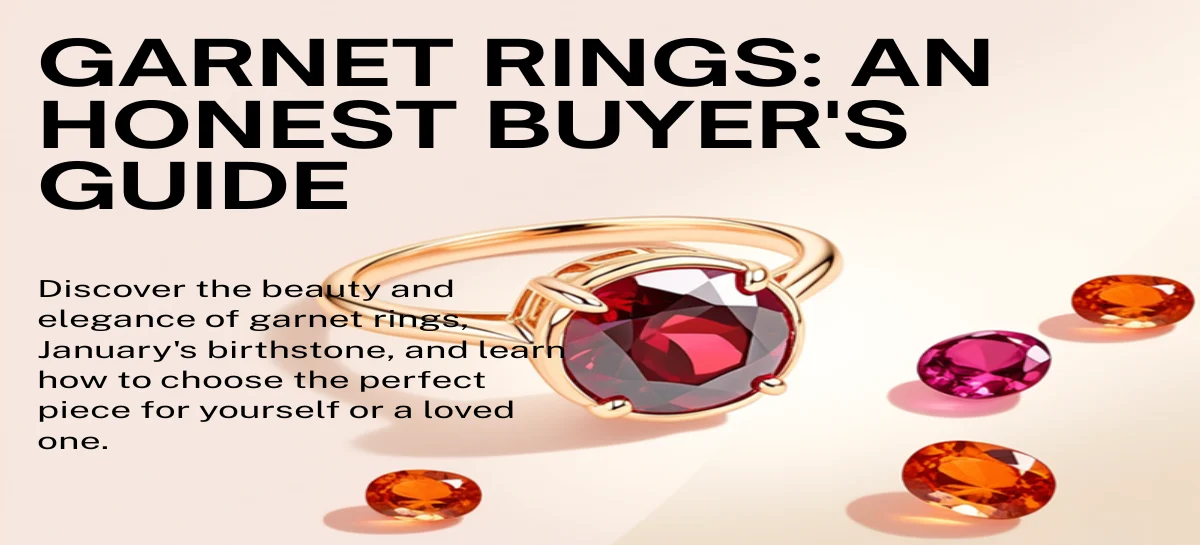
Garnet has an image problem, and it is not the stone's fault. Say the word and most people picture a dark, brooding red, the colour of an old wine bottle, set in some grandmother's brooch. That image is doing garnet a real disservice, because it leaves out almost everything that makes garnet one of the smartest gemstone buys on the board.
So here is our promise for this guide. We are going to tell you what garnet genuinely does better than gems three times its price, the one mistake that turns a garnet ring from gorgeous to gloomy, what a fair price actually looks like, and the questions to ask before you buy. No breathless adjectives, no pretending a fifty dollar stone is a crown jewel, and no hiding the parts the sales pages skip.
A quick word on what garnet even is, because this is the bit nobody explains and it changes everything. Garnet is not one stone. It is a whole family of related minerals that happen to share a crystal structure, and they come in nearly every colour except blue. The deep red you are picturing is just the cheapest, most common member of a much larger and far more interesting clan. Once you understand that, you buy garnet completely differently.
What Garnet Actually Is
Most gem names point to one mineral. "Garnet" points to about half a dozen that geologists lump together because they crystallise the same way. The ones you will actually meet in jewellery are worth knowing by name, because the name is the price tag.
- Almandine is the workhorse. Deep brownish to purplish red, abundant, cheap, and the stone behind garnet's dull reputation. This is what fills most inexpensive garnet rings.
- Pyrope is a brighter, more fiery red, the classic "Bohemian garnet" of antique jewellery. Often blended with almandine in nature.
- Rhodolite is our quiet favourite. A raspberry to purplish pink-red that is brighter and more lively than common red garnet, and still very affordable. If someone tells us they find garnet too dark, we point them straight at rhodolite.
- Spessartite, also sold as "mandarin garnet," runs from vivid orange to a glowing reddish orange. Genuinely beautiful, and priced accordingly.
- Tsavorite is a green garnet that rivals emerald for colour, with none of emerald's fragility. It is rare and expensive.
- Demantoid is the other green garnet, a brilliant grass-to-yellowish green with more fire than a diamond. The rarest and priciest of the family by a wide margin.
There is even colour-change garnet that shifts from greenish in daylight to red under lamplight, which sounds like a gimmick until you see it move in your hand. The point is simple. When you shop for a "garnet ring," you are not picking from one stone at one price. You are picking from a family that runs from twenty dollars a carat to several thousand. Knowing which garnet you are looking at is ninety percent of buying well.
Why We Genuinely Rate Garnet
The case for garnet is strong, and most buyers never hear it made properly. So let us make it.
It is almost never treated, and that is rare. This is garnet's best-kept secret and the reason we recommend it so often. Ruby, sapphire, and emerald are nearly always treated in some way: heated, oiled, fracture-filled, diffused. Garnet is one of the very few coloured gems that reaches you exactly as it came out of the ground, with no enhancement at all. What you see is the real, natural colour of the stone. For a buyer who wants something honest and untouched, almost nothing else in the affordable bracket can say that. We think it is a genuinely underrated selling point.
It punches far above its price. A clean, well-cut red garnet costs a fraction of what a ruby of the same size costs, and from a few feet away a fine rhodolite or pyrope reads as a rich, expensive red. The value per dollar is excellent, especially if you want real, saturated colour rather than a pale pastel.
It has real birthstone meaning. Garnet is the birthstone for January, which makes a garnet ring a natural choice for a January birthday, a winter anniversary, or a meaningful gift, rather than just a pretty red stone. That history and symbolism is something morganite and most fashion stones simply cannot offer.
It has fire. Garnet has a high refractive index, which is a technical way of saying it bends light well and sparkles with a deep, glowing return rather than a flat glassy look. Demantoid in particular throws more fire than a diamond. Even common red garnet, when it is cut well, has a lively inner glow.
That is a strong list. Now the part that actually decides whether your ring looks wonderful or disappointing.
The One Trap: Buying a Garnet That Is Too Dark
If we could give a garnet shopper a single piece of advice, it would be this. The most common red garnet, almandine, is frequently too dark. In larger sizes especially, a deep almandine can look almost black, like a brake light at night, swallowing light instead of returning it. This is the single biggest reason people end up underwhelmed by a garnet ring, and it is completely avoidable.
Here is what is happening. Garnet's colour deepens as the stone gets bigger, because light has further to travel through it. A small almandine can look like a lovely bright red. Scale that same material up to a three carat centre stone and it can go murky and lifeless. The stone is not faulty. It is just dark material cut too thick.
So this is what we tell friends to do:
- Look at the stone face-up in normal light, not under the jeweller's spotlight. Bright shop lighting flatters everything. Tilt it, move it, take it toward a window if you can. If it stays bright and glowing, good. If it goes to a flat dark mass, walk away.
- Favour brighter species for bigger stones. If you want a centre stone over a carat or two, lean toward rhodolite or a good bright pyrope rather than dark almandine. They hold their life at size.
- Mind the cut. A well-cut garnet is cut to let light back out. A cheap one is cut to save weight, which often means too deep, which means dark. Brightness beats raw carat weight every time with this stone.
Get this one thing right and garnet rarely disappoints. Get it wrong and no setting on earth will save the ring.
The Other Honest Drawbacks
We would not be doing our job if we only sold you the upside. Two more things to know.
It is softer than the hard gems. Garnet sits around 6.5 to 7.5 on the Mohs hardness scale depending on the species, with rhodolite and pyrope at the harder end and some others softer. That is fine for a ring, better than opal or pearl, roughly on par with amethyst. But it is well below sapphire at 9 and diamond at 10. For a ring you will wear every single day for decades, garnet's facet edges can soften and the table can pick up tiny scratches over many years. It is not fragile, it just is not bulletproof. For a daily engagement ring we would push the stone slightly down into the setting or add a protective halo rather than perch it high and exposed.
Common garnet holds little resale value. Because red garnet is so abundant, the everyday stuff has almost no resale market. Buy a common red garnet ring because you love it today, not as any kind of investment. The exception is the rare end of the family. A fine tsavorite or demantoid genuinely holds value, because those are scarce stones. But the typical garnet ring is a stone to enjoy, not a store of wealth, and we would rather you knew that going in.
Watch Out for Fakes and Glass
Because cheaper garnet is so inexpensive, you would think nobody would fake it. They do, mostly at the bottom of the market. Red glass has been sold as garnet for centuries, and a beginner cannot always tell pressed red glass or a "garnet-coloured" synthetic from the real thing by eye. There are also garnet-topped doublets, an old trick where a thin slice of real garnet is fused to a glass base.
None of this is a reason to avoid garnet. It is a reason to buy from someone who will put it in writing. Our rule is simple. For anything above a token price, ask the seller to state on the receipt that the stone is natural garnet, and ideally which species. A seller who knows their material will happily tell you it is a "natural rhodolite garnet" or a "natural spessartite." A seller who just says "garnet stone" and gets vague when you ask is one to be careful with. For a significant tsavorite or demantoid, ask about an independent lab report, because at that price level it is worth the certainty.
What You Should Actually Pay
Vague price talk helps nobody, so here are rough ballparks for the loose stone, before setting. Garnet's enormous price range is the whole point, so we will break it out by species.
- Common red garnet (almandine): often just a few dollars to twenty dollars per carat. This is the stuff in inexpensive fashion rings.
- Good rhodolite or bright pyrope, eye-clean, well cut: roughly 30 to 150 dollars per carat. This is the sweet spot for a beautiful, affordable garnet ring, and where we would spend.
- Fine spessartite (mandarin garnet): several hundred dollars per carat for vivid material, more in larger clean sizes.
- Tsavorite: hundreds to well over a thousand dollars per carat, climbing steeply with size and colour.
- Demantoid: the most expensive garnet of all, easily into the thousands per carat for fine Russian material with the prized "horsetail" inclusion.
Then add the setting, which for the affordable garnets is where most of your money will actually go. A solid 14k gold setting with small accent diamonds typically runs a few hundred to over a thousand dollars depending on the gold weight and the quality of the accents.
This split leads to our core advice, and it is different depending on which garnet you fall for.
Our Buying Strategy: It Depends on the Garnet
Here is the bit most guides get wrong by treating garnet as one thing. The right strategy flips completely depending on which member of the family you are buying.
For common and mid-range garnet (almandine, rhodolite, pyrope, most red and pink garnet): treat it like any affordable coloured stone. The gem is the cheap part, so put your money into the setting. We would tell a friend to do this:
- Buy a generous, bright stone. Carats are cheap here, so prioritise brightness and good colour over raw size, and do not go so big that the colour goes dark.
- Put the budget into the metal and setting. Solid gold over plated. A well-made setting that protects the stone. Quality accent diamonds if you want extra sparkle. This is what makes the ring feel like a real piece rather than costume jewellery, and it is what will last. It is the same logic we gave readers in our amethyst ring guide and our morganite guide: when the gem is cheap, craftsmanship is what you are really buying.
- Yellow or rose gold flatters red garnet beautifully and warms the colour, while white gold and platinum give it a cooler, more modern frame. Red garnet against yellow gold is a genuinely classic, hard-to-get-wrong combination.
For rare garnet (tsavorite, demantoid, fine spessartite): throw that advice out. Now the stone is the expensive, valuable part, and the strategy is the opposite. Here you buy the best stone you can afford and keep the setting clean and simple so nothing distracts from it, exactly the way you would treat a fine sapphire or ruby. Do not bury a tsavorite under a busy halo. Let it speak.
Knowing which of these two playbooks applies is the difference between buying garnet well and buying it badly.
A Note on Vintage and Antique Garnet Rings
Garnet has a long history in antique jewellery, and "vintage garnet ring" is one of the most searched garnet terms for good reason. Victorian and Bohemian pieces often used clusters of small rose-cut pyrope garnets packed tightly together, sometimes called "Bohemian garnet," and they have a warm, glowing charm that modern mass-produced rings rarely match.
We have a soft spot for these, but two honest cautions. First, antique garnets were frequently set in low-carat gold or gilt metal, so check what the band actually is before you pay a fine-jewellery price. Second, old rose-cut garnets are cut shallow and foil-backed in some pieces, which means they can look flat or go dark if the foil has degraded. Buy antique garnet for the character and the history, inspect the metal and the stones closely, and price it as a charming old piece rather than a modern gem-quality buy.
Garnet vs Ruby: The Honest Comparison
This is the comparison everyone makes, so let us settle it. Garnet and ruby are both red, and a good red garnet can genuinely flatter a buyer who would otherwise spend ten times more on a ruby. But they are not the same stone, and pretending garnet "wins" would be dishonest.
Ruby is harder at 9 on the Mohs scale, holds its value, carries thousands of years of status and lore, and at fine quality glows with a vivid pinkish red that garnet cannot quite reach. It is also expensive, and nearly always heated.
Garnet is softer, holds little value at the common end, and tends toward a deeper, sometimes warmer or browner red. But it is a fraction of the price, and it is natural and untreated, which ruby almost never is. If you want a serious heirloom red stone and budget allows, ruby is the better long-term buy. If you want a beautiful, honest, affordable red that you can wear and enjoy without a second mortgage, garnet is a genuinely smart choice and nothing to apologise for. We have recommended both, to different people, for entirely different reasons.
How to Care for a Garnet Ring
The care routine is easy. Garnet is reasonably tough and chemically stable, so it asks less of you than emerald, opal, or pearl.
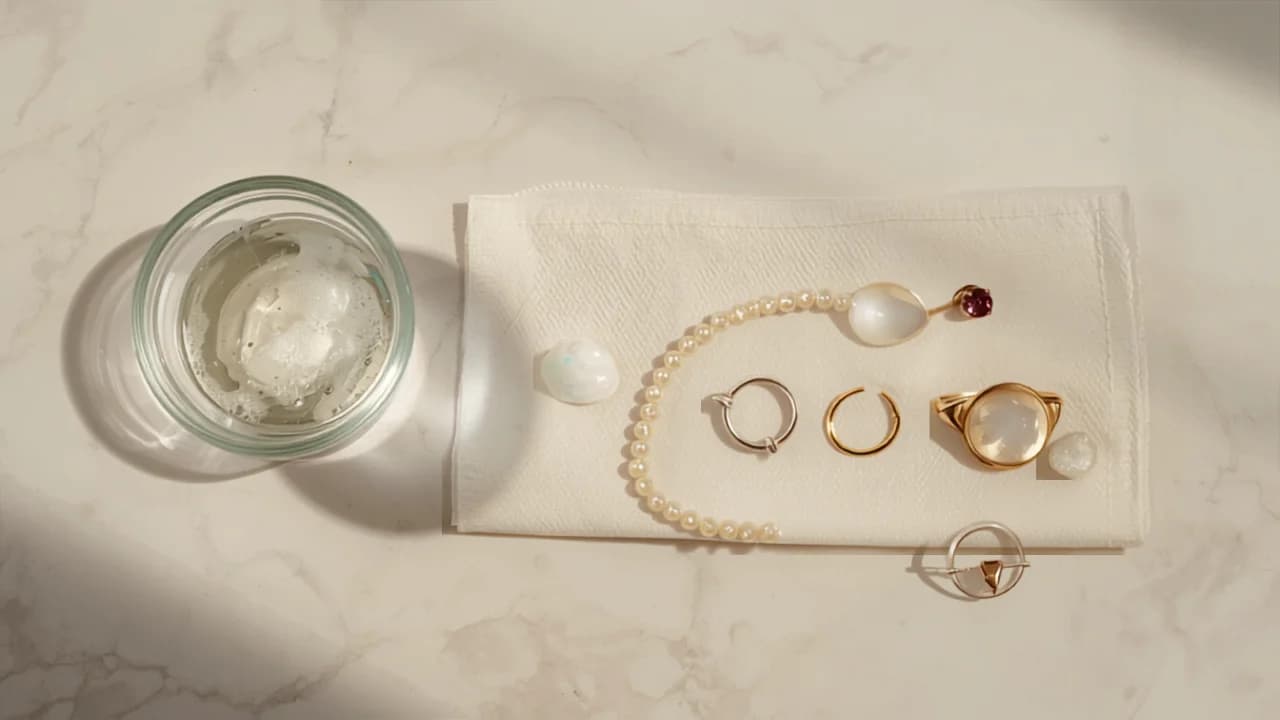
- Clean it with warm water, mild dish soap, and a soft toothbrush. That is all most garnet needs.
- Ultrasonic cleaners are generally safe for clean, untreated garnet, but skip them if the stone has visible inclusions or fractures, and avoid steam cleaning to be safe.
- Take the ring off before heavy chores, gym sessions, and gardening, where a hard knock could chip a facet.
- Store it separately so harder stones like sapphire and diamond do not scratch it.
For a fuller routine across coloured stones, our notes in the October birthstone guide cover the gentle-stone approach in more depth.
Our Verdict
Garnet is one of the most underrated gemstone buys there is, and almost all of the disappointment people feel with it comes down to one fixable mistake: buying a stone that is too dark. Get a bright, well-cut garnet, ideally a rhodolite or a good pyrope if you want real life at size, lean on yellow or rose gold for red stones, pour your budget into a solid setting, and get "natural garnet" with the species named in writing. Do that and you will have a glowing, honest, untreated red ring for a fraction of what its colour suggests it should cost.
Buy it because you love the colour, because it is January's stone, or because you want a red gem that nature made rather than a furnace finished. Just do not buy a dark, cheaply cut almandine and expect it to sparkle, and do not expect common garnet to hold value. Those are the gaps between the reputation and the reality, and now you know exactly where they are.
If garnet's birthstone meaning is part of the draw, read our full guide to January's birthstone for the history and symbolism, browse the month-by-month engagement ring guide to see how garnet sits beside the other birthstones, and check the full birthstone chart if you are buying for a different month.
Working out a budget? Our engagement ring budget calculator turns a monthly figure into a realistic ring spend, and the ring size calculator gets the fit right before you order.