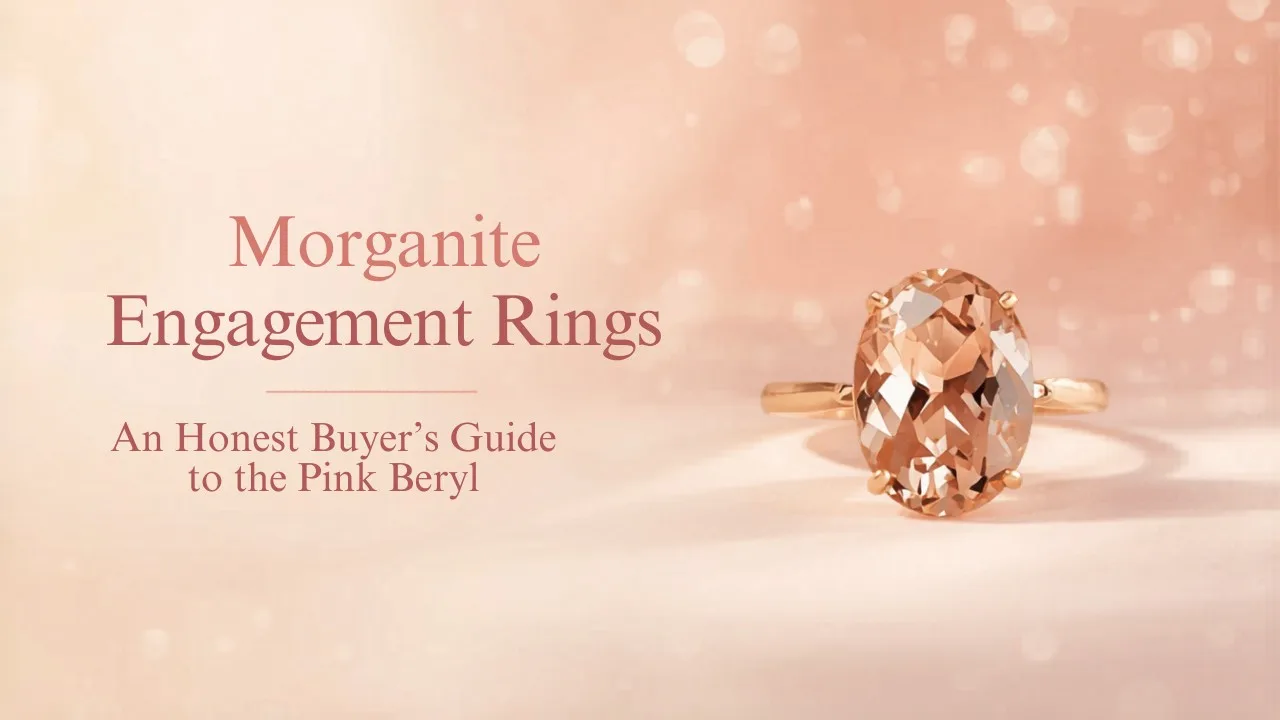
Morganite is the engagement stone that built its whole reputation on a single photo: a peachy-pink cushion in a rose gold setting, shot in soft light, shared a few million times. It is romantic, it is soft, and it is one of the best value coloured stones you can put on a hand. We like it. We also think the way it gets sold leaves out the parts you actually need to know before you spend.
So here is our promise for this guide. We are going to tell you what morganite genuinely does well, where it quietly disappoints people, what a fair price looks like, and the exact questions to ask a jeweller before you hand over a card. No breathless adjectives, no pretending a fashion stone is a family heirloom in waiting.
A quick word on what morganite even is, because it matters for everything below. Morganite is pink beryl. That makes it the literal sister stone of two birthstones we cover in depth: emerald, May's green beryl, and aquamarine, March's blue beryl. Same mineral family, three different colours, three very different temperaments. Understanding that family tree is the fastest way to understand why morganite behaves the way it does.
What Is Morganite, Really
Beryl is one mineral that shows up in several costumes. Add a trace of iron and you get aquamarine. Add chromium or vanadium and you get emerald. Add a whisper of manganese and you get morganite, in shades that run from barely-there blush to peach to a warmer salmon pink.
It was named in 1910 after J.P. Morgan, the banker and gem collector, which tells you something about its history. This is not an ancient talisman stone with a thousand years of lore behind it. It is a twentieth-century discovery that spent decades as a collector's curiosity and then exploded into the mainstream around 2015 when rose gold and soft romantic aesthetics took over bridal. That is not a knock. It just sets expectations. You are buying a beautiful modern stone, not a piece of antiquity.
One honest point up front: morganite is not an official birthstone for any month. You will see it sold as a "pink birthstone" or lumped in with October's pink tourmaline, but that is marketing, not the standardised list. If you want a stone tied to a birth month, look at our birthstone chart. If you want a soft pink stone for a ring and you do not care about the calendar, morganite is a genuinely strong pick. Both things are true.
Why People Love Morganite (And Why We Mostly Agree)
The case for morganite is real, so let us make it properly.
It is durable enough for daily wear. Morganite sits at 7.5 to 8 on the Mohs hardness scale. That is harder than amethyst at 7, and crucially it does not have emerald's problem. Emerald is the same mineral but it is riddled with fractures and gets treated with oil, which makes it fragile and high-maintenance. Morganite is typically clean, with no cleavage plane waiting to split. For a coloured engagement stone you can actually wear every day, morganite is one of the safer choices on the board. We rate its everyday wearability above emerald, opal, and pearl without hesitation.
It is cheap for its size. This is the headline. Morganite costs a fraction of what sapphire, ruby, or diamond cost per carat, and it comes out of the ground in large, clean crystals. That means you can buy a big, eye-catching stone, two or three carats, for a few hundred dollars. The visual impact per dollar is excellent.
The colour is genuinely flattering. Soft pink reads as warm and romantic, and it pairs with rose gold in a way that feels almost designed for it. On most skin tones it looks lovely.
Clarity is usually excellent. Most gem morganite is eye-clean, meaning you will not see inclusions without a loupe. Unlike emerald, where inclusions are part of the deal, a good morganite looks crystal clear.
That is a strong list. Now the part the sales pages skip.
The Honest Drawbacks Nobody Mentions
We would not be doing our job if we only sold you the dream. Here is where morganite trips people up.
The colour is pale, and pale stones look washed out small. This is the single biggest disappointment we hear about. Morganite's pink is delicate by nature, and below about one carat it can look almost colourless, or worse, faintly brown or grey. The gorgeous saturated peach you saw in photos was almost certainly a large stone, professionally lit, sitting on rose gold that was bouncing pink back up into it. Take that same stone, shrink it, and set it in white gold or platinum, and the magic can vanish. If you want visible colour, buy size. We would not go below 1.5 carats for a centre stone if colour is what you are after.
Rose gold is doing a lot of the work. Here is the trick of the trade: rose gold reflects warm pink light up through the stone and makes the colour look richer than it actually is. That is why nearly every morganite ring you have seen is set in rose gold. It is a genuinely smart pairing, but go in knowing that the metal is part of the colour story. Set the same stone in platinum and it will look paler. There is nothing wrong with leaning into rose gold. Just understand why every photo looks the way it does.
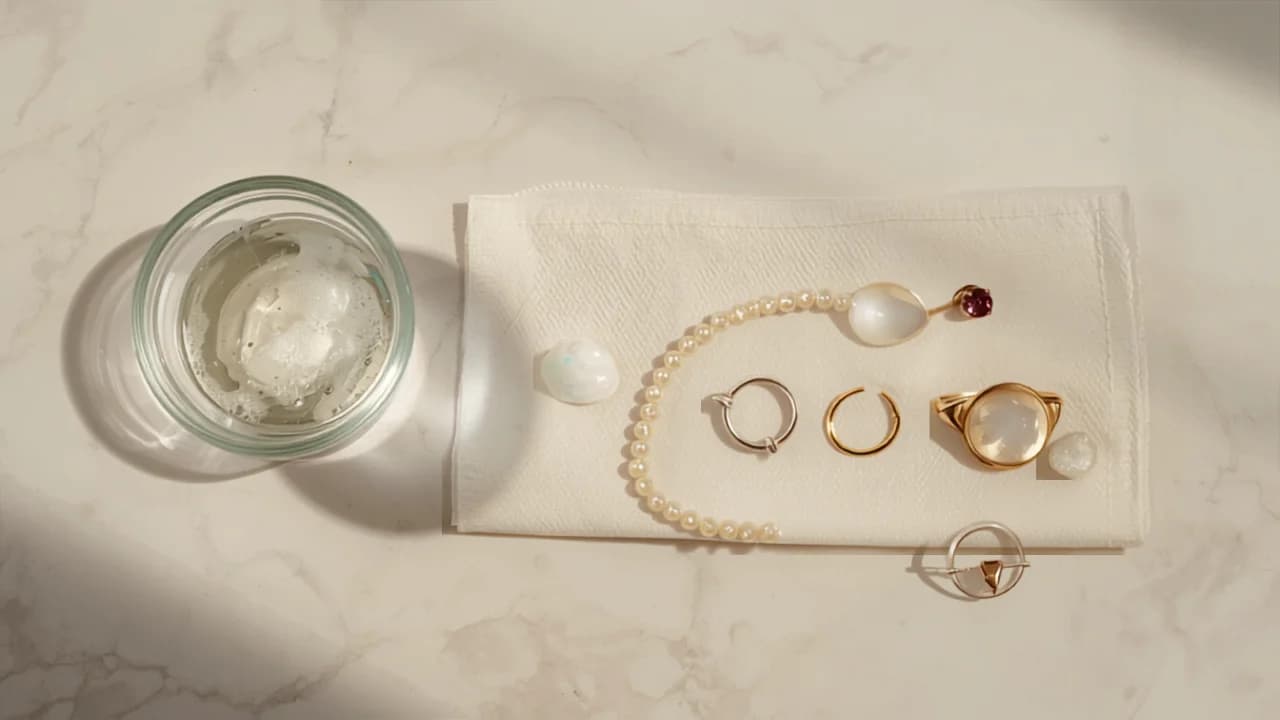
It shows dirt and oil fast. Morganite is what gemologists call oleophilic, which is a fancy way of saying it loves grease. Hand lotion, sunscreen, cooking oils, and the natural oils on your skin build up a film on the stone quickly, and because the colour is already light, that film kills the sparkle faster than it would on a darker, brighter stone. A morganite ring needs cleaning more often than most to keep looking its best. A soft brush, warm water, and mild dish soap once a week is the honest maintenance reality.
Almost all of it is heat-treated. The vast majority of morganite on the market is gently heated to remove orange or yellow tones and bring out the cleaner pink. This treatment is standard, stable, and permanent, and we have no problem with it. But you should know it is happening, and you should never pay a "natural untreated" premium unless you have lab paperwork proving it.
Resale value is poor, and it is a trend stone. This is the one we feel strongly about. Morganite surged in popularity around 2015 to 2020 on the back of the rose gold wave. Trends move. The stone itself holds almost no resale value because supply is abundant and demand is fashion-driven. Buy morganite because you love how it looks today, not as any kind of investment, and certainly not expecting it to feel timeless the way a classic diamond solitaire or a blue sapphire does. If "will this still feel right in thirty years" matters to you, that is a real question to sit with.
Watch Out for Fake and Imitation Morganite
Because morganite is inexpensive, you would think nobody would bother faking it. They do, and here is why: a beginner cannot tell pink glass, pink cubic zirconia, or pink-dyed quartz from real morganite by eye, and a dishonest seller can pass off a two-dollar simulant as a "morganite" stone at a healthy markup.
There is also lab-grown beryl, which is real morganite chemically but should cost less than natural. None of these are scams in themselves, the same way lab-grown stones are legitimate across the board. The scam is being charged natural-stone money for glass or synthetic without being told.
Our rule is simple. For anything above a token price, ask the seller to state in writing that the stone is natural beryl (morganite), and for a centre stone over a carat or two, ask whether they will provide or support an independent lab report. A seller who pushes back on putting "natural morganite" on the receipt is telling you something.
What You Should Actually Pay
Let us put rough numbers on it, because vague price talk helps nobody. These are ballpark figures for the loose stone, before setting.
- Commercial quality, pale colour, small (under 1 carat): often just a few dollars to twenty dollars per carat. This is the stuff in cheap fashion jewellery.
- Good quality, decent peachy-pink, eye-clean (1 to 3 carats): roughly 20 to 80 dollars per carat. This is the sweet spot for most engagement rings.
- Fine quality, strong saturated colour, larger sizes: 100 dollars per carat and up, occasionally more for exceptional material, but morganite rarely climbs into truly expensive territory.
Then add the setting, which is where most of your money actually goes. A solid 14k rose gold setting with small accent diamonds will typically run a few hundred to over a thousand dollars depending on the gold weight and the quality of the accents. This is the part worth understanding: with morganite, the stone is the cheap part and the ring around it is the expensive part. That is the exact inverse of a diamond ring, where the stone dominates the budget.
Which leads to our core piece of advice.
Our Buying Strategy: Spend on the Setting, Not the Stone
Because morganite is so affordable, your money is far better spent on everything except the gemstone. We would tell a friend to do exactly this:
- Buy a generous stone. Since carats are cheap, go for size and good colour. A larger stone shows off the pink properly. Do not skimp here, but do not overpay either, because the stone is not where quality lives.
- Put the budget into the metal and setting. Solid gold over plated. A well-made setting that protects the stone. Quality accent diamonds if you want sparkle. This is what makes the ring feel like a real piece rather than costume jewellery, and it is what will actually last.
- Choose rose gold if you want the richest colour, white gold or platinum if you prefer a cooler, more modern look and you are buying a bigger stone that can carry its colour on its own.
- Consider a halo. A halo of small diamonds around a morganite does two jobs at once: it makes the centre look larger and it frames the soft pink so it reads as more saturated. It is the most popular morganite setting for good reason.
This is the same logic we gave readers in our amethyst ring guide, and it holds for every affordable coloured stone: when the gem is cheap, craftsmanship is what you are really buying.
Morganite vs the Alternatives
If you are drawn to soft pink, morganite has competition, and being honest about it builds more trust than pretending it wins every time.
Morganite vs pink sapphire. Pink sapphire is harder (9 on Mohs), holds far better value, and has deeper, more vivid colour. It also costs several times more. If budget is the priority and you love the soft pastel look, morganite wins. If you want a stone that lasts generations and holds value, pink sapphire is the better long-term buy. We covered the sapphire case in our sapphire engagement ring guide.
Morganite vs aquamarine. Same beryl family, same price bracket, same durability. It genuinely comes down to colour: soft pink versus pale blue. If you cannot decide, that is a good problem, because both are smart, affordable, wearable choices.
Morganite vs diamond. Different worlds. A diamond is harder, brighter, holds value, and carries tradition. Morganite is softer in every sense, cheaper, and warmer in colour. People who choose morganite over a diamond are usually choosing a look and a budget on purpose, and there is nothing wrong with that.
How to Care for a Morganite Ring
The care routine is easy, but morganite needs it more often than tougher stones because of that grease-loving surface.
- Clean it weekly with warm water, mild dish soap, and a soft toothbrush. This is the single most important habit, and it makes a bigger difference on morganite than on almost any other stone.
- Ultrasonic cleaners are generally fine for untreated morganite, but skip them if your stone is fracture-filled or you are unsure, and never use steam.
- Take the ring off before lotion, sunscreen, swimming, and cleaning with chemicals.
- Store it separately so harder stones do not scratch it.
For a fuller routine across delicate stones, our notes on stone care in the October birthstone guide cover the gentle-stone approach in more depth.
Our Verdict
Morganite is a genuinely good engagement stone for the right person, and a frequent letdown for the wrong one. Buy it if you love soft pink, you want maximum size for your budget, and you are choosing it with eyes open as a beautiful modern fashion stone. Pour your money into the setting, buy a stone big enough to show real colour, lean into rose gold, and get "natural morganite" in writing.
Do not buy it expecting it to hold value, feel timeless, or stay vivid at a tiny size. Those are the gaps between the marketing and the reality, and now you know where they are.
If you are weighing morganite against a stone with birthstone meaning behind it, browse our full birthstone jewellery guide and the month-by-month engagement ring guide to see how it stacks up against the traditional options. And if it is the beryl family that has caught your eye, the emerald and aquamarine guides round out the set.
Working out a budget? Our engagement ring budget calculator turns a monthly figure into a realistic ring spend, and the ring size calculator gets the fit right before you order.