September's Birthstone: The Complete Sapphire Guide to Colour, Meaning and Buying
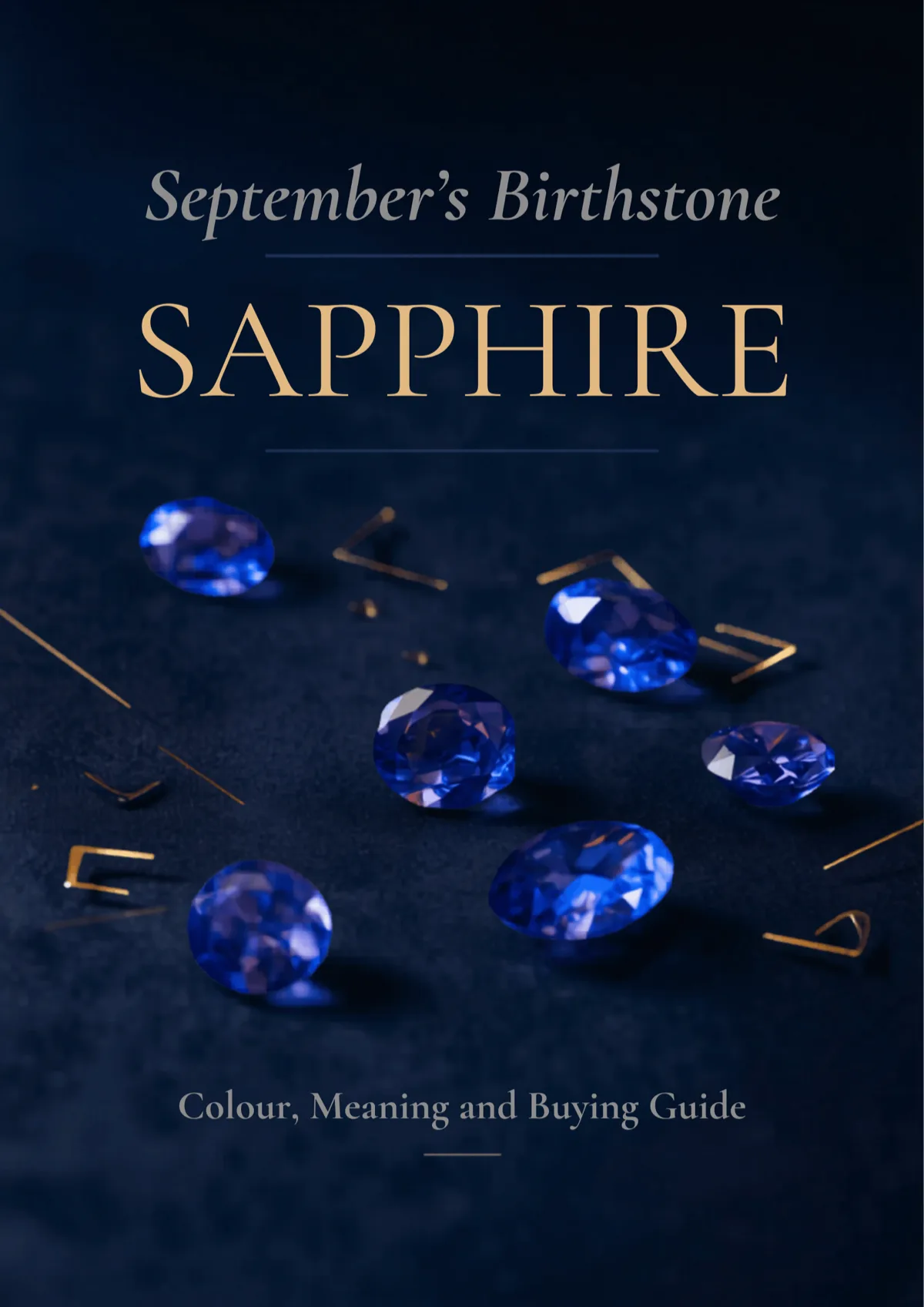
If you were born in September, your birthstone is sapphire. That is the short answer, and unlike some months it is not complicated. There is one classic September birthstone, it has been the same one for centuries, and it happens to be one of the genuinely great gems to own.
We will say this up front, because it is the through-line of the whole article: sapphire is, in our opinion, the best value-for-prestige stone on the birthstone calendar. It carries thousands of years of royal and religious history, it comes in nearly every colour you can name, and it is hard enough to wear every day for a lifetime. Very few gems can claim all three. Here is the full picture.
So What Is September's Birthstone, Exactly?
September's birthstone is sapphire. Most people picture a deep velvety blue, and that is the traditional and most prized colour, but the full story is more interesting than that, and we will get to it.
You may have searched and seen confusing results asking "what are the 2 birthstones for September?" or even three. Here is the honest version. The traditional, official September birthstone, the one fixed by the American jewellery trade's 1912 list, is sapphire and only sapphire. The "second" and "third" stones you see floating around are modern alternative or zodiac additions, usually lapis lazuli or moonstone, added by sellers and astrology sites rather than by the historical list.
Our take: do not overthink it. If you are buying a September birthstone gift, buy sapphire. The alternatives are perfectly nice stones, but sapphire is the real one, and it is not even a close call.
Sapphire and Ruby Are the Same Mineral
This surprises almost everyone, so it is worth a short detour. Sapphire is corundum, which is crystalline aluminium oxide. So is ruby. They are the exact same mineral. The only difference is the trace element doing the colouring.
A pinch of chromium turns corundum red, and we call that ruby. Iron and titanium turn it blue, and we call that sapphire. Every other colour of corundum, the yellows, pinks, greens, purples, even colourless, is also called sapphire. So sapphire is really "any corundum that is not red", which is why the family is so colourful.
This matters for September babies in a very practical way. Corundum sits at 9 on the Mohs hardness scale, beaten only by diamond at 10. That hardness is the quiet reason sapphire is such a good buy. You can wear a sapphire ring every day, knock it about, garden in it, and it will shrug it off. Compare that with June's pearl, which scratches if you look at it wrong. Sapphire is built for a real life.
The Colours of Sapphire (It Is Not Just Blue)
When people search "sapphire colour" they usually expect one answer. There are really a dozen. Knowing the range is the single biggest advantage you can have as a buyer, so here is the field guide we wish everyone had.
- Blue sapphire. The classic. The most prized blue is a vivid, slightly violet "cornflower" or "royal" blue with strong saturation and not too dark a tone. The historic gold standard is Kashmir blue, a velvety, almost sleepy blue from a tiny Himalayan source that has been essentially mined out for a century. Kashmir stones now sell for eye-watering sums at auction precisely because the supply ended.
- Padparadscha. A delicate pink-orange found mainly in Sri Lanka, named after the lotus flower. It is one of the rarest and most collectable sapphires, and a genuine padparadscha commands a serious premium. We think it is the most beautiful colour in the entire corundum family, and we are not alone.
- Yellow, pink, green, purple and "fancy" sapphires. All real sapphire, all generally far cheaper per carat than fine blue, and all wildly underrated. A clean yellow or pink sapphire is, in our opinion, one of the best-value coloured-stone buys you can make today.
- White (colourless) sapphire. A budget-friendly, durable diamond alternative. It lacks a diamond's fire, but it is hard, clear, and inexpensive.
- Colour-change sapphire. Blue or violet in daylight, purple or reddish under warm indoor light. A genuine party trick of a stone.
- Star sapphire. Contains needle-like inclusions that produce a six-rayed star of light across the dome of a cabochon. The Star of India, a 563-carat star sapphire, is one of the most famous gems in the world.
The buying lesson hiding in that list: if you love sapphire but not the blue price tag, the fancy colours give you the same legendary durability and history for a fraction of the cost.
What Sapphire Means: Heaven, Truth and Royal Favour
The lore around sapphire is some of our favourite in the whole birthstone world, because it is remarkably consistent across cultures. Where ruby is the stone of fire and blood, sapphire is the stone of the heavens.
George Frederick Kunz, the gemmologist whose 1913 classic The Curious Lore of Precious Stones is our regular primary source, devotes loving attention to sapphire. He records the medieval conviction that its blue was a piece of the sky itself, which made it the stone of divine favour, truth, and the soul's connection to heaven. Clergy wore it. Bishops were given sapphire rings on appointment, set so the stone touched the skin, because it was thought to keep the wearer chaste and pure of thought.
From that root, the symbolism fans out in directions that still shape how we give sapphire today:
- Truth and faithfulness. Sapphire became the stone of fidelity and sincere promises, which is a large part of why it works so well in engagement rings. You are quite literally giving a stone that for a thousand years has meant "I am telling the truth."
- Wisdom and clear thinking. The blue-sky association tied it to mental clarity and good judgement.
- Protection. Kunz notes the old belief that a sapphire would lose its colour or grow dull when worn by an impure or unfaithful person, and shine brightly for the honest. It was, in effect, a medieval lie detector.
Our honest opinion on the folklore: the "colour fades for liars" claim is obviously not real, but it is a wonderful piece of social engineering. A betrothal stone that supposedly reports on your faithfulness is a very effective way to encourage faithfulness. The sapphire was not magic. It was peer pressure with excellent production values.
Famous Sapphires (and the One on a Very Famous Hand)
Sapphire's royal reputation is not just history book stuff. The most famous engagement ring of the modern era is a sapphire: the 12-carat oval Ceylon blue sapphire surrounded by diamonds that Prince Charles gave Diana in 1981, and that Prince William later gave Catherine. That single ring is, we would argue, responsible for a measurable share of the world's ongoing demand for blue sapphire engagement rings. One royal proposal moved an entire market.
Beyond that, the British Crown Jewels are studded with historic sapphires, including the St Edward's Sapphire set in the Imperial State Crown, said to be one of the oldest gems in the royal collection. The 423-carat Logan Sapphire and the Star of India sit in museums precisely because sapphire has always been a stone that kingdoms and collectors fight over.
Where Sapphires Come From
Origin matters to sapphire pricing more than almost any other factor, so a quick geography lesson pays for itself.
- Sri Lanka (Ceylon) is the great classic source, producing bright, lively blues and most of the world's fine padparadscha. "Ceylon sapphire" is still used as a quality signal.
- Kashmir, as mentioned, produced the legendary velvety blue and is effectively finished. Its stones are now collector trophies.
- Myanmar (Burma) produces rich, saturated royal blues prized for their depth.
- Madagascar has become a major modern source of excellent material across many colours, and is a big reason fine sapphire is more available now than a generation ago.
- Montana, USA produces lovely steely and teal blues, and "American sapphire" with full traceability is increasingly popular with buyers who care about ethical sourcing.
A point we will keep banging on about: a beautiful Madagascar or Montana sapphire is a genuinely smart buy. Origin snobbery, especially paying a Kashmir or Burma premium for a name rather than for what is in front of you, is the most expensive habit in this hobby.
The Buying Reality: Treatment, Price and What to Ask
Here is the part that actually saves you money. The vast majority of sapphires on the market, well over ninety percent, have been heat-treated to improve colour and clarity. This is a long-accepted, stable, permanent treatment, and it is fine. It is not a defect and it is not a scam, it is simply the industry norm. What you are paying a premium to avoid is the much smaller pool of unheated stones, which a lab can certify.
What does change the price dramatically is more aggressive treatment, particularly beryllium diffusion (which alters colour at the surface) and glass filling of fractures. Those should make a stone significantly cheaper, and you deserve to be told about them.
So, the four questions we would ask before paying real money for a sapphire:
- What is the colour, honestly described? Tone, saturation and hue drive value more than carat weight. A vivid medium-blue beats a large inky one every time.
- Has it been heated, and only heated? "Heat only" is normal and fine. "Diffused" or "glass-filled" should cost much less.
- What is the origin? It affects price. It does not affect beauty. Buy the stone, not the postcode.
- Is there an independent lab report? For any sapphire over a carat, you want a GIA or comparable report stating treatment and, ideally, origin.
On rough numbers, fine commercial blue sapphire runs into the hundreds to low thousands per carat, while certified unheated Kashmir or top Burmese material runs to tens of thousands per carat and up. The fancy colours, yellow, green, pink, can often be had for a fraction of equivalent blue, which is exactly where we would shop for value.
Why Sapphire Is a Brilliant Engagement Ring
We will plant a flag here: for an engagement ring that is not a diamond, sapphire is our number one recommendation, and it is not close.
The reasoning is simple and it all comes back to that hardness of 9. An engagement ring is the one piece of jewellery a person wears every single day for decades, through washing up, gym sessions, and everything else. Most coloured gems cannot survive that. Sapphire can. Add a thousand years of meaning around truth and fidelity, a royal pedigree, and a price that undercuts diamond for comparable visual impact, and you have a stone that makes emotional and practical sense at once.
If you want to go deeper on settings and styles, our birthstone engagement rings guide walks through the month-by-month options, and the birthstone jewelry hub is the place to browse pieces.
Caring for Sapphire
Good news: sapphire is low-maintenance. Warm soapy water and a soft brush is all the routine cleaning it needs. Ultrasonic cleaners are generally safe for untreated and heat-treated stones, but avoid them for any fracture-filled stone, which is one more reason to know your treatment. Store it apart from softer gems so it does not scratch them, because at hardness 9 it will happily scratch almost everything else in the box.
September's Other Symbols
If you are putting together a September birthday gift, the birthstone pairs beautifully with the month's birth flowers, the aster and the morning glory, both of which carry their own meanings of love and affection. We cover the full set in our birth flowers and birthstones by month guide, which is a lovely way to layer a gift with extra meaning.
The Bottom Line for September Birthdays
A few closing opinions, the kind we would give a friend shopping for a September birthday:
- Buy sapphire, not the "alternatives." Lapis and moonstone are fine, but sapphire is the real September birthstone and the better gem by a distance.
- Explore the fancy colours. Yellow, pink and green sapphires give you the same durability and prestige as blue at a far friendlier price.
- Pay for colour, accept heat treatment, and skip origin snobbery. That is the formula for getting the most beautiful stone for your money.
- Consider it for the engagement ring. Hardness 9 plus a thousand years of meaning around fidelity is hard to beat.
For the wider story of how each month got its stone, read our birthstone origins and the 1912 list piece, and the whole Kunz lore series lives on the blog as we work through the old book one gem at a time.
Sources and Further Reading
- George Frederick Kunz, The Curious Lore of Precious Stones, 1913. The sapphire material runs through the chapters on planetary, talismanic and ecclesiastical stones. We also wrote a plain-English summary of the whole book.
- For how the modern month-by-month list was assembled, see our birthstone origins history.
- For the natural versus synthetic question across all gems, see lab-grown versus natural birthstones.
- For settings and styles, the birthstone engagement rings guide and the birthstone jewelry collection.
The simplest way to think about September's birthstone is this. Sapphire is the rare gem where the history, the durability and the price all point the same way. It has been the stone of kings, bishops and brides for a thousand years, and it is still, quietly, one of the smartest stones you can choose today.
Wondering how it stacks up against every other gem? Compare values in our gemstone price guide and toughness on the sortable Mohs hardness table.