I've watched friends spend two hours scrolling Etsy for a custom birthstone necklace and end up with something that arrives looking nothing like the photo. The chain is half the thickness they thought. The "birthstones" are glass. The font on the engraving is wrong. The whole thing tarnishes by August.
A custom birthstone necklace can be one of the most personal pieces of jewelry on the planet. It can also be a great way to waste $89 on something that gets stuffed in a drawer. The difference is almost never the design. It's the five or six small decisions you make before you click buy.
This is the guide I wish my friends had read before clicking.
Why Custom Birthstone Necklaces Got So Popular Again
Custom birthstone necklaces and mothers birthstone necklaces have been climbing in popularity for three straight years, with predictable peaks every May (Mother's Day) and December (holidays). The trend is real, and nostalgia is only part of it. A few things are happening at once.
People are moving away from generic, mass-produced jewelry. Lab-grown stones have pushed the cost of colored gems down, which means a six-stone family necklace is finally affordable for most budgets. And the "stackable, layered, meaningful" aesthetic on TikTok and Instagram has made birthstone pieces feel modern instead of grandmotherly.
My honest take: the best custom birthstone necklaces feel like a tiny family portrait you can wear. That's the whole appeal. Get that part right, and even a simple piece will get worn weekly for a decade. Get it wrong, and you've made an expensive keychain.
The Three Real Styles (and What Each One Actually Costs)
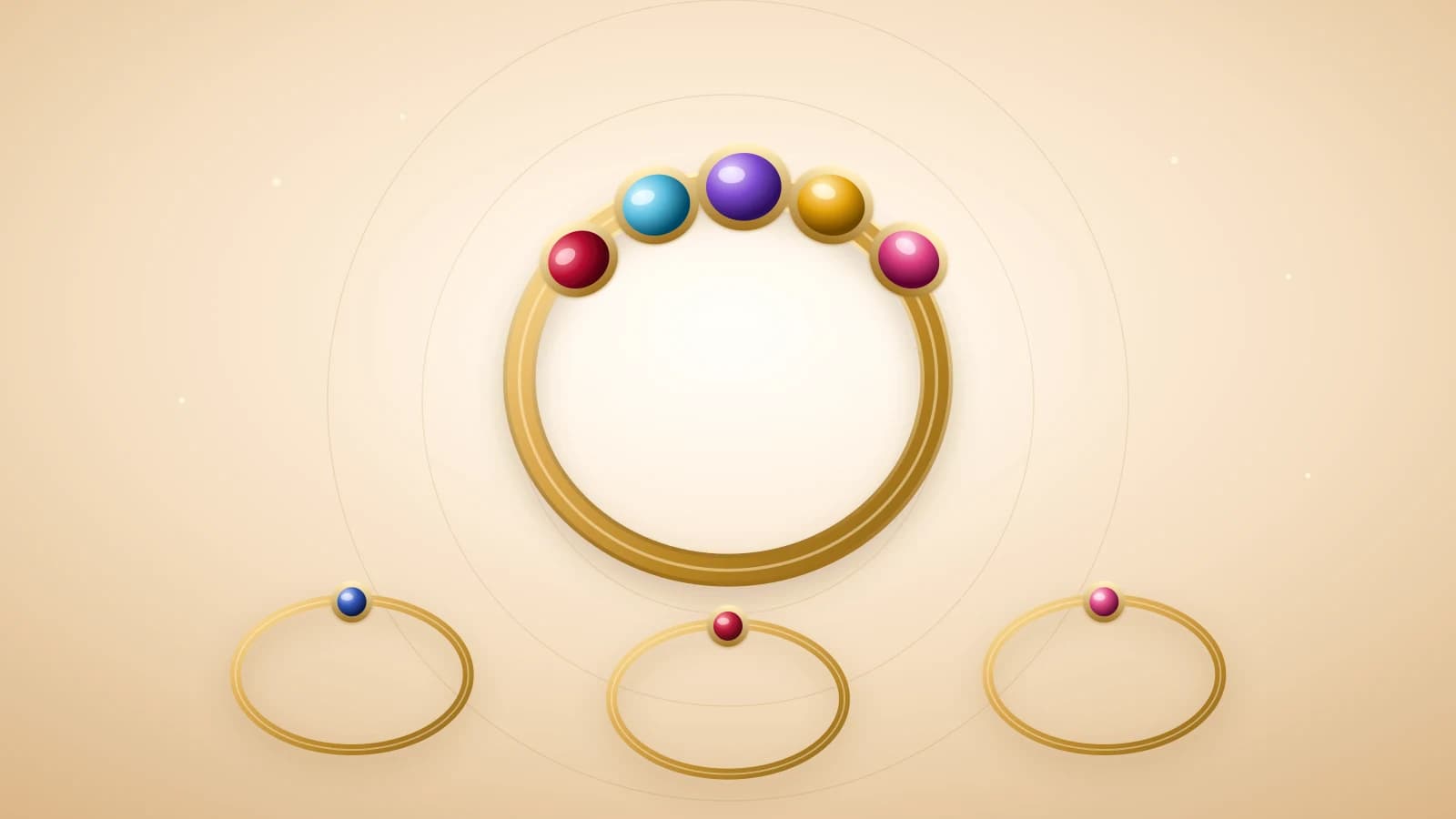
Most custom birthstone necklaces fall into one of three layout families. Pick your layout first. Everything else (metal, chain, engraving) is downstream of this choice.
1. The Bar Necklace
A horizontal bar with the birthstones set in a row, sometimes with names or initials engraved below each one. This is the modern default. It sits flat against the collarbone, layers well with other chains, and reads cleanly even with five or six stones on it.
Best for: families with 3 to 6 members. Anything beyond six starts to look crowded.
Expect to pay: $80 to $180 in sterling silver, $180 to $400 in 14k gold-fill, $500 and up in solid 14k.
2. The Pendant Cluster
A small charm or pendant where the stones are clustered together, often in a flower, heart, or circle shape. This is the more "jeweled" of the three options, and it photographs beautifully.
Best for: 2 to 4 stones, or for someone who wants the necklace to feel like an actual piece of jewelry rather than a personalized accessory.
Expect to pay: $120 to $250 in silver, $300 to $700 in gold.
3. The Family Tree / Circle
A round pendant with birthstones arranged around (or hanging from) a tree, ring, or open circle. This is the format most grandmothers love because it scales gracefully to seven, eight, even ten stones.
Best for: large families, multi-generational gifts, grandma birthstone necklaces.
Expect to pay: $90 to $220 in silver, $250 to $600 in gold.
If you have to pick blind, the bar style is the safest bet. It's the most versatile, the most flattering at any age, and the easiest to layer with whatever the recipient already owns.
The Metal Decision (This Is Where People Get Burned)
Half the complaints about custom birthstone necklaces come down to one thing. The metal was wrong, or the metal wasn't what the listing implied. Quick translation guide.
- Stainless steel: Cheap, doesn't tarnish, but feels light and reads slightly industrial. Fine for kids or as a starter piece.
- Sterling silver (925): The honest baseline. Real silver, will tarnish over time, polishes back to bright easily. Good value at $40 to $150.
- Gold-plated: A microscopic layer of gold over base metal. Looks good in photos. Wears off in 6 to 18 months. Avoid for anything you want to keep.
- Gold-filled (14/20 or 12/20): A proper layer of gold mechanically bonded to brass. Lasts 10 to 20 years with normal wear. This is the sweet spot for value.
- Vermeil: Thick gold plating over sterling silver. Better than plating, not as durable as filled. Reasonable middle ground.
- Solid gold (10k, 14k, 18k): The real thing. Expensive, but it's the only one that becomes an heirloom.
If you're buying a custom birthstone necklace for mom and you want her to wear it in five years, my opinion is simple. Either spend the money on 14k gold-fill at minimum, or stick with sterling silver and accept the patina. Skip everything labeled "plated." It is a false economy.
Real Stones vs. Synthetic vs. Glass
Here's the part most listings won't spell out clearly. Birthstones on a custom necklace are almost never natural mined gems unless the listing explicitly says so and the price reflects it. Anything under about $200 is using one of these three options.
- Lab-grown gemstones: Chemically identical to the natural stone. Perfectly fine, and increasingly the default. A lab-grown emerald is still emerald.
- Cubic zirconia or crystal "in birthstone colors": Colored glass or CZ cut to mimic the birthstone color. Looks fine, but it's not the stone. Not a problem if you know what you're buying.
- Resin or epoxy: This shows up in cheaper pieces. Avoid. It scratches, it dulls, and it can yellow in sunlight.
My rule of thumb: if the listing uses the word "simulated," "created," or "crystal" without saying "lab-grown," assume it's glass. That's fine for some gift contexts (a sweet 16, a baby gift) but it is not what most people picture when they hear "real ruby."
For a useful primer on what each stone actually looks like, our birthstone colors by month guide is the fastest way to know what a "real" version of each gem should look like before you order.
The Birthstone Choice Itself (And Where People Get It Wrong)
You'd think this part was simple. It mostly is. But two specific months trip up almost every custom necklace order.
June: There are three official June birthstones (pearl, alexandrite, moonstone). Most custom necklaces default to pearl, which is the cheapest. If the recipient prefers blue or a color-shifting look, you may need to request alexandrite or moonstone specifically. See the June birthstone hub for the actual differences.
December: Three options here too (turquoise, tanzanite, zircon). Default is usually turquoise or blue zircon. Tanzanite is gorgeous but pricier, and many "tanzanite" stones on cheap pieces are dyed glass. If the recipient is December-born and you want the real thing, just budget for it.
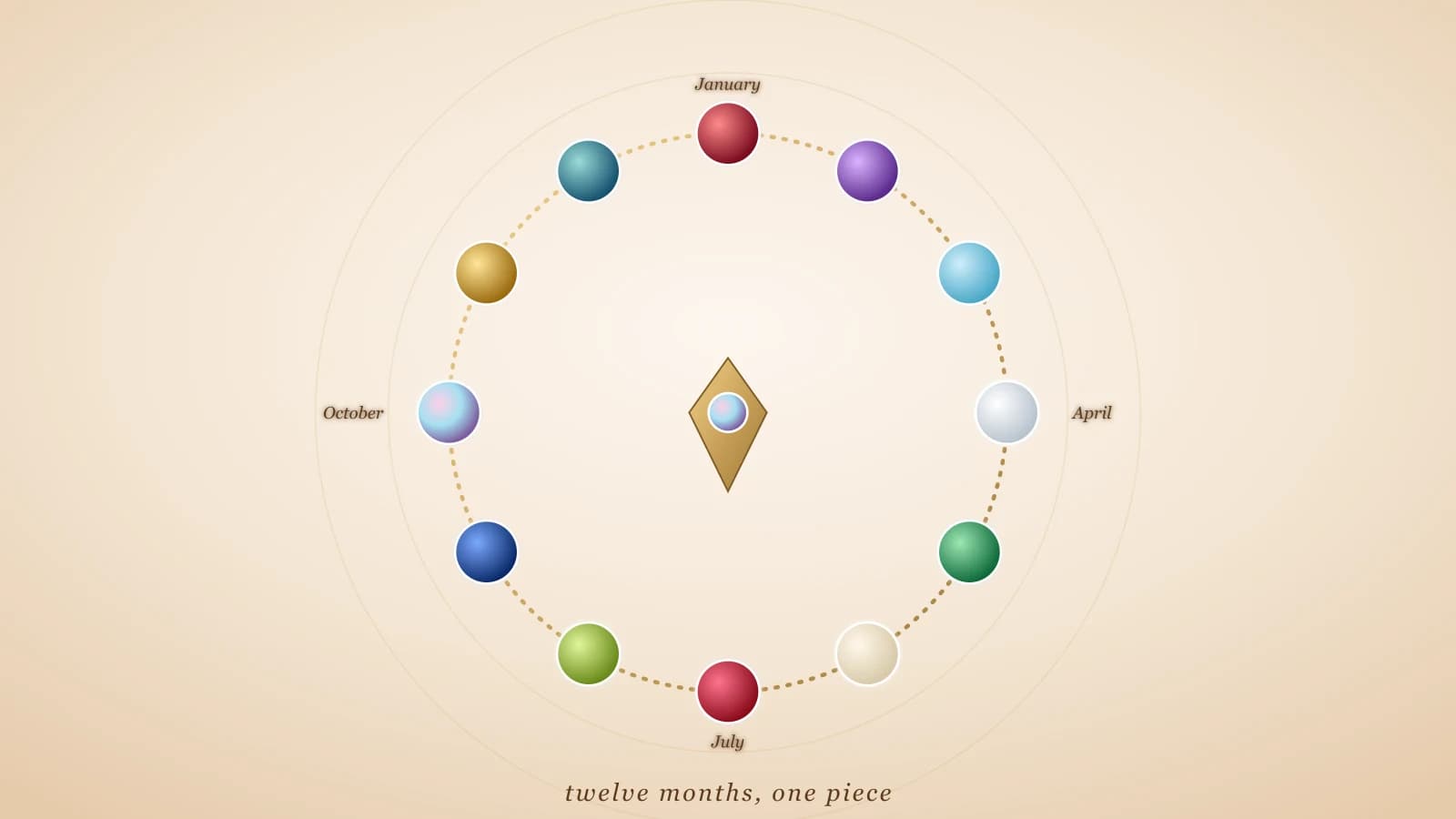
Every other month, you can trust the default. The birthstone chart is a fast reference if you're working from kids' or grandkids' birthdays and need to check.
Layout Choices for Family Necklaces
When you're buying a family or grandma piece with multiple stones, there's an order-of-operations question most people don't think about until checkout.
- Birth order (oldest to youngest): The traditional choice. Reads like a family tree, easy to remember.
- Calendar order (January to December): Cleaner visually because the colors flow through the spectrum.
- Couple in the middle, kids outward: A nice option for a "two parents, three kids" arrangement. Centers the bond visually.
- Random/aesthetic: Picking the order purely on what colors look good next to each other. Heretical to some, but honestly the prettiest option.
I'm a fan of the aesthetic order for one reason. The necklace gets worn for years. The birth-order trivia gets explained once. Looks win, in the long run.
Engraving: Less Is Always More
If you're adding names, initials, or a date, here's the only opinion you need. Pick one. Don't add three.
A bar necklace with five stones, five names, and a date below feels like a junk drawer. The same bar with just the stones, or just initials below each stone, feels intentional. If you must add a phrase, put it on the back of the bar where only the wearer sees it. That's a much better moment than something visible from across the room.
A Quick Word on Where to Buy
I won't recommend specific shops because the good ones change every year. But here's the filter I use:
- The listing shows real photos, not just renders.
- The metal is specified with a quality stamp (925, 14k, 14/20, etc.), not just a vague "silver" or "gold."
- There's at least one review with a clear, in-focus photo of the actual piece received.
- The shop is willing to answer a "what's the stone actually made of?" message before you buy.
If a shop fails any of those four, keep looking. There are dozens of honest sellers and hundreds of dishonest ones in this category. The filter is what saves you.
For a broader look at what to expect across the birthstone jewelry category (not just necklaces), our birthstone jewelry guide has more on rings, bracelets, and earring options.
Care: Three Habits That Triple the Lifespan
Custom birthstone necklaces fail for boring reasons. Sweat, lotion, chlorine, and being thrown in a tangled pile in a drawer.
- Take it off before showering, swimming, or working out. Especially if it's silver or gold-fill.
- Wipe it with a soft cloth after wear. Two seconds. Removes oils that cause tarnish.
- Store it flat or hung, not piled. A $4 jewelry tray prevents 80% of the damage these pieces accumulate.
That's it. Do those three and a $120 sterling silver bar necklace will look new in five years. Skip them and a $600 gold necklace will look tired in two.
The Bottom Line
A custom birthstone necklace is one of those gifts that lives or dies in the details. Pick the layout that fits the number of stones. Pay for real metal, not plating. Be honest with yourself about whether you're buying real stones or beautiful glass (both are fine, just know which one). And keep the engraving restrained.
Do those four things and the necklace becomes something the recipient actually reaches for, not just something they thank you for. Which, when you think about it, is the only metric that matters.
Related reading
- Birthstone colors by month: a visual guide
- Aquamarine engagement rings: the ultimate guide
- Find your birthstone in seconds
- The full birthstone history
Before you buy, sanity-check what the stones should cost with our gemstone price guide and price the metal with the gold price calculator.