Labradorite: Meaning, Colours, and Why It Flashes Like the Northern Lights
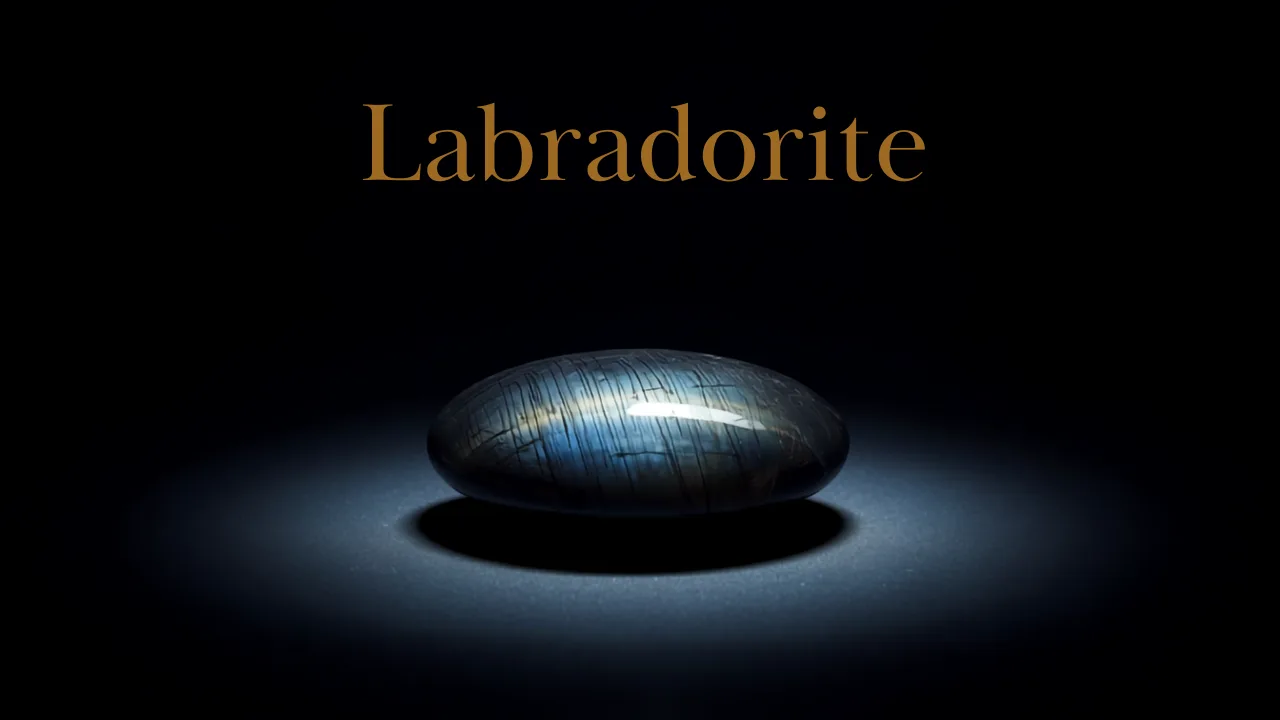
Hold a piece of labradorite flat in your hand and it looks like nothing. A dull grey pebble, the sort of thing you would step over on a beach. Then you tilt it a few degrees toward the light and the whole face ignites with a sheet of electric peacock blue, or green, or gold, as if a switch flipped somewhere inside the stone. Tilt it back and the colour vanishes and the grey returns. No other gem at this price hides its trick so completely until you find the exact angle that wakes it up.
That flash has a name, labradorescence, and it is the entire reason this stone has a following far bigger than its status would suggest. Labradorite is not an official birthstone, it has no famous crown jewel, and it costs pocket money in most forms. Yet it is one of the most searched gems on the internet, and in our experience it is the single stone that most often makes someone fall down the gemstone rabbit hole. The flash does that to people.
This is the honest, complete version. What labradorite actually is, why it flashes the way it does, what it has meant to people since it was pulled from a cold Canadian coast, the colours and types that matter, what fine material is really worth, how to spot the dyed and glass fakes in a few seconds, and how it stacks up against moonstone and opal, the two gems people constantly mix it up with. We genuinely love this stone, so we will also be straight about where the marketing gets carried away.
Labradorite Meaning in One Sentence
If you only want the quick answer: labradorite is widely treated as a stone of transformation, intuition, and protection, the gem you reach for during change, because its hidden flash reads as a light that lives inside the stone and only shows itself when the angle is right. It is the classic "magic" stone of modern crystal lore, tied to the idea of seeing what is normally hidden.
That is the meaning in a line. Where it comes from is genuinely good, because unlike a lot of gem lore, labradorite's story is recent enough that we actually know roughly how it started. But first it helps to understand what the stone physically is, because the flash and the symbolism are the same thing viewed from two sides.
What Is Labradorite?
Labradorite is a feldspar, which is the most common mineral group in the Earth's crust. Specifically it sits in the plagioclase feldspar series, the calcium-sodium branch, and that detail matters because it is also where the flash comes from.
As the molten rock cooled, the mineral separated into extremely thin alternating layers of slightly different composition. Those layers are stacked so finely, on the scale of the wavelength of light itself, that when light enters the stone it bounces between them and interferes with itself, throwing back specific colours in a directional sheet. Geologists call the layering "exsolution lamellae." You do not need the term to enjoy it, but it explains why the colour only appears from certain angles. You are not looking at a pigment in the stone. You are looking at light being sorted by a structure too small to see.
Two practical facts fall out of this, and the listings almost never tell you either. First, labradorite is 6 to 6.5 on the Mohs hardness scale, which is on the soft side for something you wear every day. Second, and more important, it has two directions of perfect cleavage, built-in planes of weakness. A sharp knock at the wrong angle can chip or split it cleanly along one of those planes. We will come back to what that means for wearing it, because it should change which jewellery you buy.
Why Labradorite Flashes: Labradorescence Explained
The flash has its own name because it is genuinely its own optical effect: labradorescence. It describes that metallic, almost neon sheet of colour that floats across the surface and appears to switch on and off as you move the stone.
Here is the part worth understanding, because it is also your best fake test. Real labradorescence is directional and metallic. It does not glow softly from everywhere at once. It lies flat and dark until you hit the precise angle where the internal layers line up with the light, and then it flares hard, like sun catching an oil slick or a beetle's wing. Move past that angle and it shuts off. That on-off, find-the-angle behaviour is the signature. A stone that shimmers a soft even rainbow from every direction, with no sweet spot, is usually dyed, coated, or glass.
The colour you get depends on how thick those internal layers are. Blue is the most common flash, followed by green, then yellow and gold. Orange, red, purple, and pink are rarer and push the price up fast. When a single stone throws the full spread of colours at once, the trade has a special name for it, and we will get to that, because it is the material actually worth spending on.
Labradorite Meaning and Symbolism: Where the Lore Comes From
Most gem legends are lost in deep history. Labradorite's is refreshingly traceable, because the stone was only formally described in the West in the 1770s, when Moravian missionaries collected it on the Labrador Peninsula in what is now Canada. That is where the name comes from.
The most repeated legend belongs to the Inuit and the Innu peoples of that coast. In the story, the Northern Lights were once trapped inside the rocks along the shore. A warrior came across them and struck the stone with his spear, freeing most of the lights back into the sky, but some of the aurora stayed locked inside the rock forever. That is the labradorite you hold, a piece of frozen Northern Lights. We will be honest, that is one of the better gem origin stories on the calendar, and it fits the stone perfectly, because a labradorite flash really does look like a slow aurora caught under glass.
From there, modern crystal culture ran with the theme of hidden light. The recurring associations are transformation, intuition, psychic protection, and a calmer, less scattered mind. It became known as a stone for people going through change, starting something new, or feeling pulled in too many directions, the idea being that it shields your energy while helping you see what is really going on. You will see it sold as the "stone of magic" more than almost any other crystal.
We find the history and symbolism genuinely charming, and we think the aurora legend adds real character to a piece. But we will say plainly what a lot of sellers will not: these are cultural and symbolic meanings, not physical properties. Labradorite will not literally protect your aura or sharpen your intuition. If you enjoy the meaning as a piece of personal symbolism, wonderful, that is a big part of why people wear gemstones at all. If you want the wider story of how stones picked up these protective roles in the first place, our piece on talismans and amulets in gemstone lore traces where a lot of it began.
Labradorite Benefits and Healing Properties: An Honest Take
This is the most searched corner of the whole topic, so let us handle it straight rather than dodge it.
In crystal and metaphysical practice, labradorite is associated with a fairly consistent set of so-called benefits: calming an overactive mind, easing anxiety, supporting intuition and "psychic" work, protecting against draining people or environments, and helping you adapt during big life transitions. It is usually linked to the third eye and throat chakras, the centres tied to insight and self-expression. Practitioners carry it, meditate with it, or wear it as a pendant close to the throat.
Here is our position, and we will not pretend otherwise. There is no scientific evidence that labradorite, or any crystal, produces a measurable physical or medical effect. What it genuinely can do is act as a focus, a reminder, a small daily anchor. If holding a stone helps you pause, breathe, and reset before a hard conversation, that is a real and useful thing, and it costs less than almost any other ritual. We have no problem at all with people wearing labradorite for that reason. We have a big problem with anyone selling it as a treatment for an actual condition. Enjoy it as symbolism and as a beautiful object. Do not let it replace a doctor.
If the spiritual side is what drew you in, you might also like how those same ideas play out across the calendar in our guide to what each birthstone is said to mean.
Labradorite Colours and Types
The grey-to-black body is only half the story. With labradorite, the colour that matters is the flash, and the trade names mostly describe that. Here is how it actually breaks down.
Classic labradorite is the everyday material: a dark grey to almost black body with a blue, or blue-and-green, flash. This is the affordable stuff, sold by the truckload as tumbled stones, palm stones, and cheap cabochons. Good examples still look fantastic for the money.
Spectrolite is the one to know. This is labradorite that shows the full spectrum of flash colours, blue, green, gold, orange, red, and violet, often in the same stone, usually over a very dark, near-black body that makes the colours pop. The finest spectrolite comes from Ylämaa in Finland, where it was discovered in the 1940s in stone quarried for wartime fortifications, and the name is sometimes used as a trademarked term for that Finnish material specifically. Strong full-spectrum stones also come out of Madagascar. Spectrolite is where labradorite stops being pocket money and starts costing real money, and in our opinion a single great spectrolite cabochon beats a drawer full of ordinary blue-flash tumbles.
"Rainbow moonstone" is the great naming mess, and this is important. Most of the stone sold online as "rainbow moonstone," with a near-white, semi-transparent body and flecks of blue flash, is not moonstone at all. It is a pale, light-bodied labradorite. It is genuinely pretty and genuinely popular, but if you bought rainbow moonstone expecting true moonstone, you bought a cousin. We unpack the other side of this confusion in our full moonstone meaning and colours guide, because the two stones get swapped both directions.
You will also see "andesine-labradorite" and brightly coloured red or green "labradorite" beads. Treat strongly coloured, evenly transparent material with suspicion, because a lot of it is copper-diffused or otherwise treated, and the disclosure is often missing. Honest labradorite earns its colour from the flash, not from a uniform body tint.
Is Labradorite a Birthstone?
Short answer, no, not on the official lists. Labradorite does not appear on the modern American birthstone calendar drawn up in 1912 or its later updates, so if you are looking for an official month, it is not there.
That said, it travels in birthstone circles for two fair reasons. First, it is a feldspar, the same family as moonstone, which is one of June's birthstones, so labradorite often gets grouped in as a June-adjacent or alternative stone. If you were born in June and the pearl, alexandrite, and moonstone options never clicked, labradorite is a reasonable personal pick, and it is the most dramatic of the bunch. Our full June birthstone hub covers the three official June stones if you want the proper list.
Second, labradorite shows up constantly in zodiac and "mystical birthstone" charts, most often assigned to Leo, and depending on the chart you read, also to Scorpio, Sagittarius, Aquarius, or Pisces. We will be honest that these zodiac gem assignments are modern, informal, and wildly inconsistent from one source to the next. There is no single authority behind them. Pick the stone you love and do not over-think which sign some chart files it under.
Labradorite vs Moonstone vs Opal: Telling the Glowing Gems Apart
These three get confused endlessly, because all three do something with light that a plain gem does not. Here is the clean way to keep them straight.
Labradorite flashes. Moonstone glows. Opal sparkles in flecks. That one line does most of the work, but the detail is worth having.
Labradorite (labradorescence) gives you a flat, metallic sheet of a single colour, usually blue or green, that switches on hard at one angle and off at another. It is directional and a little aggressive, like light off a beetle's back. The body is usually grey to black.
Moonstone (adularescence) is softer. The light is a billowy blue or white cloud that seems to float just under the surface and roll across the stone as you tilt it, more like moonlight on water than a switch. The body is usually white, cream, or clear. Moonstone is the gentler, dreamier of the two, and it is a genuine June birthstone where labradorite is not. We go deep on it in the moonstone guide.
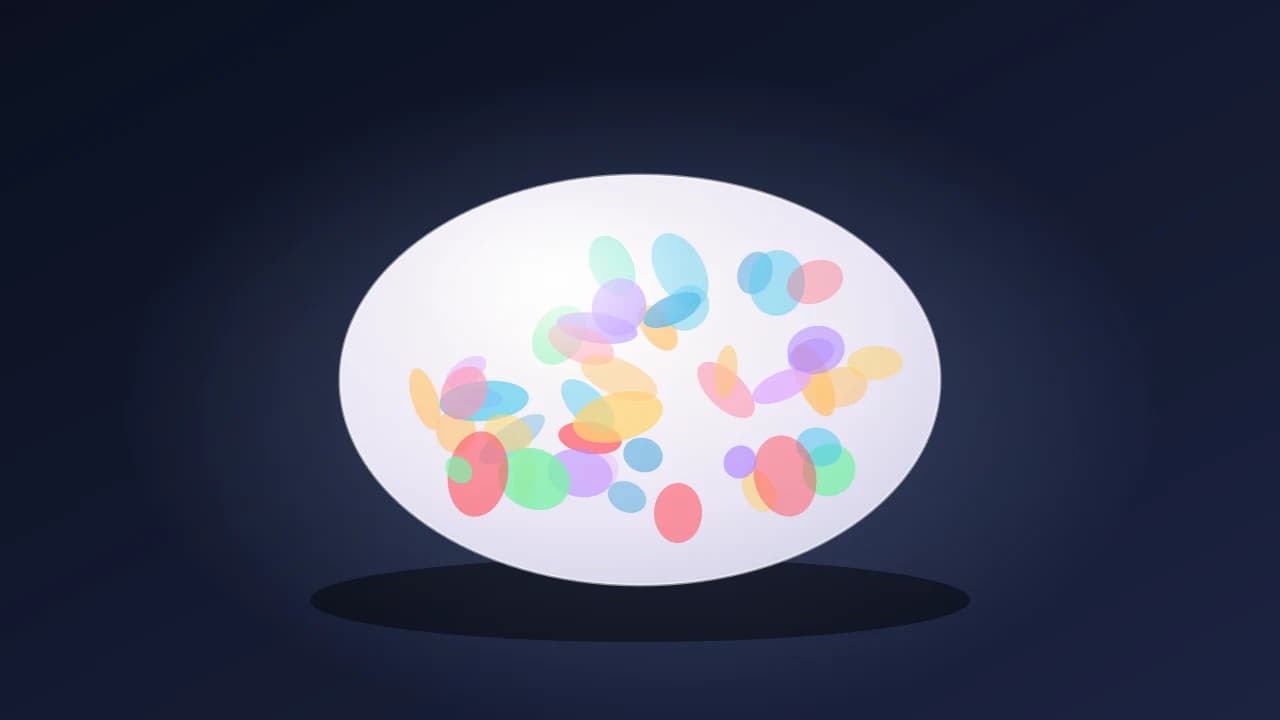
Opal (play-of-colour) is different again. Instead of one flashing colour, opal scatters tiny separate flecks and patches of many colours at once, red, green, blue, all over the stone, caused by microscopic silica spheres rather than feldspar layers. It looks like confetti, not a sheet. Opal is October's birthstone, and if that is the look you are chasing, start with our opal colours guide and our piece on how much an opal is actually worth.
So if a stone shows one bold colour that appears and disappears as you turn it, that is labradorite. A soft floating glow is moonstone. Scattered multicoloured flecks are opal. Three different minerals, three different optical tricks, three different prices.
How to Spot Fake Labradorite
Labradorite is cheap enough that you might wonder why anyone fakes it. The answer is that rainbow sells, so the market is full of dyed, coated, and glass material pretending to have a bigger, brighter, more even flash than real stone ever shows. Here is how to catch it.
Make the flash work for its money. Real labradorescence is directional. Tilt the stone slowly under a single light and watch for the colour to switch on at a specific angle and off again as you keep turning. If the colour is just there, evenly, glowing from every direction with no sweet spot, be suspicious. That even all-over shimmer is the tell of dyed quartz, foil-backed glass, or man-made "opalite."
Watch for colours that are too perfect. A flash that runs a smooth, even rainbow gradient across the whole face, like a soap bubble, is often a coated or backed imitation. Real labradorite flash tends to come in patches and bands tied to the internal structure, not one seamless sweep.
Check the body and the back. Genuine labradorite has a stony grey-to-black body with visible flaws, faint internal lines, and a slightly waxy to glassy lustre. Glass fakes are too clean, too transparent, or show curved swirl lines and the odd trapped bubble. A foil or coated backing is a dead giveaway, so look at the underside of any cabochon.
Be wary of vivid uniform colour. Bright, saturated, evenly transparent red, green, or gold "labradorite" beads are frequently treated or simply glass. Honest labradorite earns its colour from the flash floating over a neutral body, not from a candy-coloured see-through body.
The good news is that real labradorite is so affordable that there is little reason to take the risk on a sketchy seller. If something is being sold as labradorite at a premium and the flash does not behave directionally, walk away.
What Is Labradorite Worth?
Labradorite splits into two very different price worlds, the same way moonstone does, and knowing which one you are shopping in saves you both from overpaying and from being disappointed.
At the bottom, ordinary grey labradorite with a blue flash is genuinely cheap. Tumbled stones, beads, and basic cabochons run from a few dollars to maybe twenty or thirty for a nice piece. There is no reason to pay a lot here, and size is not what you are paying for.
At the top, fine spectrolite and strong full-spectrum material command real prices. A cabochon that throws bright, broad, multi-colour flash, especially blue-green-gold-into-red, over a jet-black body, and shows that flash across a wide viewing angle rather than one narrow line, can run into the hundreds for a good size. Top Finnish spectrolite is collected like a fine gem.
Our buying rule is simple: pay for the quality of the flash, not the size of the stone. A small cabochon with a wide, bright, multi-colour flash that lights up from across a room beats a big dull slab that only shows a thin blue line at one exact angle. When you compare two stones, rock them back and forth and ask which one stays "switched on" over a wider range of angles. That is the one worth more, and it is the one you will actually enjoy wearing. For where labradorite sits next to the genuinely expensive gems, our most expensive birthstones ranked puts the whole price ladder in order.
One more note: because labradorite is so cheap and so popular, it is also widely lab-made and imitated, which is a different issue from treatment. If the difference between natural and synthetic stones matters to you in general, we cover the whole question in lab-grown vs natural stones.
How to Wear Labradorite Without Breaking It
This is where that earlier hardness and cleavage warning pays off, because labradorite is one of the easier gems to damage if you treat it like a sapphire.
At 6 to 6.5 on the Mohs scale, labradorite is softer than quartz, so everyday dust, which is mostly quartz, can slowly scratch and dull a polished surface over years of careless wear. More seriously, those two directions of perfect cleavage mean a single hard knock can chip or crack it along a flat plane, not just scuff the surface.
So our honest advice on settings mirrors what we say about moonstone. Earrings and pendants are the safest homes for labradorite, because they rarely take impacts. For rings, which is where labradorite gets hit against doorframes and desks, favour a bezel setting that wraps and protects the edges of the stone, and take the ring off for anything physical, from gardening to the gym. Avoid daily-wear cocktail rings in exposed prong settings if you want the stone to survive long-term.
For cleaning, keep it simple: warm water, a drop of mild soap, and a soft cloth or soft brush. Never put labradorite in an ultrasonic or steam cleaner. The vibration and heat can find that cleavage and do real damage, and harsh chemicals can attack treated or coated material. Store it on its own so harder stones in the same box cannot scratch it. Treat it gently and it will keep flashing for generations. Treat it like an indestructible gem and you will be disappointed.
The Bottom Line
Labradorite is the best magic trick in the affordable gem world. It looks like nothing until the light hits it right, and then it does something no pigment or polish could fake, throwing back a sheet of aurora-coloured light from a structure too small to see. For the price of a takeaway you can own a stone that genuinely surprises people every time they tilt it.
Our honest summary: buy it for the flash, not the size or the spiritual claims. Hunt for broad, bright, multi-colour labradorescence that switches on across a wide angle, treat ordinary grey-blue material as the cheap and cheerful gem it is, and step up to spectrolite only when a stone truly earns it. Remember that most "rainbow moonstone" is really this stone wearing a better-sounding name, keep it out of ultrasonic cleaners, and wrap it in a bezel if it is going on your hand. Do that and labradorite gives you more wonder per dollar than almost anything else in the case.
If labradorite pulled you in, the natural next stop is its gentler feldspar cousin in our moonstone meaning and colours guide, the June birthstone it is so often confused with. And if you want to understand how gems picked up their meanings in the first place, our history of birthstone origins traces the whole tradition back to its roots.
Wondering how it stacks up against every other gem? Compare values in our gemstone price guide and toughness on the sortable Mohs hardness table.