The three stone birthstone necklace is having a moment. Interest has climbed sharply through the spring gifting window, jewelers are pushing the format hard in their ad spend, and Etsy's "personalized" category has reorganized itself around the trinity layout. That is the market's way of saying people are buying these in large numbers, and the sellers know it.
What the data does not tell you is that most of the people clicking are guessing. They like the look. They have heard the past, present, future story. They have three names in mind, or three birth months, and they think the rest will sort itself out at checkout.
It does not. The three stone format magnifies every decision you make. Three wrong stones look three times more wrong. A weak chain that would pass on a single pendant collapses under the weight of a trio. And the price ladder from "starter" to "real" is steeper here than on almost any other piece of personalized jewelry.
This is the guide I wrote for a friend last week, expanded.
What a 3 Stone Necklace Actually Symbolizes
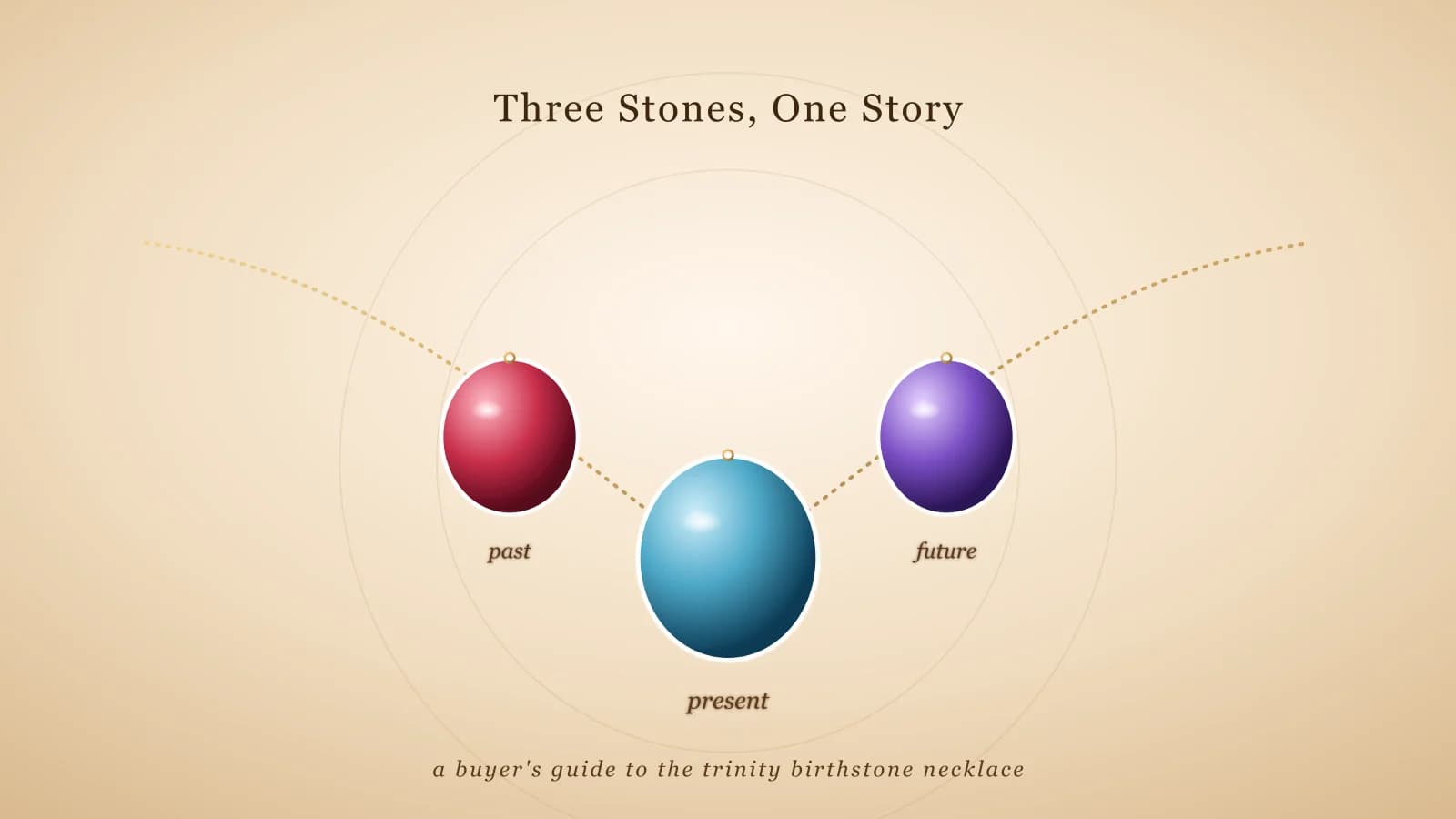
The trinity setting has roots in late-Victorian engagement rings, where three stones meant friendship, love, and fidelity. The modern reading is simpler: past, present, future. That framing got pushed hard in the early 2000s by a single American jewelry chain, and it stuck.
For a birthstone version, the symbolism stretches in three useful directions:
- A couple plus a child. Two parents flanking the birth month of the first child. Or one parent plus two kids. The center stone is the unifying one.
- Three children. Oldest to youngest, left to right. This is the most common Mother's Day order in our experience, and the one most likely to need adjusting as families grow.
- Three generations. Grandmother, mother, daughter. This is the version that ends up in family photos thirty years later, and the one most worth spending real money on.
There is also a quieter use that nobody markets, but I think is the best one: a memorial. Your birth month flanked by the birth months of two people you have lost. Worn under a sweater. Nobody needs to know but you.
Why the Trinity Format Forgives Less Than a Single Pendant
A single birthstone pendant lives or dies on one stone. If the color is off, you reset by changing one piece. A three stone necklace asks three colors to live next to each other for the next decade.
That sounds obvious until you actually try it. April (diamond/white) next to October (opal/pink) next to June (pearl/white) reads as "pale, pale, pink" rather than as three children. Meanwhile July (ruby) next to September (sapphire) next to February (amethyst) is a visual chord that strangers will compliment.
The fix is not to abandon family accuracy. It is to know in advance which months are going to fight each other and to use setting and metal to mediate. We will get to that.
The Four Layouts That Actually Sell
Forget the marketing names. There are four physical layouts:
1. The Linear Bar
Three stones set in a horizontal line on a thin gold or silver bar, the bar hung from a chain. Modern, minimalist, sits flat against the collarbone. Best for matching same-shape stones (all rounds, all marquise). Worst if your stones are wildly different sizes.
Honest opinion: the bar is the most photogenic on Instagram and the least flattering in real life on anyone with a longer neckline. If the recipient wears mostly turtlenecks and high collars, skip it.
2. The Cluster Pendant
Three stones grouped on a single small pendant, usually one center and two flanking. This is the format closest to the original Victorian trinity ring, just reoriented for a necklace.
The cluster is the most forgiving layout. Mismatched stone sizes look intentional. You can hide a smaller, harder-to-find birthstone (like alexandrite for June or tanzanite for December) behind a slightly larger flanker without it looking off.
3. The Mother's Necklace (Drop or Charm)
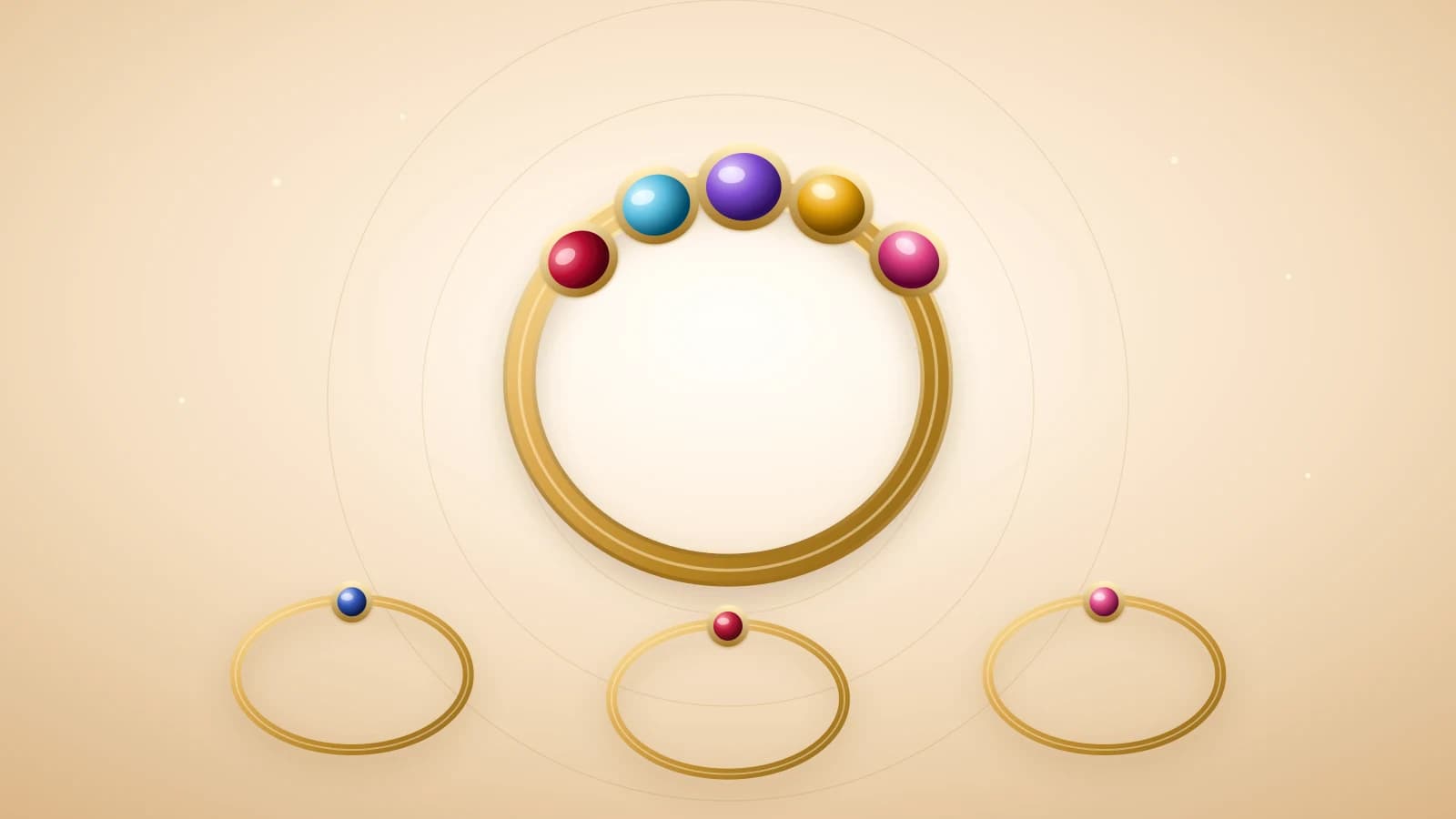
Three small individual pendants hung from the same chain, each one swinging independently. Often spaced with tiny gold beads or knots. This is the version most associated with "mom" gifting, and it is the one that allows you to add a fourth stone later without redoing the whole piece.
If there is any chance more children are coming, this is the layout. We have watched too many otherwise-beautiful bar necklaces get retired to a jewelry box because the family added a fourth child two years later.
4. The Stacked Layered Pendant
A larger center pendant with two smaller stones inset above or below. This is the rarest format and the priciest, because it usually requires custom casting rather than off-the-shelf settings. Worth it if the recipient already owns several pieces and you want something genuinely unlike anything in her drawer.
The Stones: Real, Lab, Synthetic, or Glass
Three stones means three chances to get this wrong, so it deserves its own section.
- Natural birthstones. Real garnet, real amethyst, real aquamarine, real ruby. Color will not fade, value holds, and the piece is technically resaleable. Most expensive option by a wide margin.
- Lab-grown stones. Chemically identical to the natural version (for the corundum family especially: ruby, sapphire). Look identical to the eye. We covered this in depth in our lab-grown vs natural birthstones guide. For a three stone necklace where the stones are small, lab-grown is the value sweet spot.
- Synthetic substitutes. Cubic zirconia for diamond, glass-filled corundum for ruby, dyed quartz for amethyst. Cheap, easy to source, will fade or chip within a few years.
- Glass and "crystal." If a listing uses the word "crystal" without naming the actual stone (Swarovski, Austrian, Czech, etc.), it is colored glass. Pretty in photos. Dies in sunlight.
For a sub-$200 budget across three stones, lab-grown is the right answer in most months. For a sub-$80 budget, accept that you are buying cubic zirconia or glass and shop for the chain quality instead.
The Metal That Mediates Color Conflict
Three birthstones from unrelated months will fight unless the metal calms them down. This is the single most underrated decision in the whole purchase.
- Yellow gold (or 14k yellow gold-filled). Warms cool stones (sapphire, aquamarine, amethyst) and harmonizes warm stones (ruby, garnet, citrine). The universal mediator. If you cannot decide, choose this.
- White gold or sterling silver. Sharpens cool stones, washes out warm stones. Beautiful with March, September, December. Less kind to January and July.
- Rose gold. Flatters pinks, peaches, and pearls. Fights with green emerald and blue sapphire surprisingly hard.
Plated metals are fine for a $40 gift necklace that will live one season. They are not fine for a piece intended to outlast a teenager. Solid 14k gold or 925 sterling silver is the line below which you should not go for a keeper.
We see "vermeil" thrown around as a premium term, and it is genuinely better than plain plating (2.5 microns of gold over sterling, by US legal definition). But vermeil still wears through at high-friction spots like the back of the chain clasp. Plan on five to seven good years before it needs replating, not thirty.
Sizing the Stones (Without Overpaying for Visibility)
A three stone necklace usually shows stones between 3mm and 6mm each. Smaller than 3mm and they read as accents rather than stones. Larger than 6mm and the piece starts to feel costume.
The center stone should be roughly 20% larger than the flankers if you want a clear hierarchy (the past-present-future reading). Make all three the same size if you want the kids-or-generations reading. Both are right. Decide which story you are telling.
One quiet trick: lab-grown sapphire in the 4-5mm range is the best dollar-for-impact stone on the market right now. Lab corundum has dropped in price about 40% in the last four years, while natural sapphire keeps climbing. If even one of your three birth months is September, that stone alone will carry the necklace.
Chain Length, Width, and the Mistake Almost Everyone Makes
The default 18-inch chain on most listings sits exactly where a collared shirt collar lives. The pendant disappears under the shirt all day, and the recipient stops wearing it within a month.
For a three stone piece, we strongly recommend:
- 16 inches if the recipient wears scoop necks, V-necks, or open collars most days.
- 20 inches if she layers necklaces or wears the piece over a shirt.
- 18 inches only if you genuinely have no information.
Chain width matters more than people think. A 0.8mm cable chain looks elegant on a thin pendant and snaps under any real weight. For a trinity cluster pendant or stacked layered design, ask for 1.2mm or wider. The chain should look intentional, not afterthought.
What These Necklaces Actually Cost (And What's Wasted Money)
Here is the honest range as of mid-2026, US market:
| Price band | What you actually get |
|---|---|
| Under $60 | Plated metal, glass or low-grade synthetic stones, paper-thin chain. One-season piece. |
| $60–$150 | Sterling silver or 14k gold-filled, decent CZ or lab-grown small stones. Two to four good years. |
| $150–$400 | Solid 14k gold or heavy sterling, lab-grown precious stones, real chain weight. The sweet spot. |
| $400–$900 | Solid 14k–18k gold, natural mid-grade birthstones, custom layout. Lifetime piece if cared for. |
| $900+ | Premium natural stones (real emerald, real sapphire, real ruby), bench-made setting. |
The wasted money lives at two ends. Sub-$60 is wasted because the piece does not last long enough to justify the emotional weight you are putting on it. $1,500+ for a "mother's necklace" is usually wasted because the format itself does not have the structural integrity to justify premium natural stones at that scale, unless you are commissioning a true custom piece from a bench jeweler you have met.
The honest sweet spot is $180–$320. That buys solid metal, real or lab-grown stones, and a chain that will not snap.
The Gifting Calendar (And Why Timing Matters)
The buying spikes for this category are unmistakable:
- Mother's Day is the biggest peak by a wide margin. Buyers start searching in late March and order through the first week of May.
- December holidays are the second peak, with most orders placed between Black Friday and December 15.
- First Mother's Day (after a new baby) and Grandmother's milestone birthdays create smaller, year-round spikes.
If you are ordering custom, add three weeks to whatever turnaround the listing promises. Birthstones get backordered. Engraving queues stretch. A piece arriving the day after Mother's Day is a worse outcome than a piece arriving two weeks early with a note.
Personalization: What Adds Value, What Subtracts
A discreet engraving on the back of the bar or pendant adds value. Initials, a single date, a short word in a clean serif font. That is it.
What kills value, in our opinion:
- Multiple names engraved in cursive across a small surface (illegible within a year of wear).
- Birthstone shapes that do not match each other (a round ruby next to a marquise sapphire next to a princess-cut amethyst reads as chaos).
- "Family" charm dangles added to an already-busy pendant. The trinity is enough. Trust it.
The Three Stone Necklace by Recipient
A short, opinionated cheat sheet:
- For your wife, first anniversary: linear bar, lab-grown sapphire or natural aquamarine center, yellow gold, 16-inch chain. About $220.
- For mom, three kids: mother's charm style with room for a future fourth, sterling silver or 14k yellow gold-filled. About $140 starting, $280 in solid gold.
- For grandmother, three generations: cluster pendant in solid 14k yellow gold, mixed natural and lab-grown stones. $400 and up. Worth it.
- For yourself, in memory of two people: custom cluster, your stone in the center, theirs flanking. Sterling silver keeps it personal and private. About $180.
Care: Three Habits, Decades of Wear
The same three habits keep every fine necklace alive:
- Off last, on first. Put the necklace on after perfume, lotion, and hairspray. Take it off before showering, sleeping, and the gym.
- A weekly wipe. A soft cotton cloth, dry, on both sides of every stone. Stops the film of body oil that dulls every birthstone within a month.
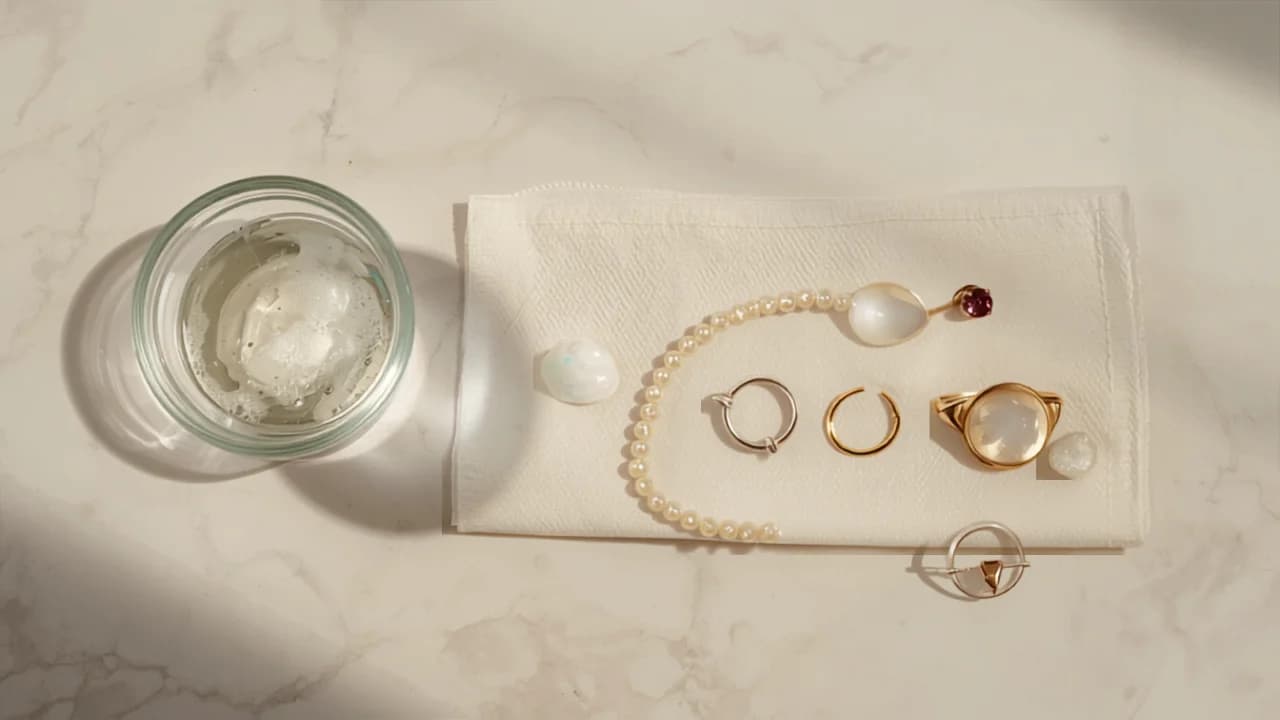
- A real cleaning twice a year. Warm water, a drop of dish soap, a soft-bristle toothbrush. Skip ultrasonic cleaners for pearls, opals, and emeralds.
The Bottom Line
A three stone birthstone necklace is one of the few pieces of personalized jewelry where the recipient looks at it daily and the format itself tells a story. Get the metal right, get the stones real (or lab-grown, which is real chemistry), respect the chain, and pay attention to the layout that fits the recipient's wardrobe.
Skip the $40 plated impulse buy. Skip the $1,500 over-spec. Land in the $180–$320 sweet spot and you have bought a piece your recipient will still wear in 2036.
If you want to dig deeper before you click order, our custom birthstone necklace buyer's guide covers the broader category and the birthstone bracelet guide is the right read for the wrist version of the same idea. To match birth months to the right stone, the birthstone chart is the canonical reference, and the birthstone jewelry hub collects the rest of our research.
Three stones. One story. Worth getting right.
Before you buy, sanity-check what the stones should cost with our gemstone price guide and price the metal with the gold price calculator.